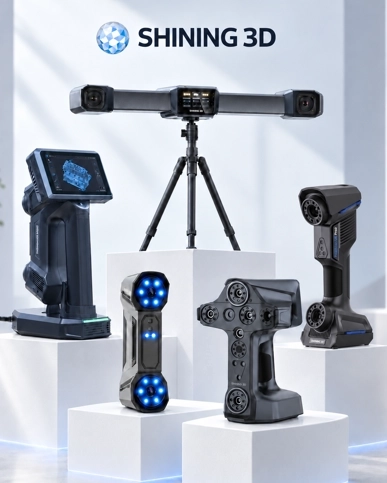
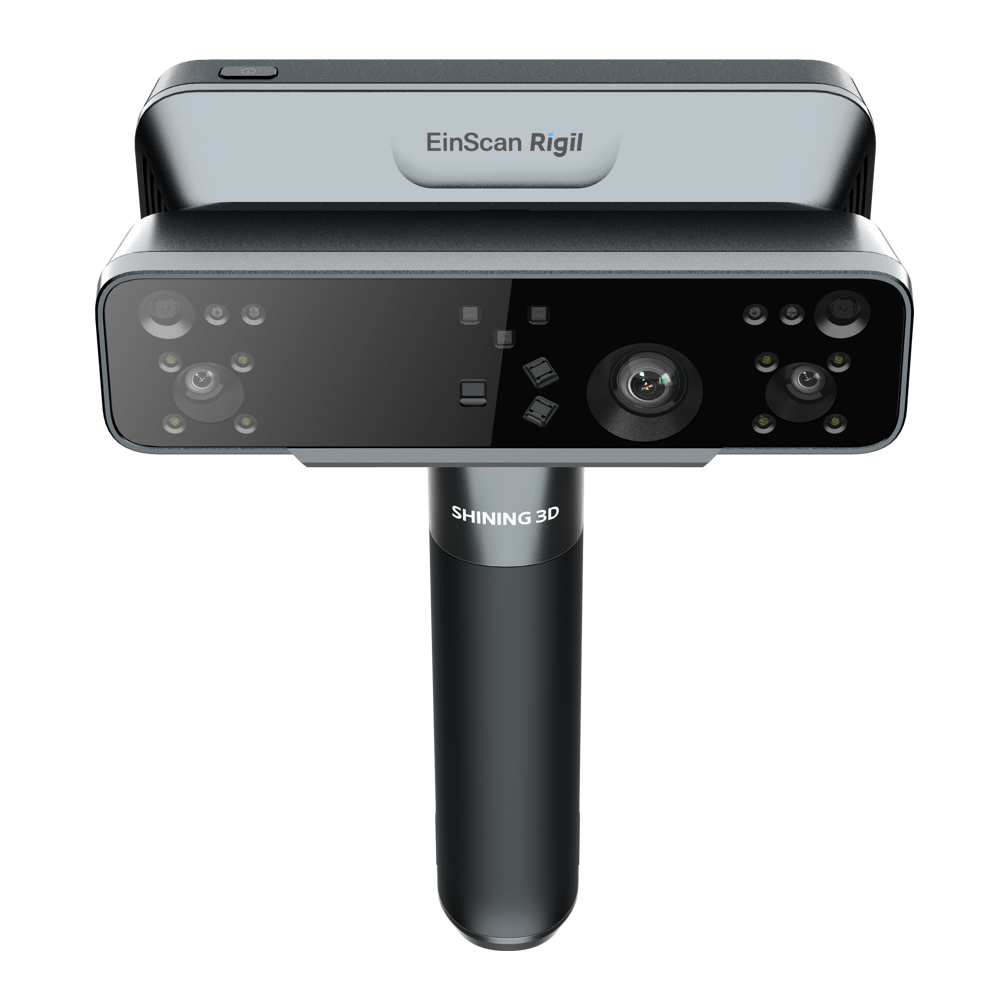
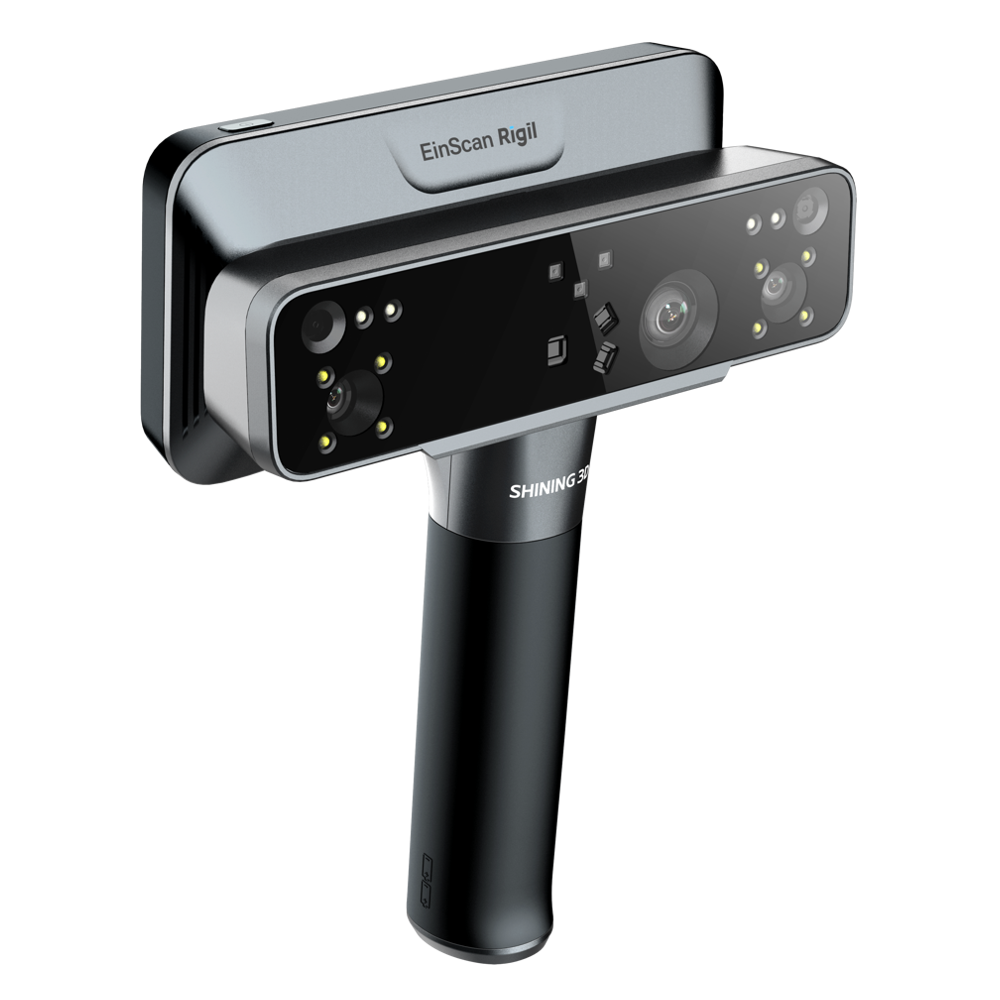
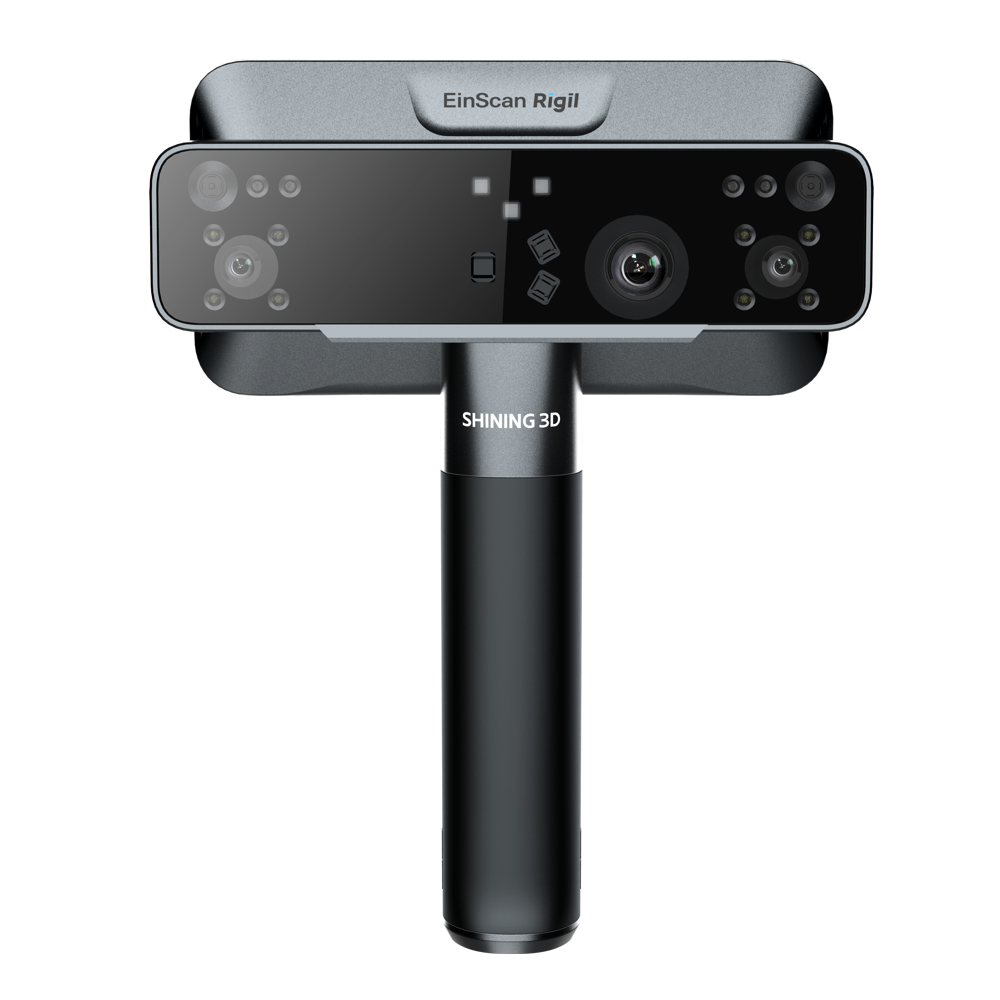
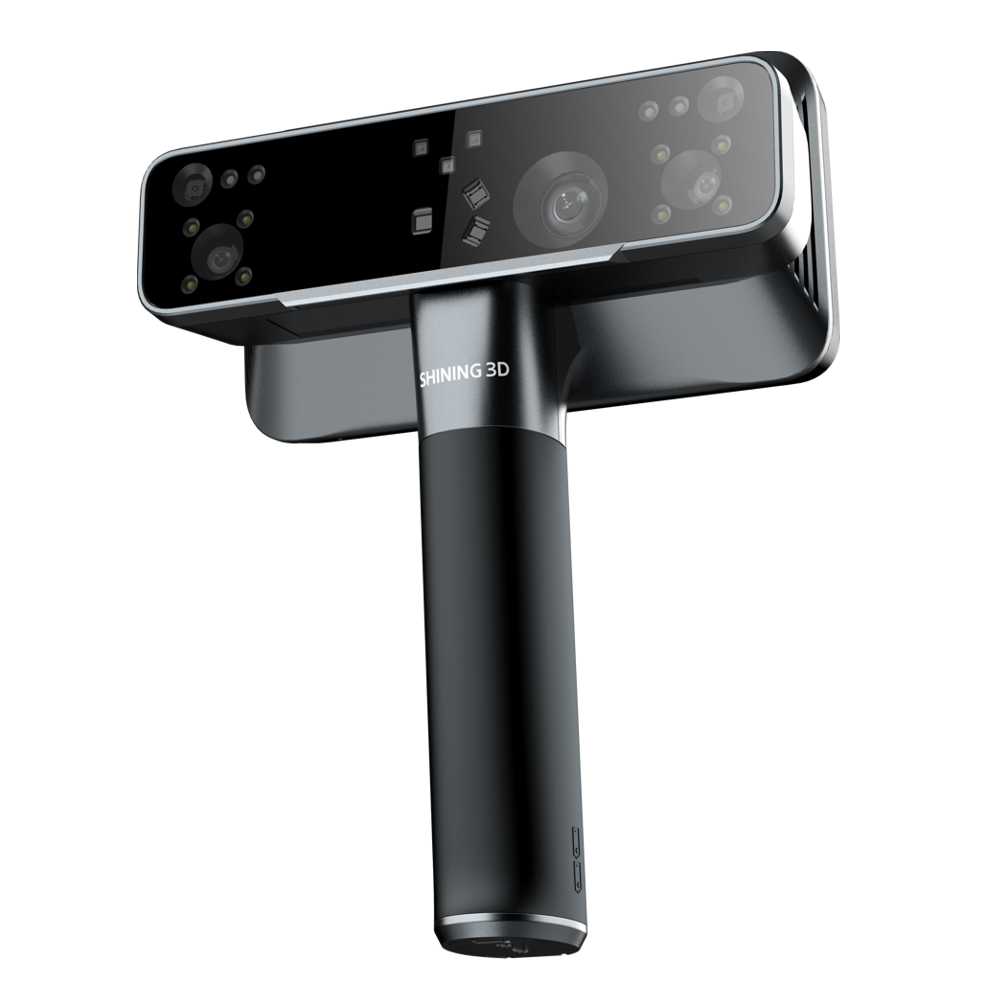
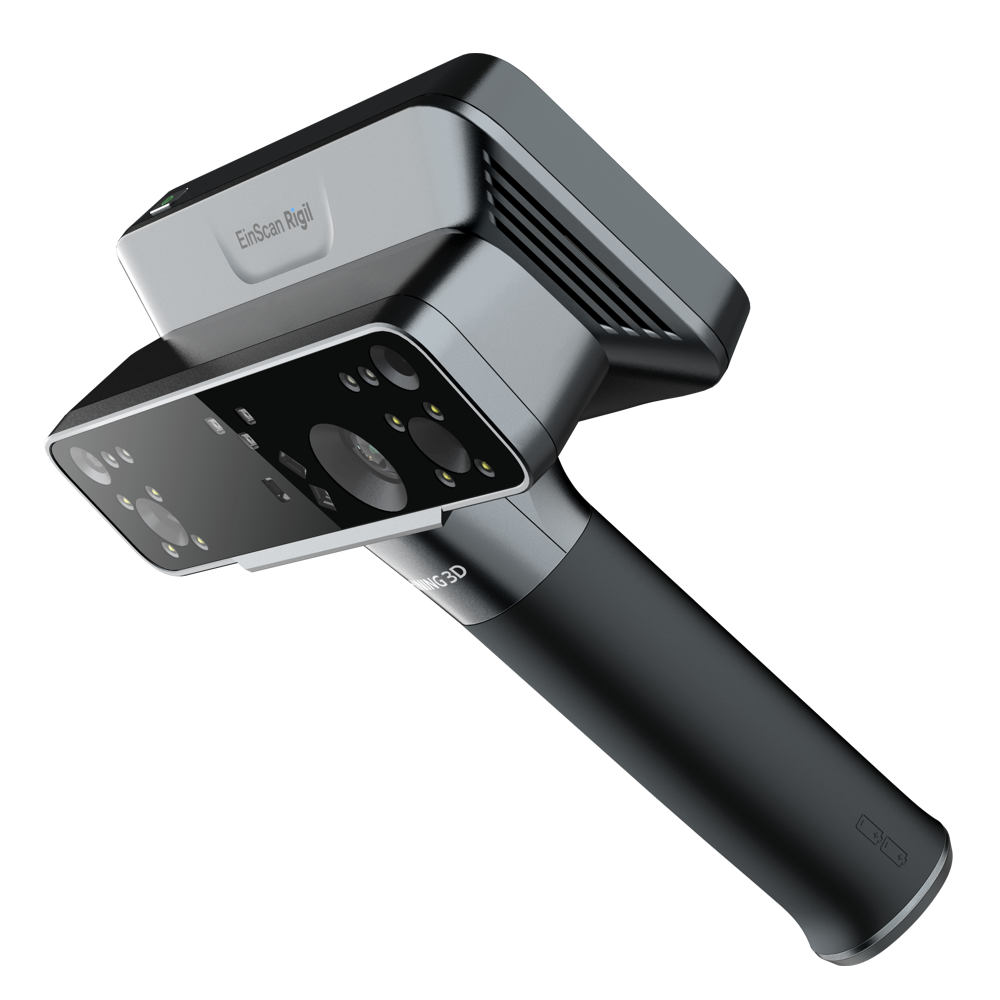
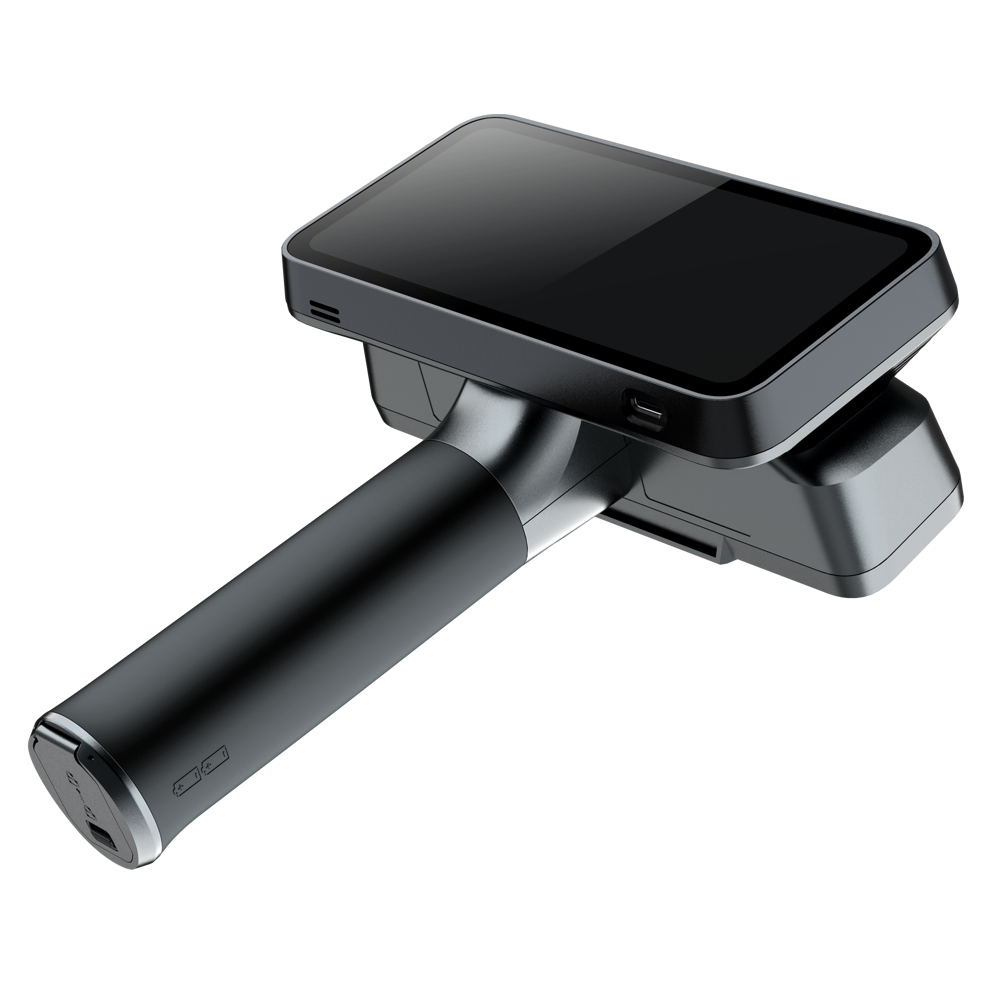
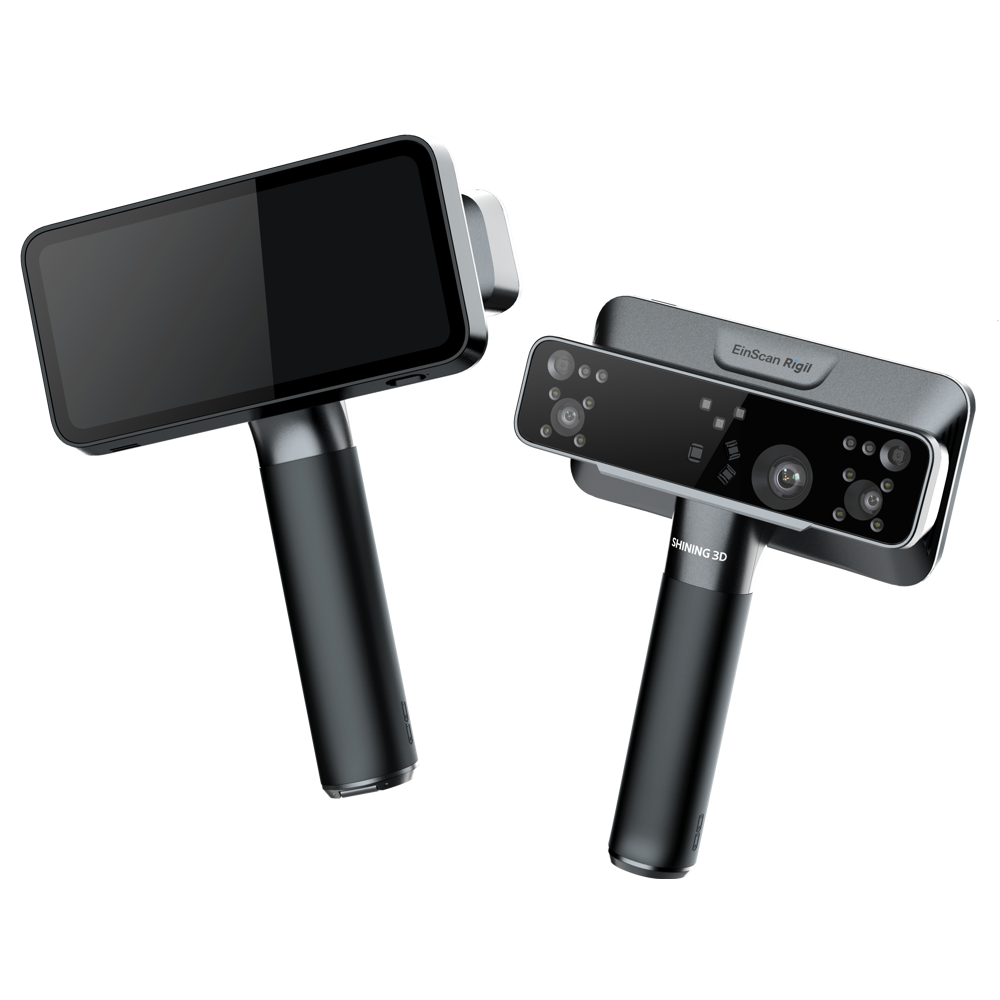
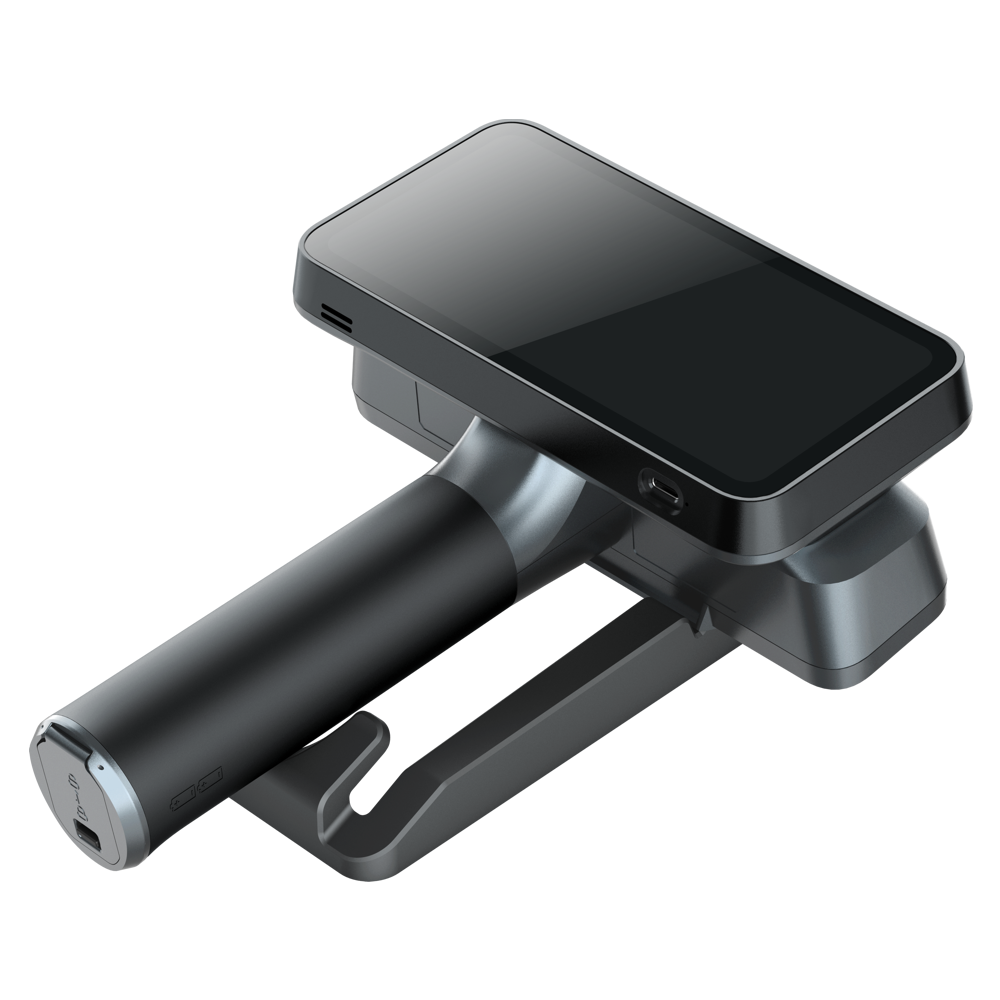
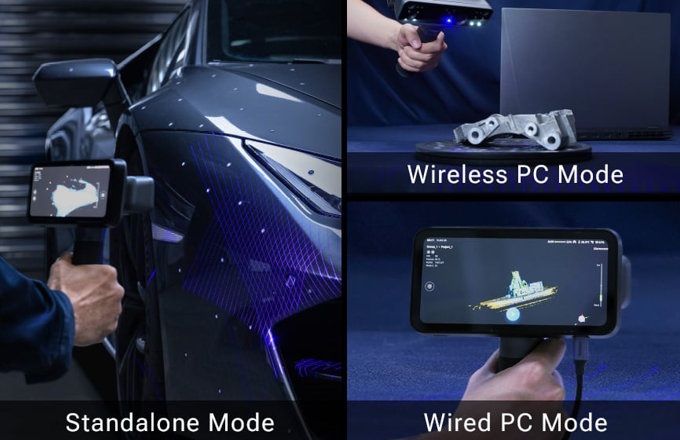
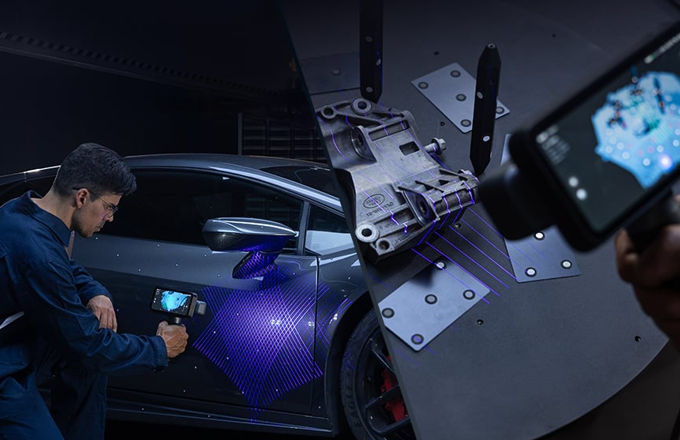
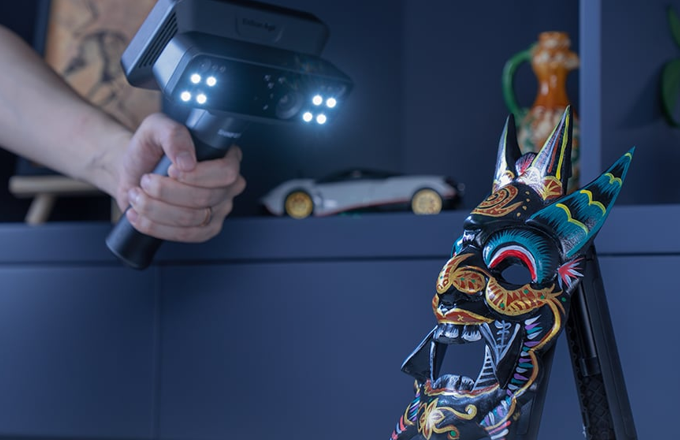
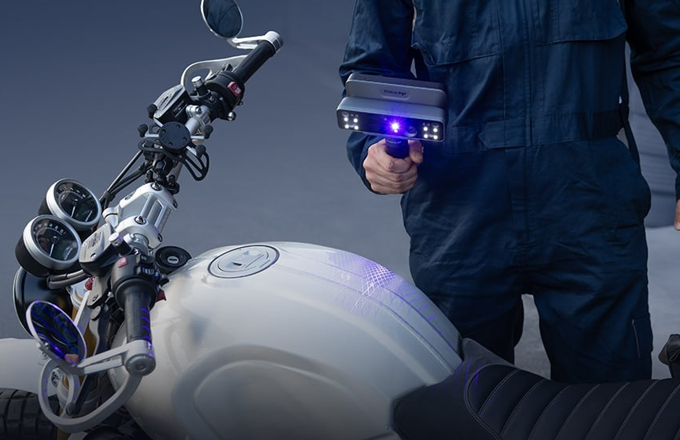
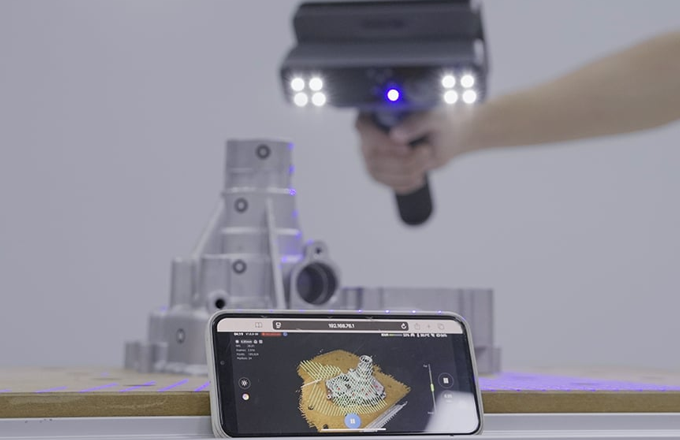
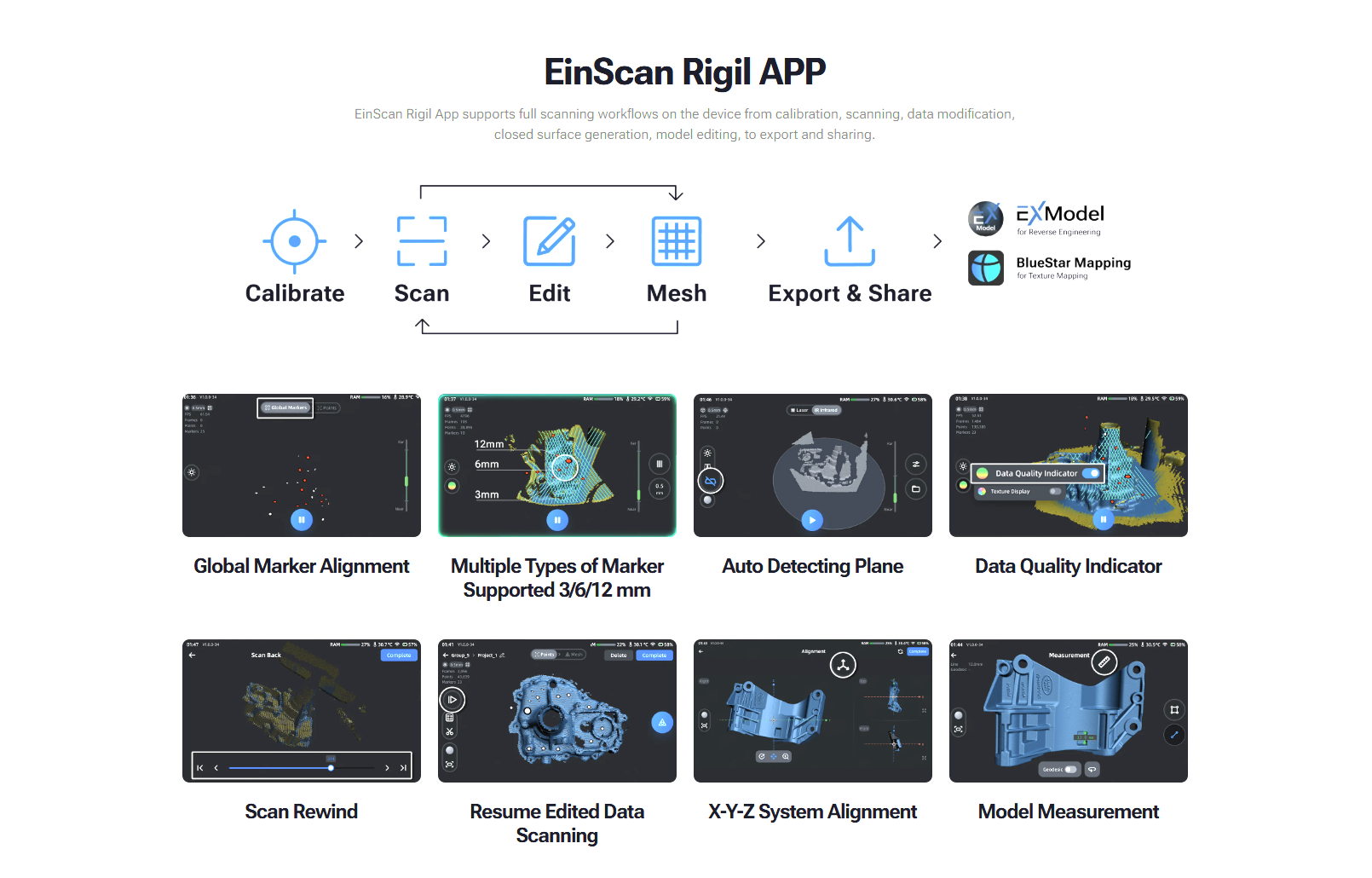
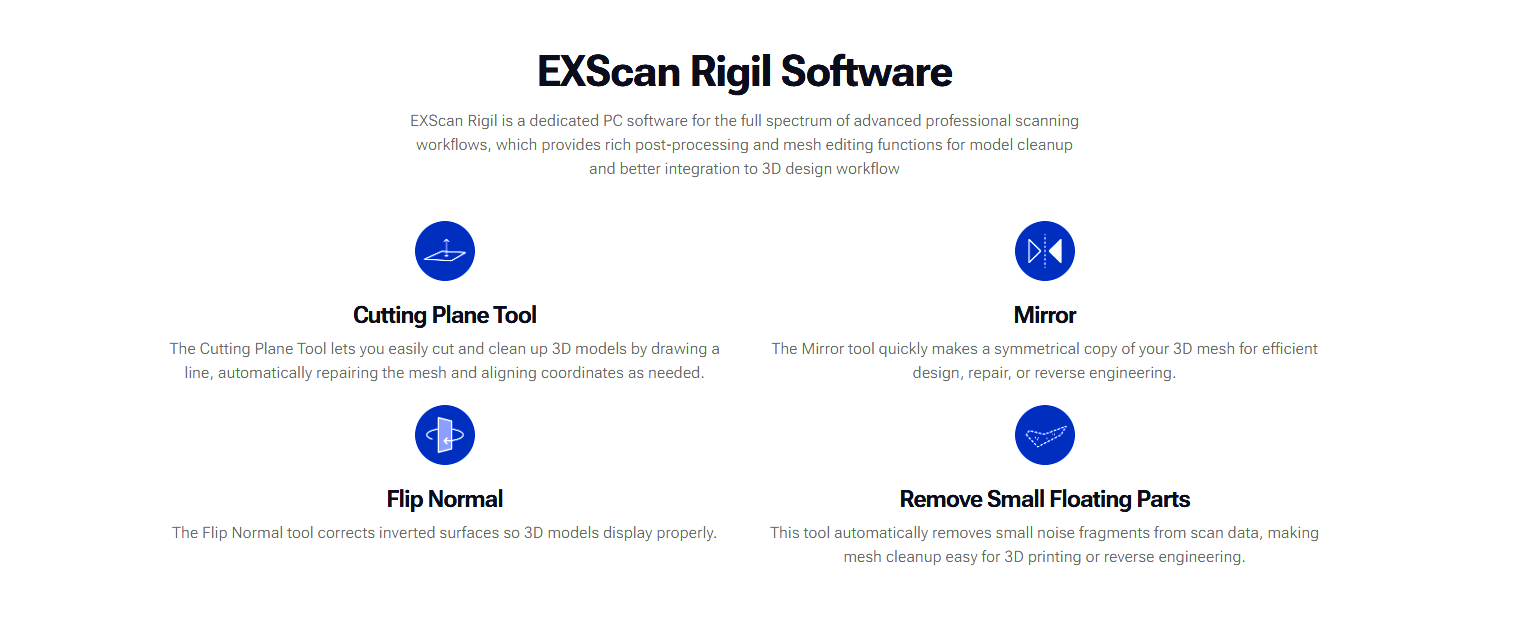
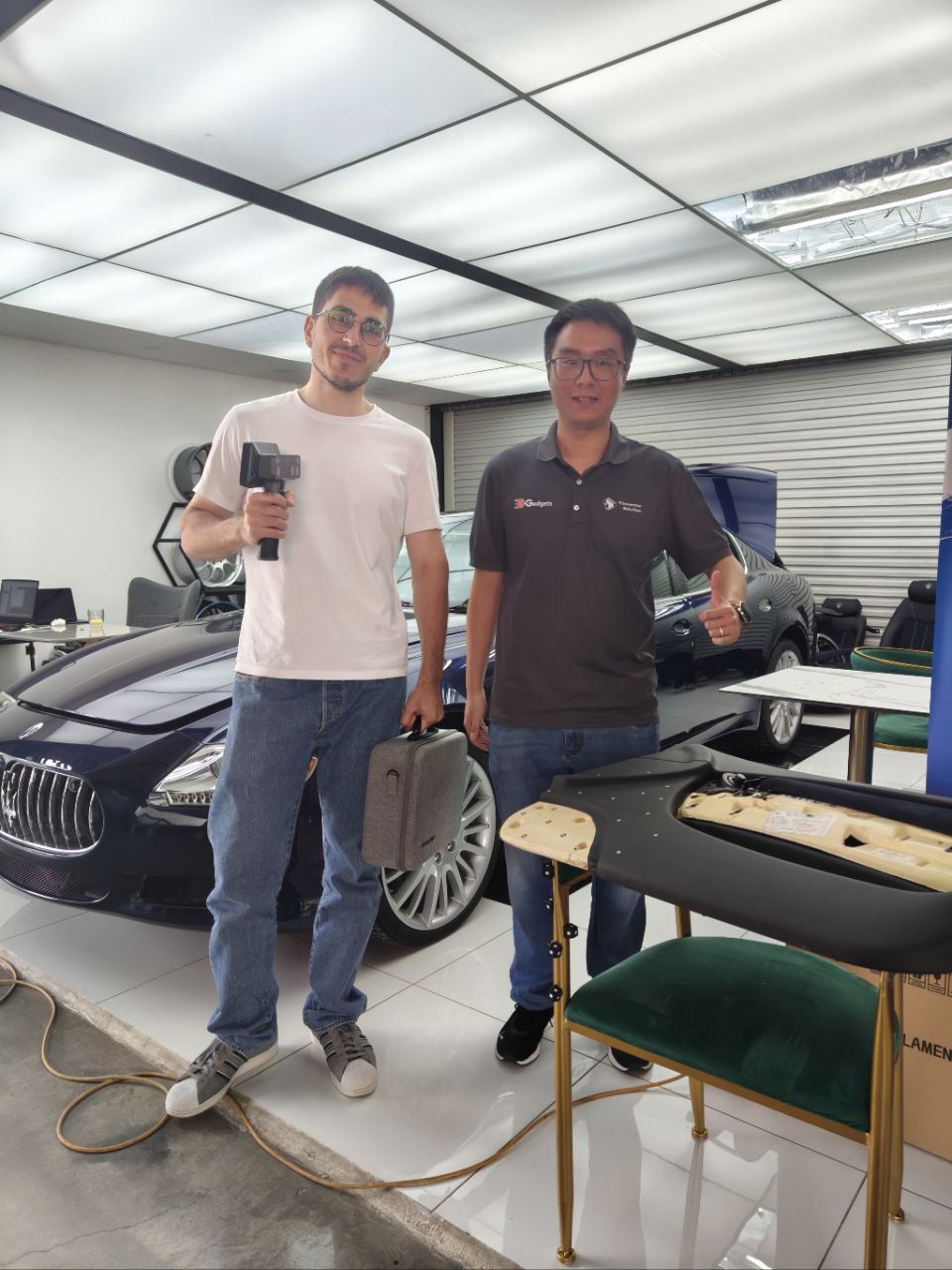
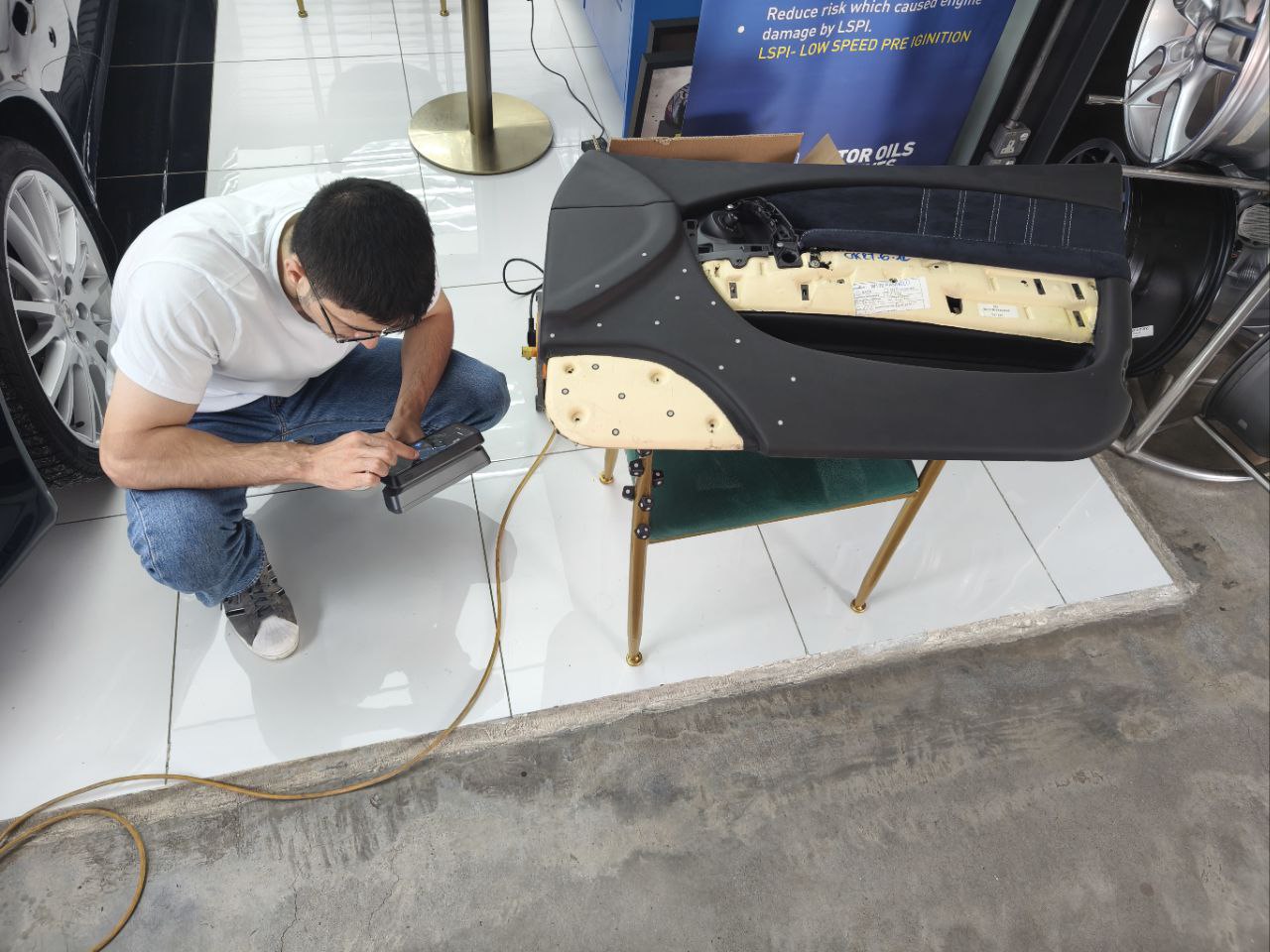
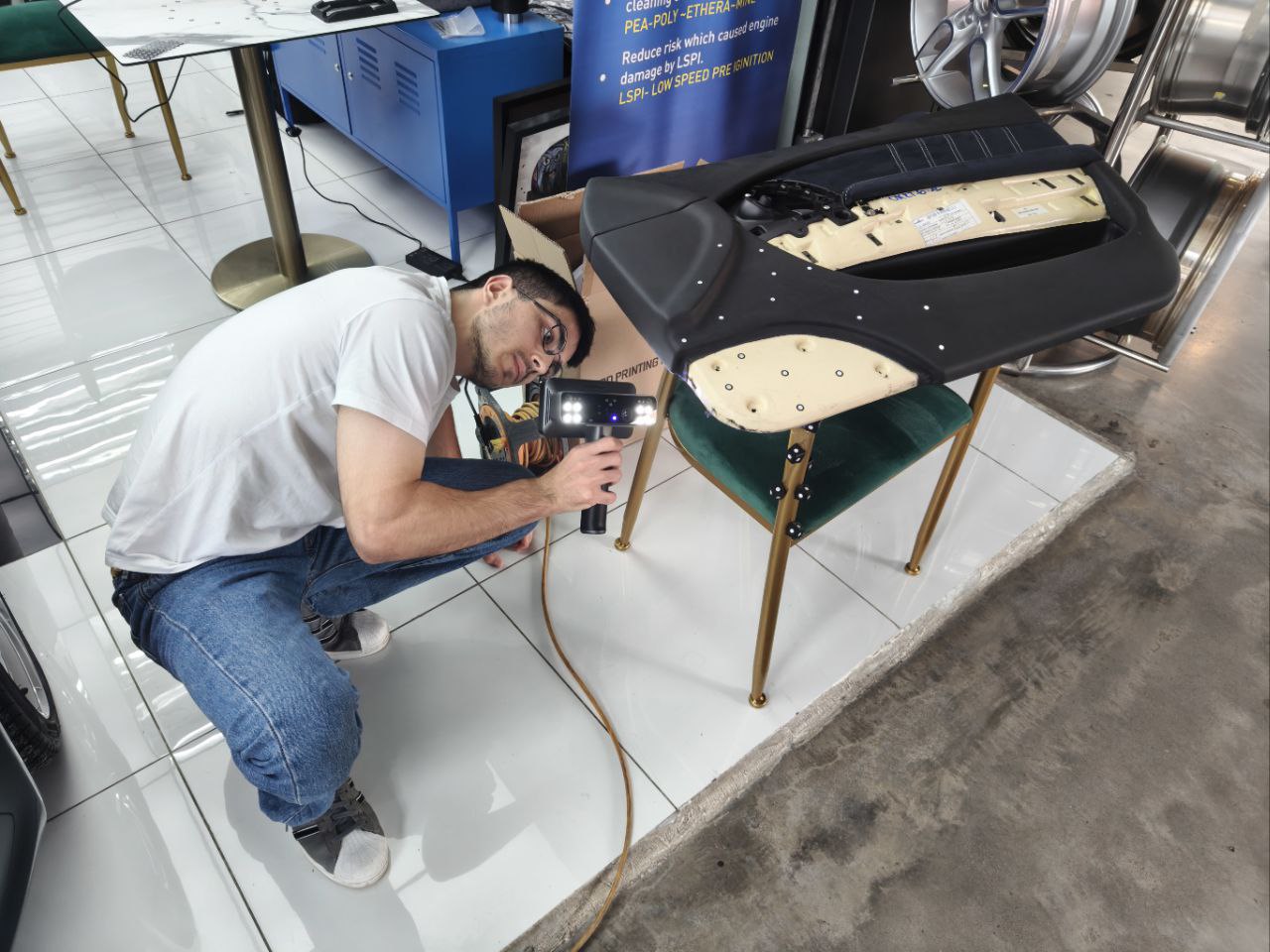
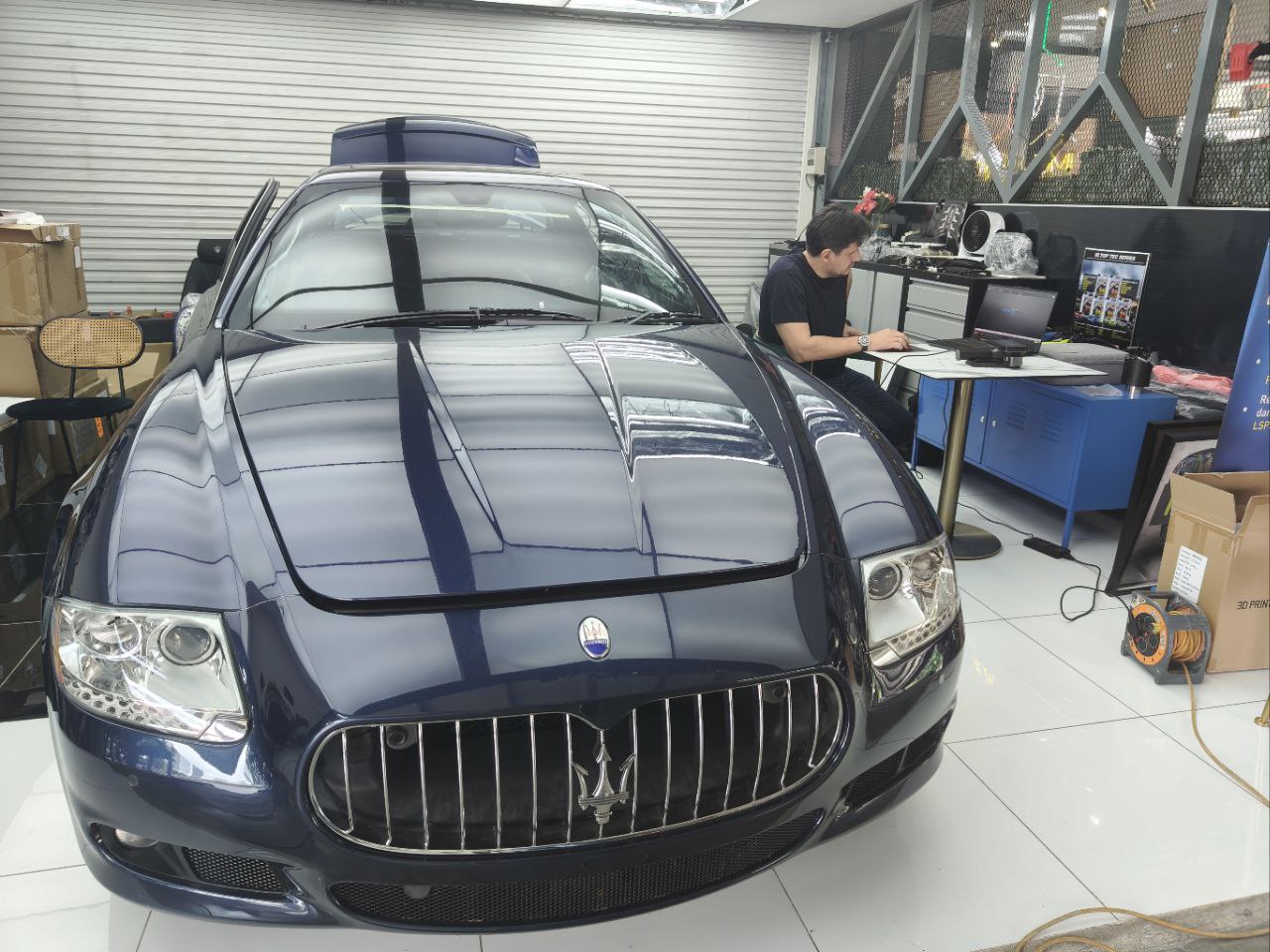
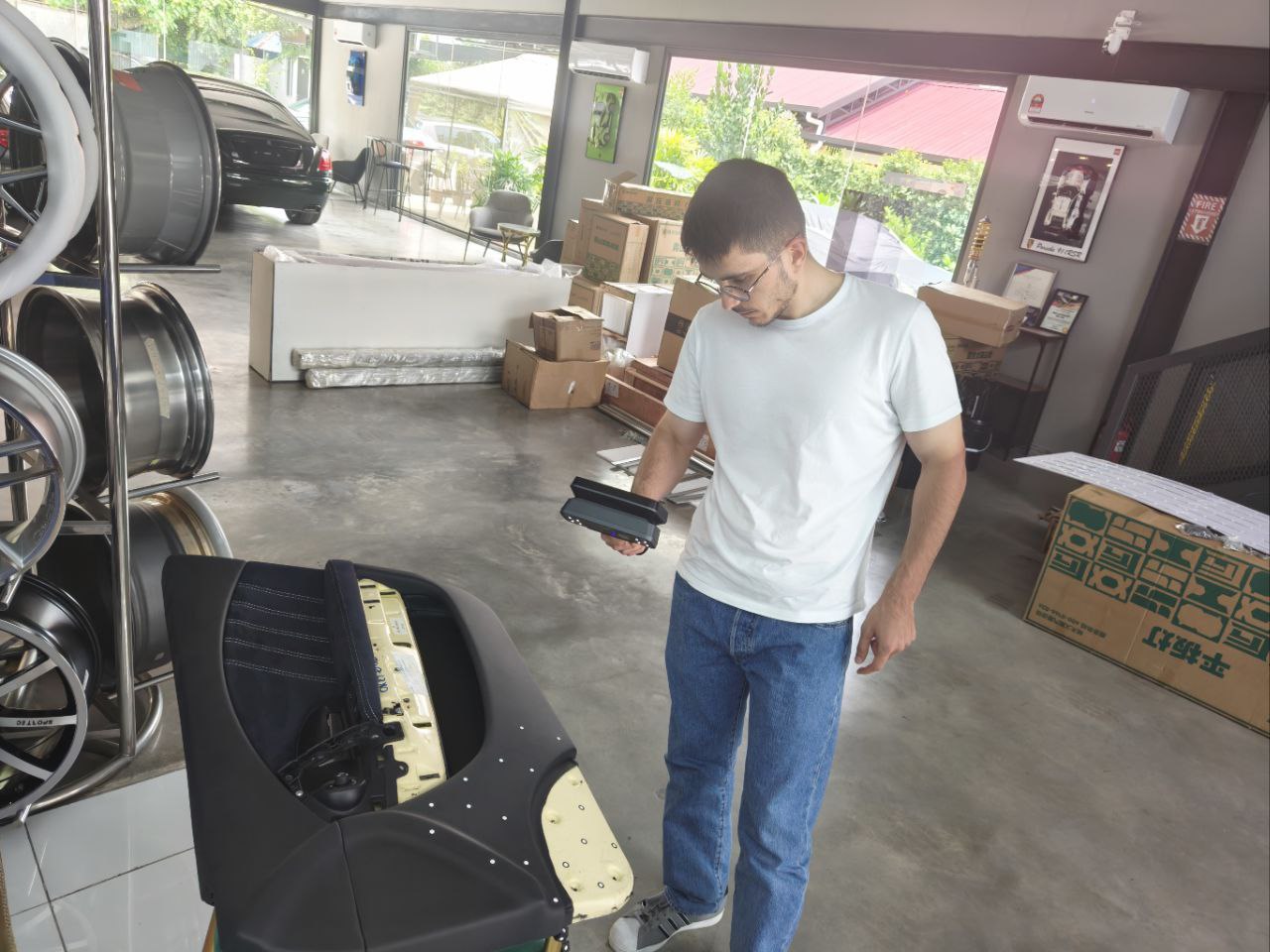
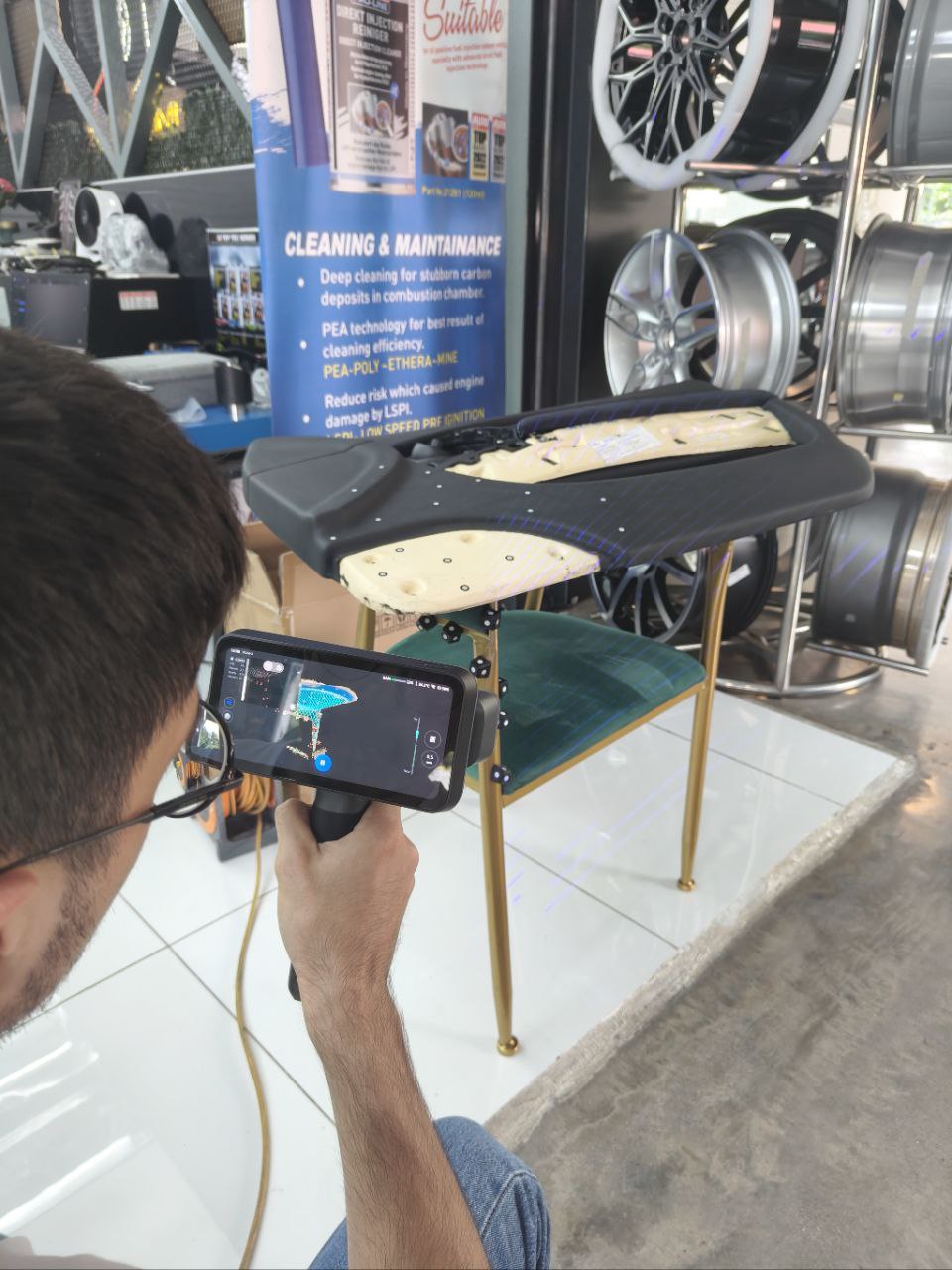
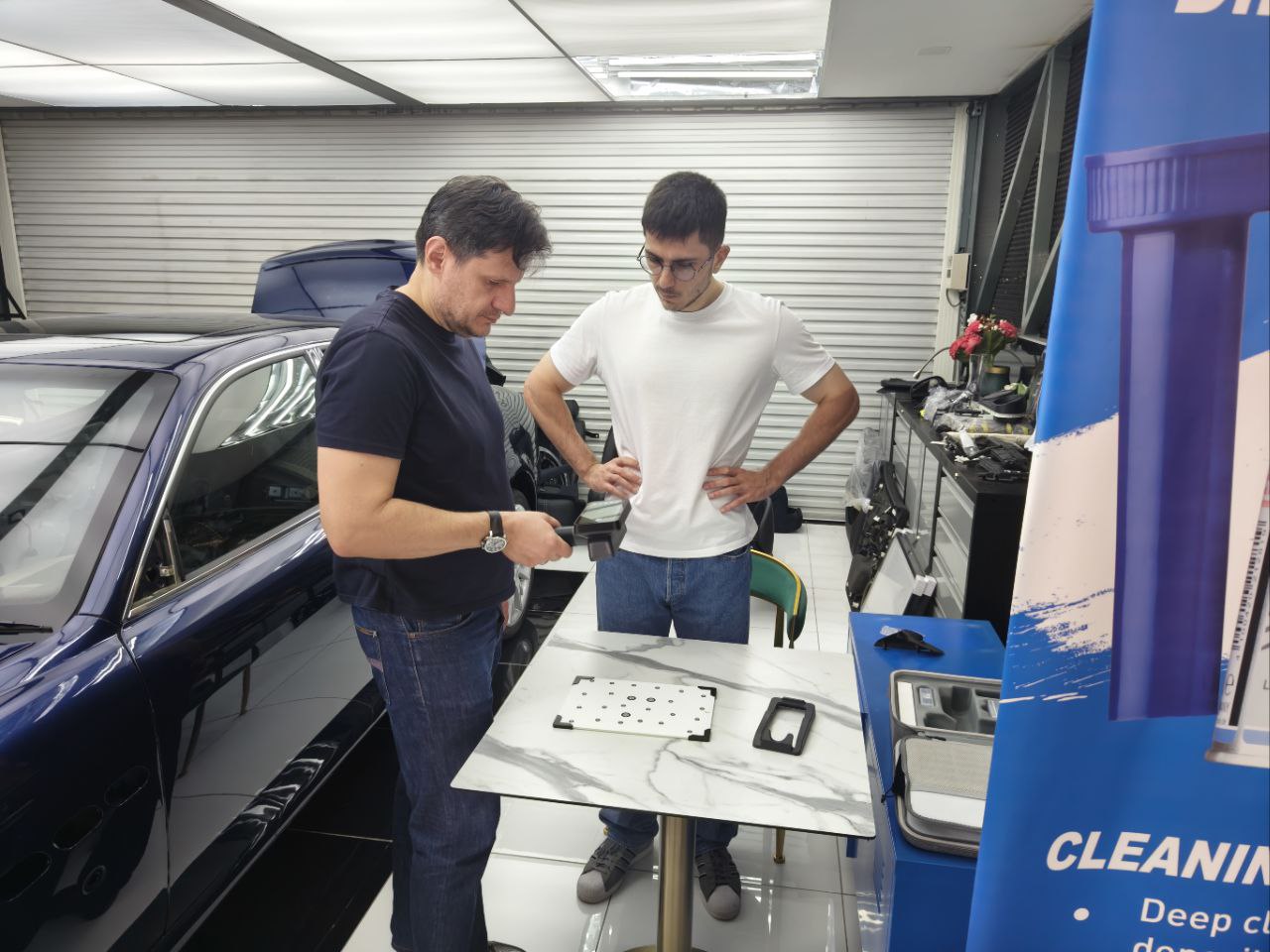
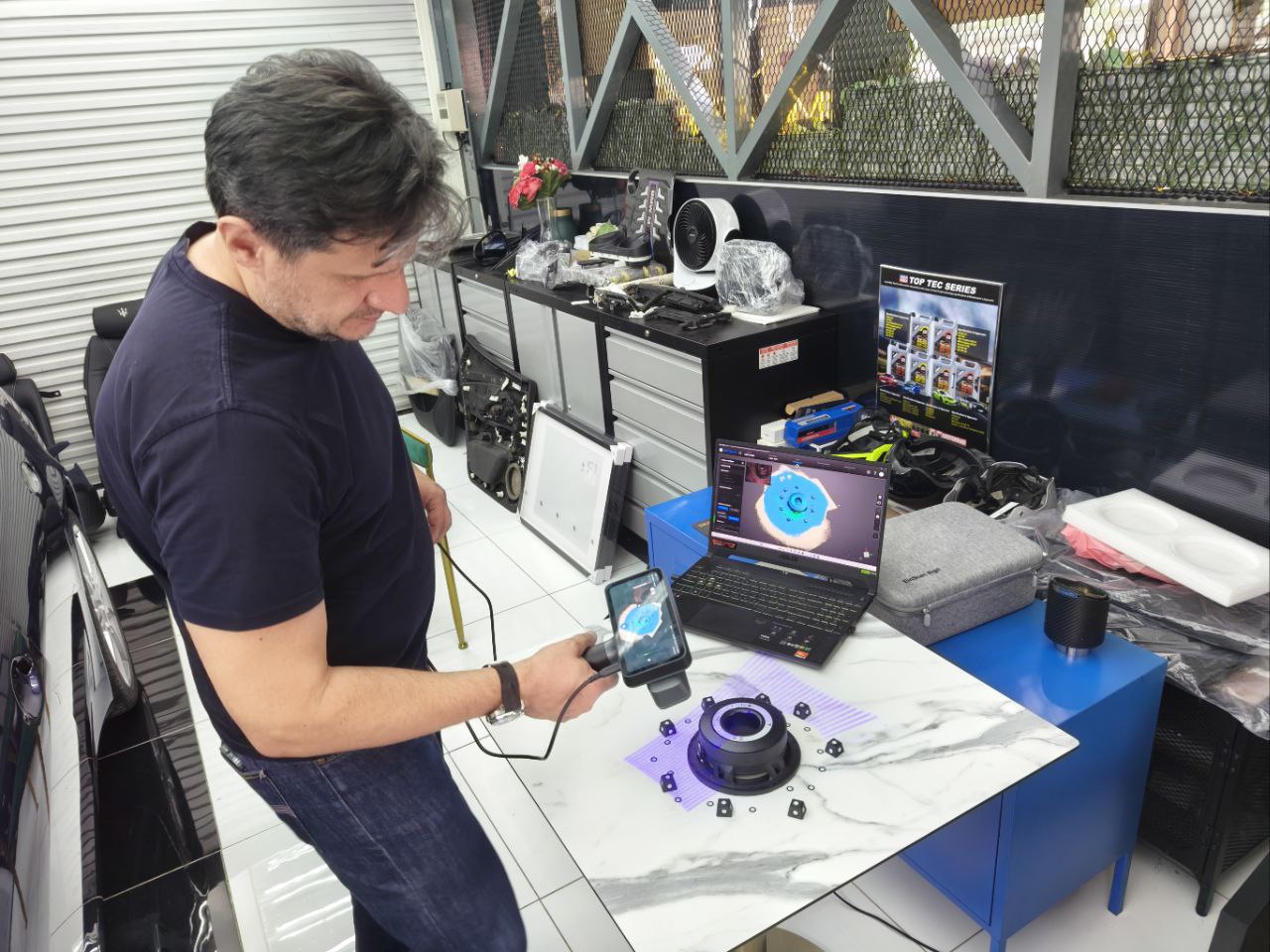
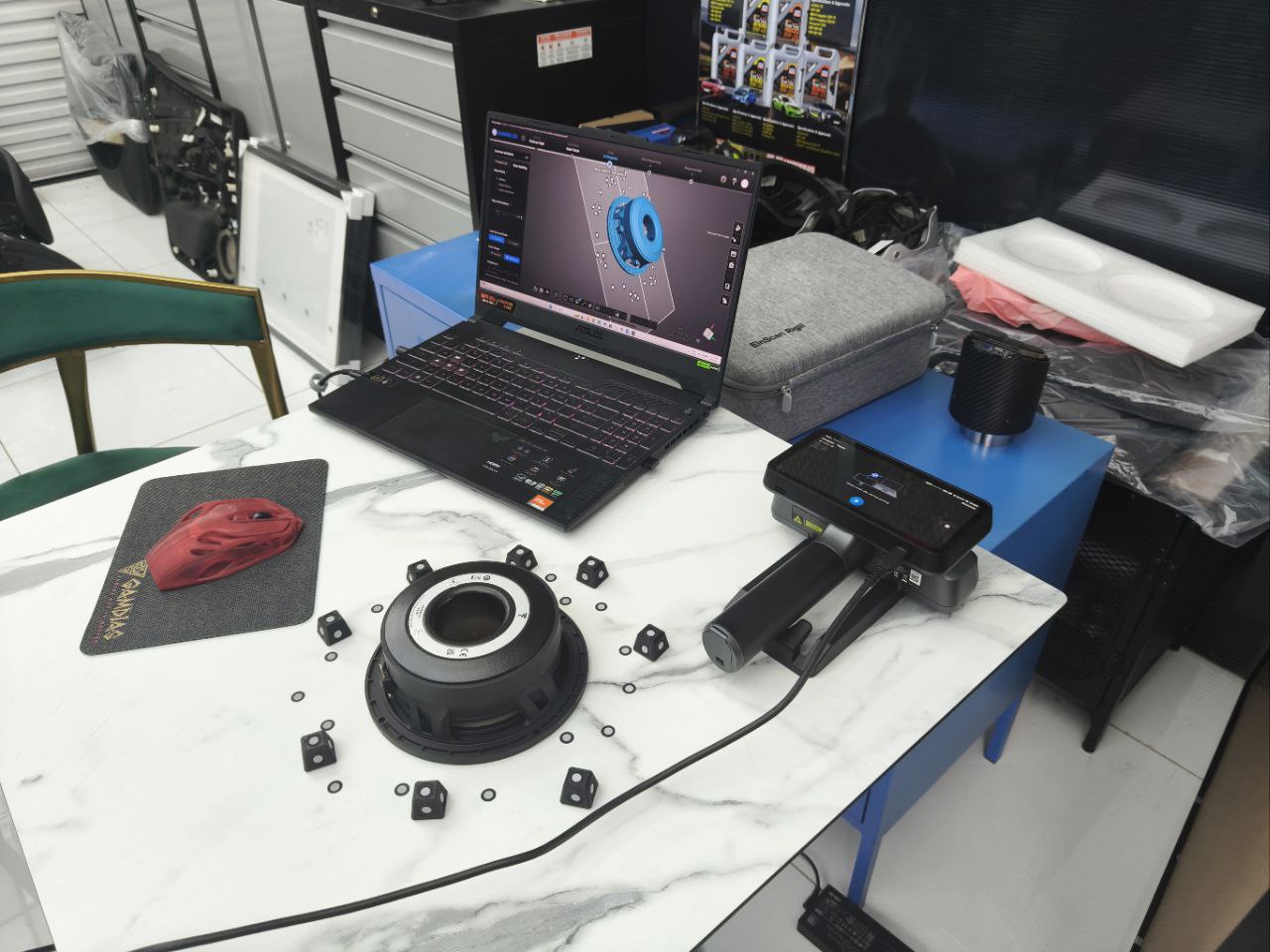
The EinScan Rigil is the world’s first tri-mode 3D scanner with computing built in: it runs standalone with its own screen, or off a PC over Wi-Fi, or wired when you want the fastest transfer. Two blue-laser modes and an infrared VCSEL mode share one handheld body, so a single device covers fine detail, big objects, dark surfaces and full-colour capture.
It sits in our professional tier — the range for engineering workshops, design and heritage studios and medical work where the tolerance is real but not dimensional-inspection tight. If your drawing calls for 0.02 mm on an assembly, the FreeScan UE Pro2 is the machine you want. If you need one handheld that starts work without a laptop and handles most jobs in the building, the Rigil is it.
Three ways to run it
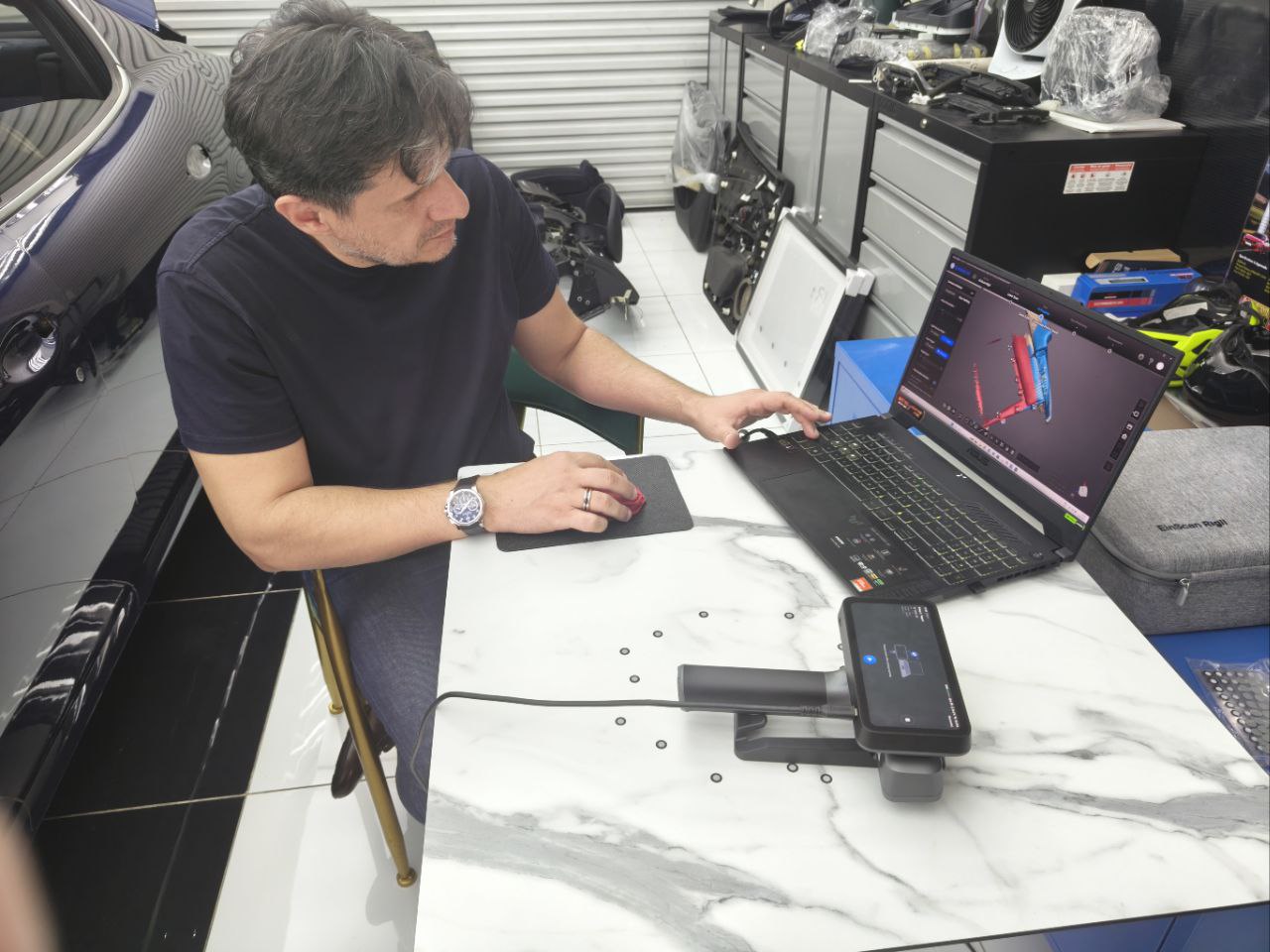
Standalone is the mode that changes day-to-day work: the scanner computes and displays on board, so you can walk up to a machine, scan it and see the mesh without setting up a laptop or hunting for a socket. Wireless PC hands processing to a workstation when you want more horsepower or a bigger screen, and wired PC is there for the longest sessions and the fastest data transfer. Switching between them does not change the scanner’s accuracy — only where the work happens.
Hybrid light: laser and IR in one head
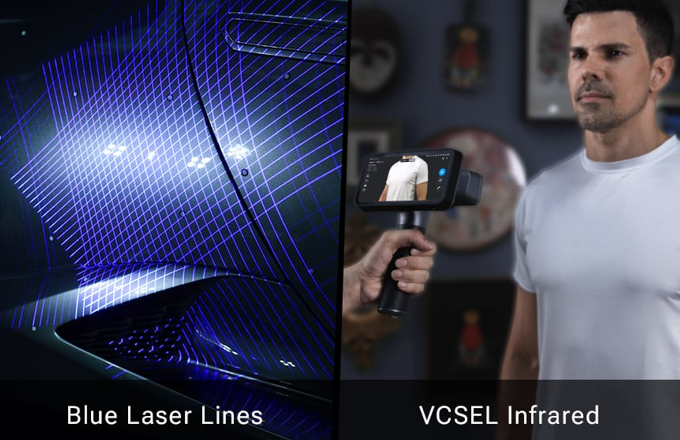
Two groups of cameras are built specifically to capture different light sources. The blue-laser modes deliver 19 + 19 crossed laser lines for fast capture, or seven parallel lines for clean edges and fine detail, with resolution down to 0.05 mm. The infrared VCSEL mode works marker-free over medium-to-large objects where laser lines would take longer to cover the same surface.
That combination is the practical answer to the usual compromise: laser handles black, glossy and machined surfaces without spray, while IR covers large areas quickly. Capture runs at up to 1.6 million points per second, with volumetric accuracy up to 0.04 + 0.06 mm/m.
Marker-free scanning, and why it matters
The Rigil uses a tracking algorithm that aligns scans from surface features rather than coded targets, so most parts need no preparation at all — nothing stuck to a painted panel, a mould or a museum object. Where a part is genuinely featureless, you fall back to targets as you would on any handheld; the difference is that it is the exception, not the routine.
Colour and texture, not just geometry
A 5 MP high-definition texture camera captures colour and material appearance alongside the shape, which is what makes the Rigil usable for heritage recording, product visuals, dental shade work and any job where the surface finish is part of the deliverable. There is a fuller colour conversation to be had if fidelity is the whole point — the EinScan Libre is the specialist there.
Where it sits in our range
The Rigil is the flexible middle of the EinScan family: more capable than a fixed desktop system for awkward or immovable parts, and far less setup than a tracked system. If the work is faces, bodies or texture-rich anatomy, the EinScan H2 is purpose-built. If the objects are vehicle-sized, or accuracy has to hold across metres, step up to the tracked EinScan Trak or the metrology FreeScan systems — the handheld, desktop and tracked guide walks through where those lines fall.
Typical jobs
- Reverse engineering and scan-to-CAD — housings, castings, moulds and legacy parts turned into editable models.
- Design and product development — digitising an existing product as the starting point for the next version.
- Workshop and on-site inspection support — a fast geometric check against CAD, or capture of a part that cannot come to a bench.
- Heritage and museum work — colour and texture recorded on objects that must not be marked or moved.
Buying and demonstration
The Rigil is quoted per configuration rather than sold from a headline figure, because the right package depends on the parts you scan, the output you need and the software your team will run. Most of what makes a system suit your work — the stand, the carrying case and the standard accessories — is included in the package. Tell us what you want to scan and we will quote against that job, and say plainly when a different tier fits better.
If the demand is occasional rather than continuous, buying scans from our 3D scanning service is usually the better financial decision than owning a system. Otherwise book a demo — we run them in Kuala Lumpur and on customer sites, using your own part wherever possible.