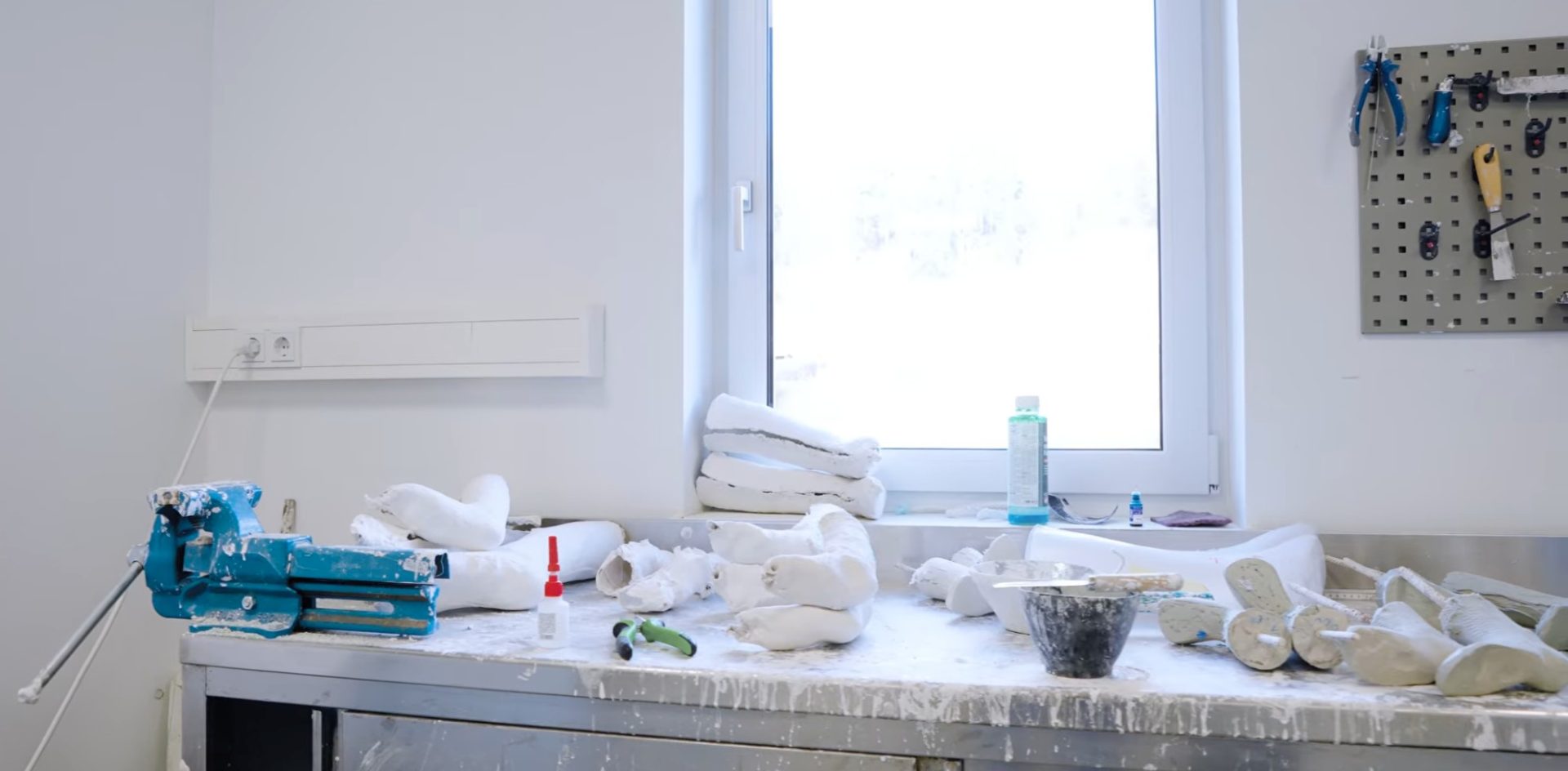
Plaster casting has been the standard for decades, but on an infant’s head — or an amputee’s residual limb — it is slow, uncomfortable and stressful for patients and families. It also introduces inaccuracy: every manual mold carries the risk of distortion.
3D scanning removes the plaster entirely. A handheld scanner captures precise surface data in seconds, and the digital model flows straight into design software and 3D printing. The result is a faster, cleaner and more accurate workflow — and a far better experience for the patient.
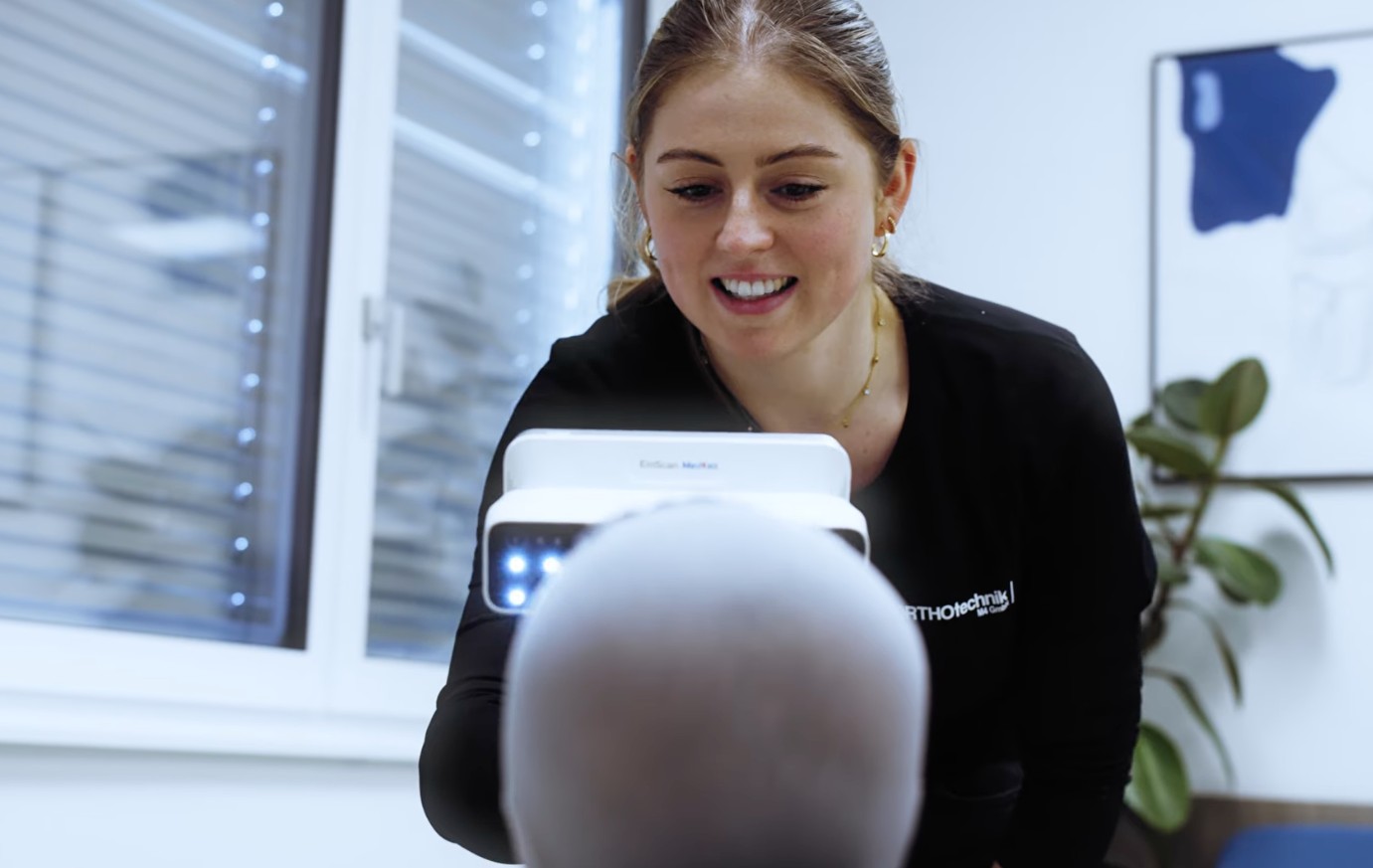
For infants with skull deformities, early cranial helmet therapy gently guides healthy development — but only if the head is measured accurately. Plaster casting an infant’s head is distressing for the child and stressful for parents.
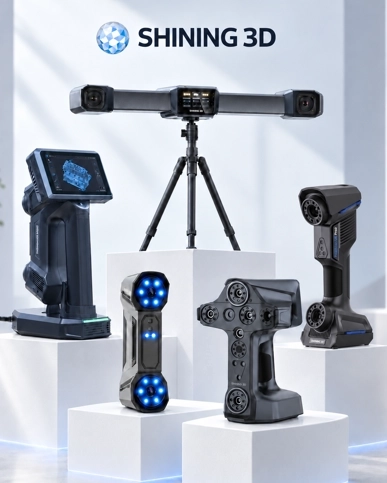
The EinScan Medixa is built specifically for orthotics and prosthetics. It is wireless and cable-free, with preset scan modes for different body parts, and its movement-compensation algorithm handles a wriggling infant — capturing an accurate head scan in seconds instead of a multi-step cast.
A clinic that switched to digital scanning reports the process is so smooth that “the children don’t cry.”


A prosthetic socket must fit the patient’s residual limb perfectly — it cannot be mass-produced, and making one by hand involves molding, counter-molding, adjusting, thermoforming, cutting and sanding: hours of work.
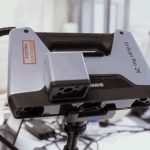
The EinScan H2 digitizes the whole process. Its 5MP colour camera captures the markings clinicians draw to indicate bone landmarks and trim lines; its movement-compensation algorithm tolerates slight patient movement; and it achieves up to 0.05 mm accuracy with 0.2 mm mesh resolution.
A complete scan takes around 10 minutes versus several hours of plaster work — and the digital socket can be designed and 3D-printed in days, not weeks.
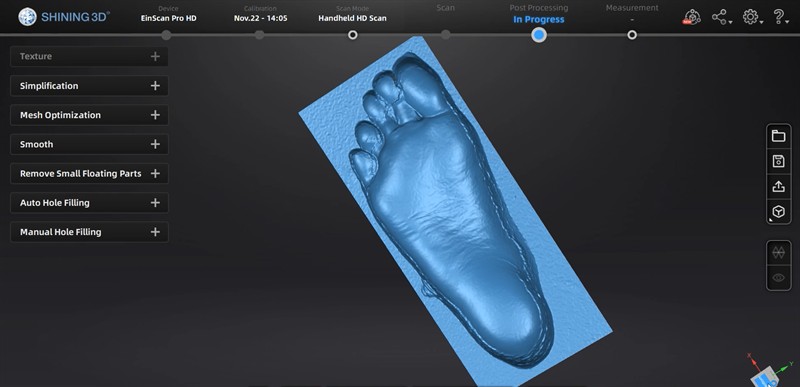
Custom insoles have moved from plaster-cast orthotics to 3D-printed precision orthotics delivered in days. The workflow starts by pressing the foot into foam, then scanning the foam impression with the EinScan Pro HD.
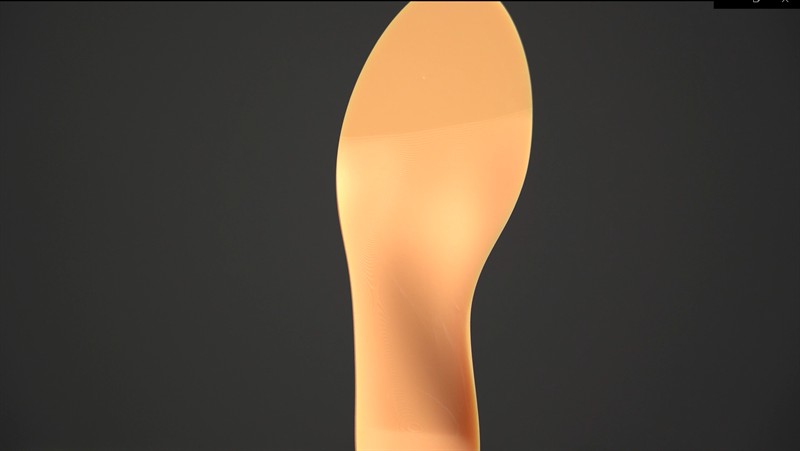
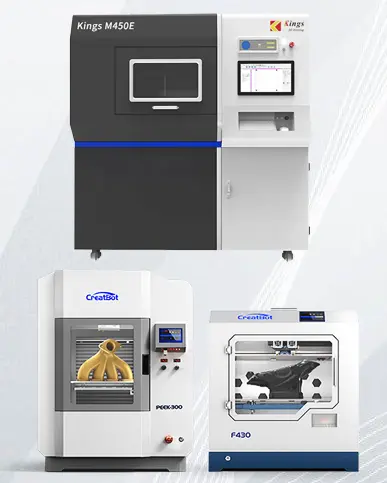
In its Handheld HD mode at 0.045 mm accuracy, the scanner captures the precise foot shape and texture. The data is cleaned in mesh-editing software, imported into CAD to design the insole, and printed on a resin 3D printer — a fully digital path from foot to finished insole.


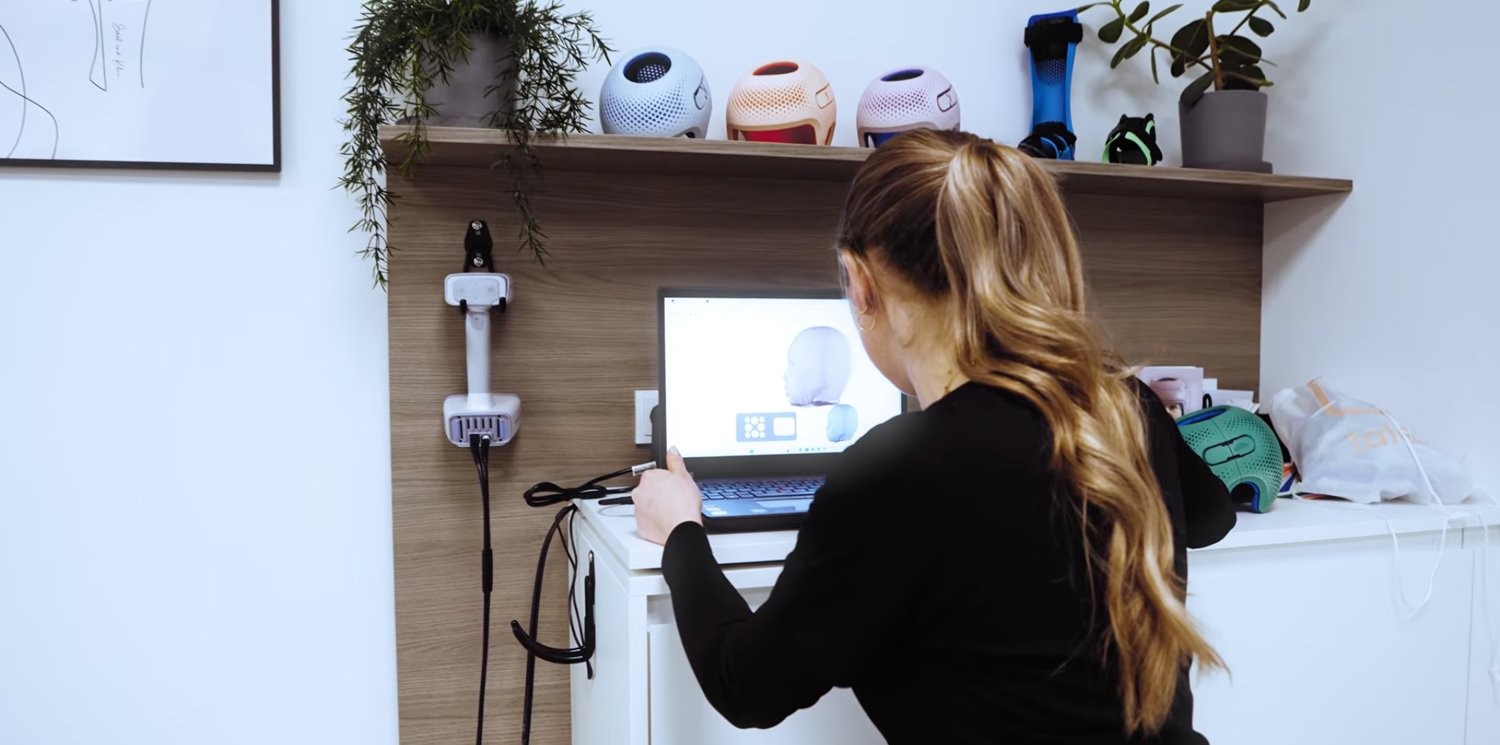
The common thread across cranial helmets, prosthetic sockets and insoles is the same digital pipeline: scan → design → print → fit. The scanner produces an accurate mesh; design software shapes it into a device; a 3D printer produces it.
For clinics and labs, this means fewer remakes, faster turnaround, and a digital record of every patient’s anatomy — ready for reprints, adjustments and long-term follow-up. It also frees clinicians to spend more time with patients instead of hand-finishing plaster.
| Factor | Plaster casting | 3D scanning |
|---|---|---|
| Patient comfort | Uncomfortable, stressful | Contact-free & fast |
| Time | Hours (multi-step) | Seconds to 10 minutes |
| Accuracy | Prone to distortion | 0.045–0.05 mm |
| Movement | Must stay still | Movement-compensated |
| Digital record | None | Reusable 3D model |
| Remakes / adjustments | Re-cast | Edit the digital model |
For orthotics and prosthetics, start with the purpose-built EinScan Medixa. For face and body scanning with photorealistic colour, use the EinScan H2. Pair with your design software and a resin 3D printer for a complete scan-to-fit pipeline.
Can I scan an infant’s head safely?
Yes — contact-free 3D scanning is safe, fast and non-invasive, and movement compensation handles a wriggling child.
How long does a scan take?
Seconds for a head scan; around 10 minutes for a full prosthetic socket — versus hours of plaster casting.
Can scan data go straight to 3D printing?
Yes — the mesh imports into design software and then to a resin 3D printer for a same-week device.
Do I need 3D design skills?
Not necessarily — preset workflows and pre-configured software make scan-to-design simple for clinicians.
Tell us what you treat or produce, and we will match the right scanner and workflow — with a live demo. Contact Trinventor Solution today.
Subscribe to our newsletter and stay updated.
Thank you for signing up. You will be the first to know the Industry news, upcoming products, latest technology and special promotion.
Stay Tuned.