Jewelry Laser Engraving in Malaysia: Names, Dates and Logos That Last
Jewelry Laser Engraving in Malaysia: Names, Dates and Logos That Last
Quick verdict: Laser engraving is the standard for jewellery because it is non-contact — no clamping, no pressure, no risk to delicate settings. A fiber laser like the xTool F2 Ultra marks gold, silver and stainless with the fine detail inside-ring engraving demands.
Engraving a name inside a ring or a date on a pendant used to mean a steady hand and a burin, and one slip ruined the piece. A laser marks gold, silver and stainless without touching the piece at all.
For a Malaysian jeweller that is the difference between same-day personalisation and sending the work out.
Why laser for jewellery
Method
Precision
Speed
Risk
Best for
Hand engraving
Skilled, variable
Slow
High — one slip ruins it
Bespoke, one-off art
Rotary/drag engraving
Limited detail
Medium
Surface pressure
Flat metal plates
Laser engraving
Extremely fine
Seconds
Low — no contact
Names, dates, fine logos, inside rings
Laser engraving is non-contact — the beam marks the metal without clamping or pressing, which is why it’s safe for delicate settings and thin pieces.
What actually gets engraved
Inside a ring band — a name, a date or coordinates, run around the band.
Pendants and lockets — initials and short messages, usually on the back where the surface is flattest.
Bracelets and bangles — logos and dedications, wrapped around the curve on a round bangle.
Watch casebacks — monograms on thin material, where depth control matters more than contrast.
Charms, tags and signet faces — small flat faces that suit fine text and miniature logos.
A pendant back is a flat plate with a sentiment on it; a ring band is curved, enclosed and already finished.
Why the inside of a ring band is the hardest spot
Four difficulties stack on a band’s interior:
The surface is tiny. Allow for the comfort curve, shoulder and edge radii, and the usable height is far less than the band width suggests.
It curves in two directions. A band interior is a cylinder, so the surface falls away from the lens across the width and around the circumference at once.
There is nowhere to hide. Outside a piece a heavy mark becomes part of the design; inside a band it is the only feature on a plain surface.
The piece is already finished. It has been sized, polished and set; the metal is thin, and no polishing step is left to disguise a mistake.
That is the whole problem: a misaligned mark on a flat plate is scrap metal, while the same mark on a wedding ring is a destroyed object. Ring work is done in a fixture, with the setting proven on a scrap band first.
What can and cannot be engraved
The finish matters as much as the material: two rings in the same alloy behave differently if one is mirror-polished and the other satin-brushed.
Material or finish
Marks well?
Risk to watch
Gold (9k–24k)
Yes — clean, high contrast
Soft at high carat; depth cannot be polished out later
Silver
Yes — strong contrast
Polished silver reflects the beam; tune settings or it washes out
Stainless steel
Yes — also takes colour marking
Hard surface gives shallow depth; contrast comes from settings
Titanium
Yes — annealed marks, colour with MOPA
Grades react differently; test the alloy you stock
Brass and copper
Yes — decorative marks
Copper tarnishes; the mark changes with the patina
Plated jewellery
Risky — the beam removes the plating
Microns thin: the mark exposes base metal of another colour
Painted, enamelled or lacquered surfaces
Risky — usually a UV job
A fiber laser burns the coating away rather than marking it
Gemstones
No — not laser-marked
Fracture or surface damage with nothing gained
Unknown alloys and costume jewellery
Generally refused
No predictable result, and no way to recover the piece
Plating is the most common disappointment: the customer sees a gold-coloured ring and expects a gold ring’s result, but the beam cuts through the finish. Refusing work is part of the service, because a reputation is built on pieces that come back looking right.
Where a mark is wanted near a setting, it is planned clear of the claws, and the piece is tested first.
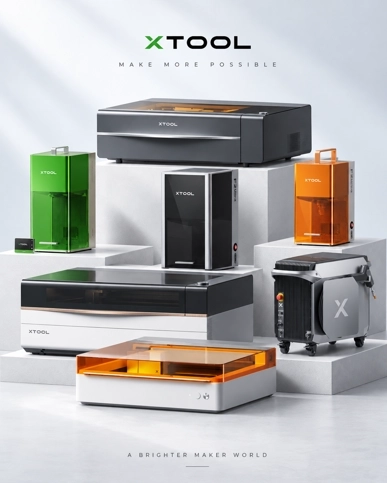
The machine: xTool F2 Ultra
The F2 Ultra pairs a 60W MOPA fiber source with a 40W diode, so one machine covers fine metal detail and colour marking.
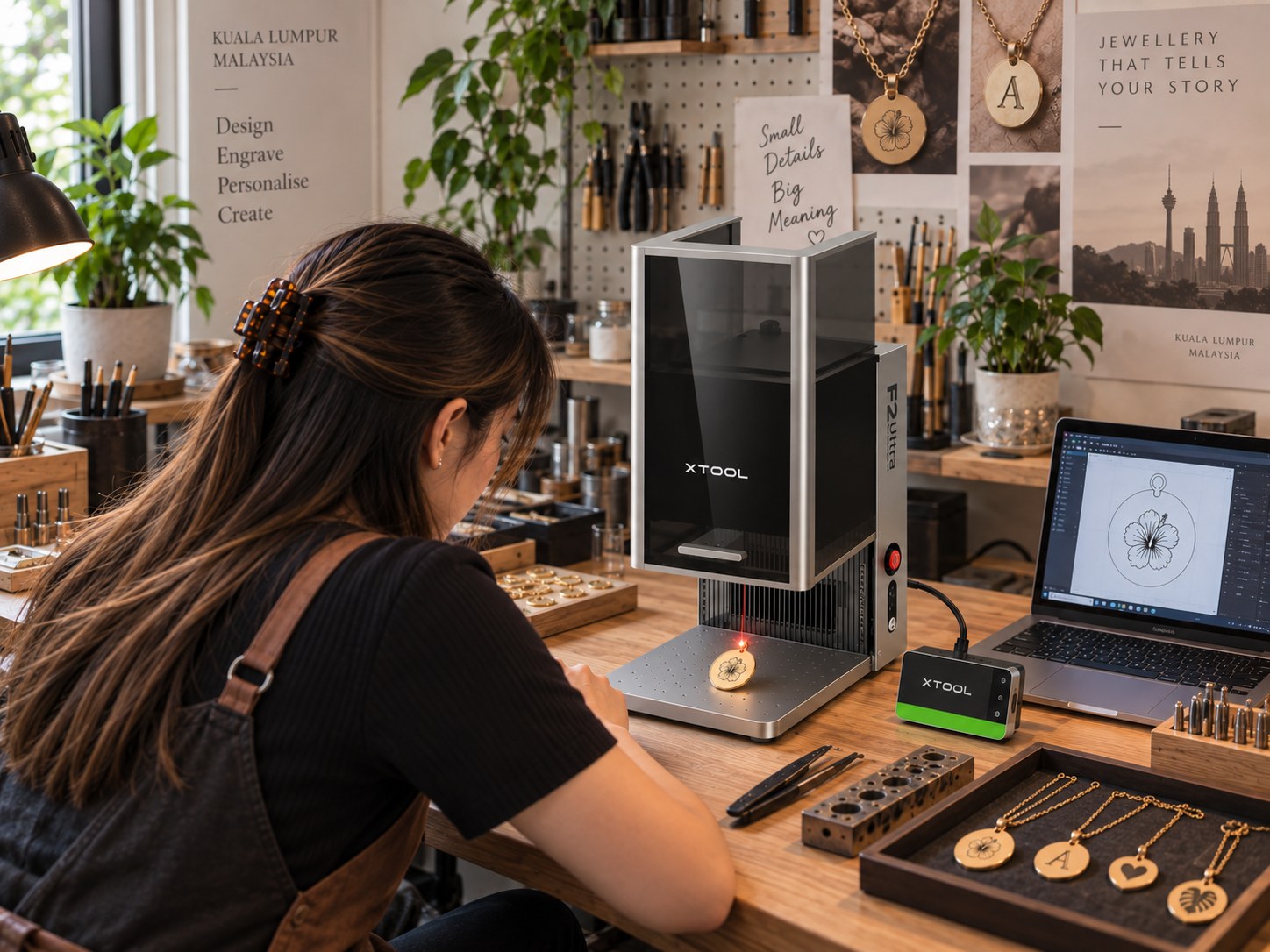
The F2 Ultra is the jewellery workhorse — a 60W MOPA fiber laser plus a 40W diode source, with onboard cameras for positioning on small pieces.
Fine detail — a spot fine enough for tiny text inside a ring.
Colour marking — black, white and colour marks on stainless and titanium.
Repeatable — the same name, the same result, every time.
Work area — 220 × 220 mm, or 220 × 500 mm with the conveyor.
The fiber source does the metal work: 1,064 nm light is absorbed by gold, silver, stainless, titanium, brass and copper. The machine also cuts brass and stainless up to 2 mm, useful for tag blanks.
MOPA is not simply a more capable fiber source. Pulse duration and frequency are controllable, so the mark can be tuned — and at the right settings stainless steel and titanium take a colour mark instead of a black one. Being a controlled surface oxide rather than a coating, nothing sits on top of the metal waiting to wear off.
On jewellery that is a premium finish: a subtle grey or blue-black mark on polished titanium reads as deliberate design.
UV solves the opposite problem. The F2 Ultra UV runs a 5W source at 355 nm with a spot under 10 microns, breaking bonds at the surface rather than heating the material through. That suits coated, painted and anodised pieces, and assemblies with resin inlay or a stone set close to the mark. Bare metal takes fiber with MOPA; a delicate, coated or heat-sensitive surface takes UV.
Sizing and legibility at ring scale
An engraving fails either by being wrong or by being right and unreadable, and the second is more common than people expect.
Measure the usable height first, then choose the type size, and run the text around the band rather than across it.
Choose open letterforms. At ring scale the spacing inside the letters carries the legibility; thin hairlines and narrow counters turn into a grey smear.
Stay on one line where you can — a second line is a second chance of misalignment on a curved band.
Depth is not contrast. On polished metal a deep mark reads worse than a shallow high-contrast one, because depth gathers shadow and residue.
A proof on a scrap piece of the same alloy, photographed at the size the customer will see it, settles it in minutes. We will engrave one of your own pieces so you can judge the result.
Why test pieces and a proof matter
Wood can be sanded and acrylic re-cut. A finished wedding ring cannot be sanded back to a plain surface or swapped for an identical blank, which is why this trade runs on test pieces.
Keep a test library. Save marked offcuts of every alloy and finish you stock; in a year it answers most customer questions before the machine is switched on.
Confirm the copy in writing. The most common engraving error is a spelling mistake, not a machine error.
Retail customers versus wholesale for jewellers
The same machine does both jobs, but they are organised differently.
Retail engraving
Wholesale engraving for jewellers
Volume
One piece at a time, on demand
Batches, usually the same mark repeated
What decides
The customer’s own words
Placement, size and consistency across the run
Turnaround
Minutes, at the counter
An agreed lead time against a delivery date
Biggest risk
Rushing a piece that cannot be replaced
Marks landing in a slightly different place each time
What makes it work
A proof the customer approves
Fixtures, so piece fifty matches piece one
Wholesale is where a laser earns its place, replacing the courier trip to a subcontractor. A trade customer wants consistent placement and a date they can plan around, which is a fixture question rather than a machine one.
Personalisation changes the nature of the purchase rather than adding to it: the ring is already chosen, and the customer has not considered that it could carry something only they would know is there.
Decided at the counter. Offer it while the piece is in hand; a customer who has left rarely comes back for an engraving.
Same-day, no new inventory. The mark takes seconds, and the margin sits on stock you already hold.
Can you engrave the inside of a ring that still has its stone set? Usually yes — the stone is not in the marking path inside a band, and nothing presses on the setting.
Will laser engraving damage a gold-plated ring? It will expose the base metal, because plating is only microns thick and the mark shows a different colour underneath.
Can you engrave a gemstone? No. Gemstones are not a marking surface, and attempting it risks fracture with nothing gained.
How small can the text be? Small enough that legibility, not the machine, is the limit; a proof on a scrap band settles it.
Which machine do I need for jewellery — fiber or UV? Fiber with MOPA for gold, silver, stainless, titanium, brass and copper, with colour marking on stainless and titanium. UV for coated, anodised or heat-sensitive pieces.
Engraving quality depends on the alloy and finish, so the only honest way to judge is a sample. Send us a ring or pendant — we’ll engrave it free, photograph the result, and you decide.
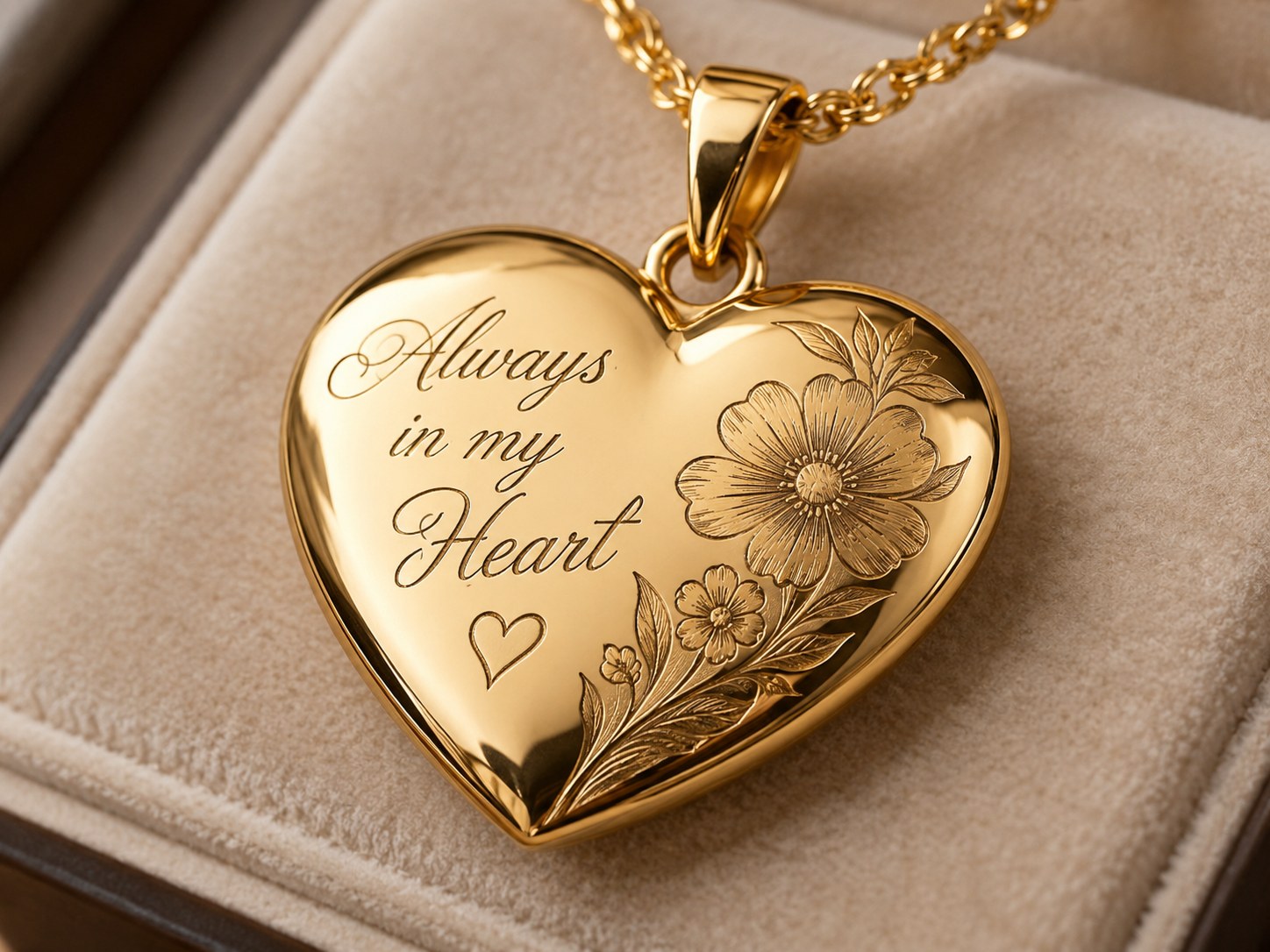
Detail is the whole job on jewellery: script and a floral motif cut cleanly into a polished gold face.
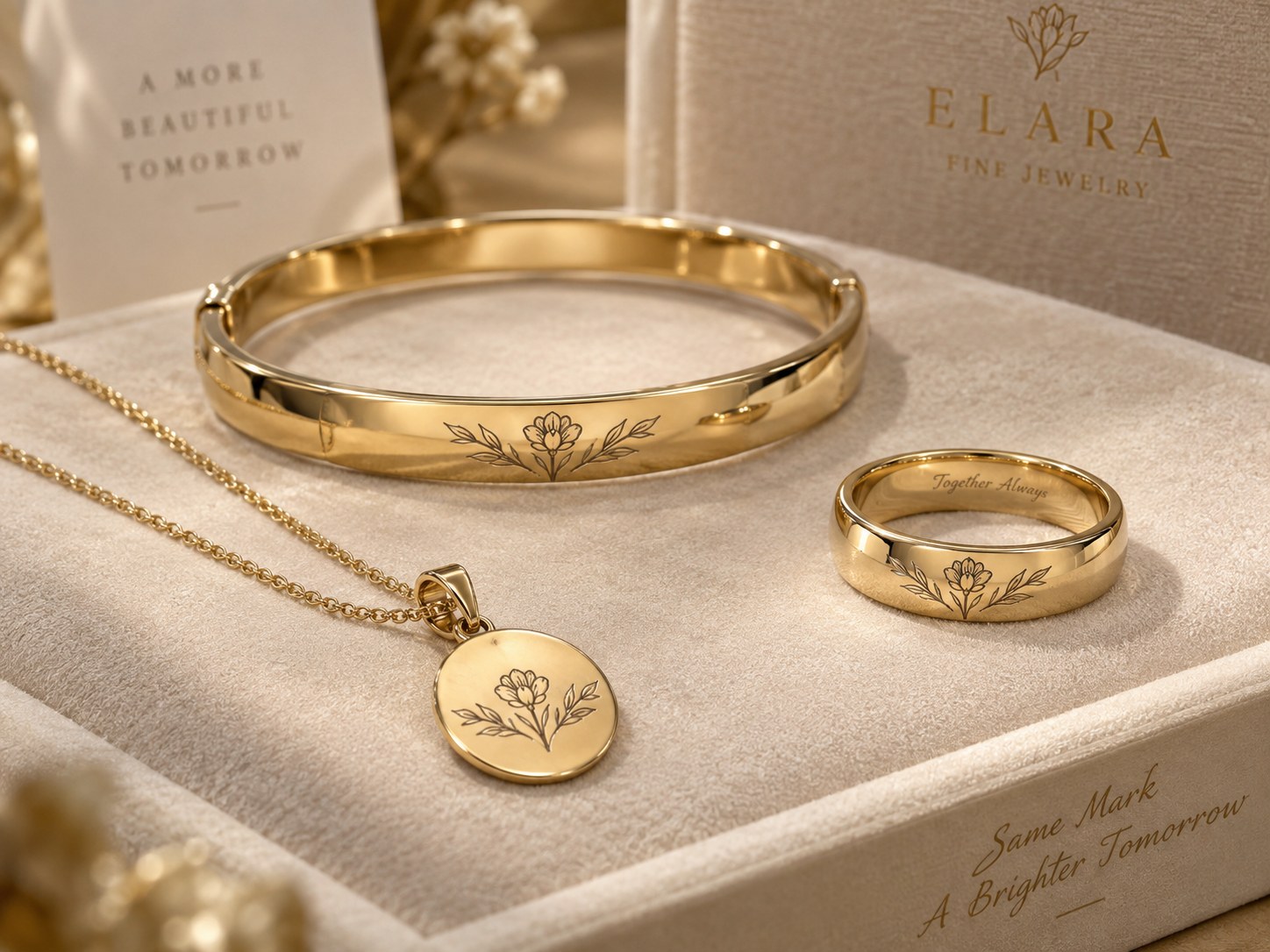
The same mark carried across a bangle, a pendant and a ring — repeatability is what makes personalised sets sell.
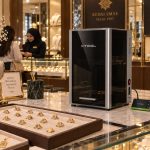
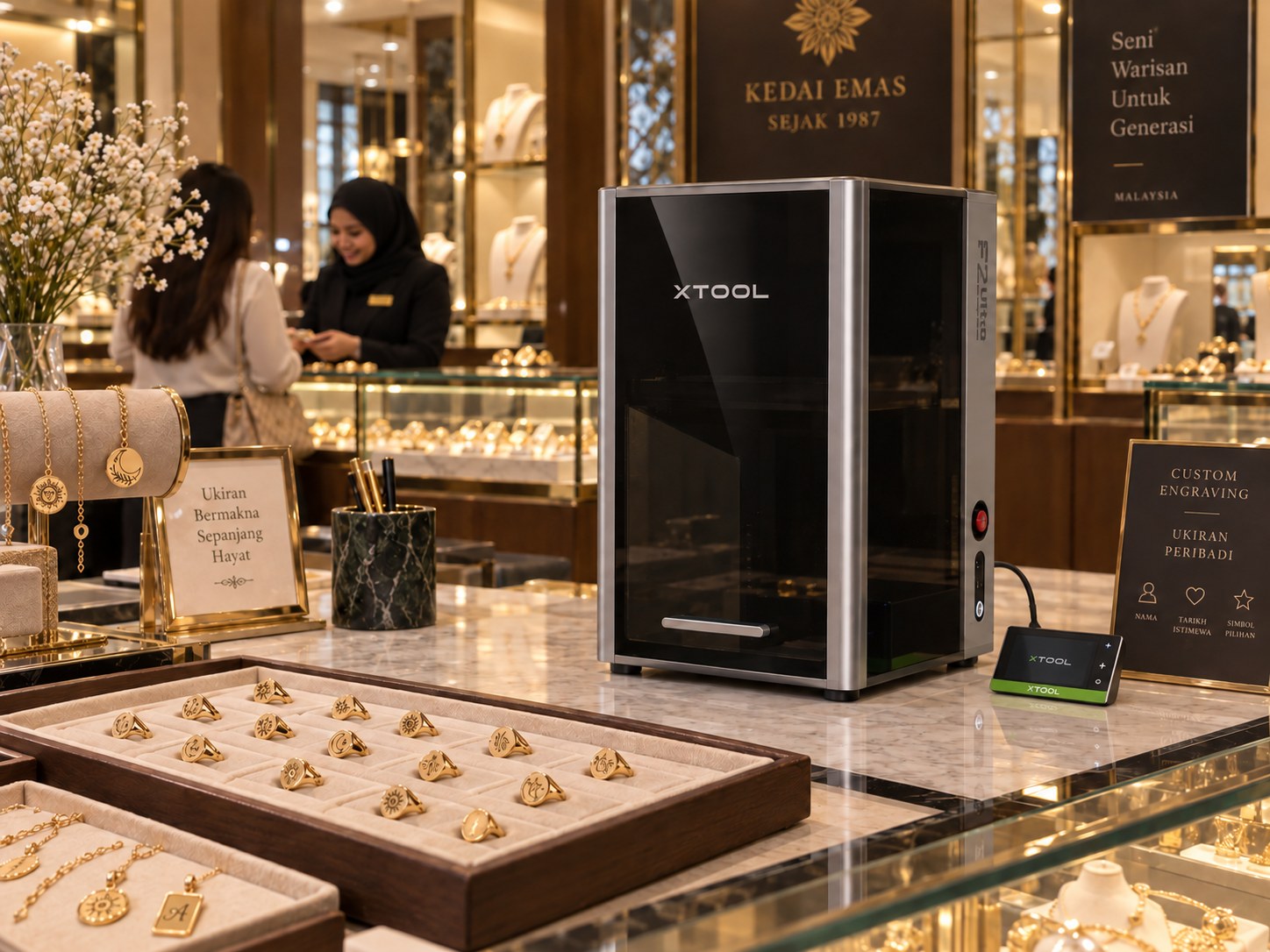
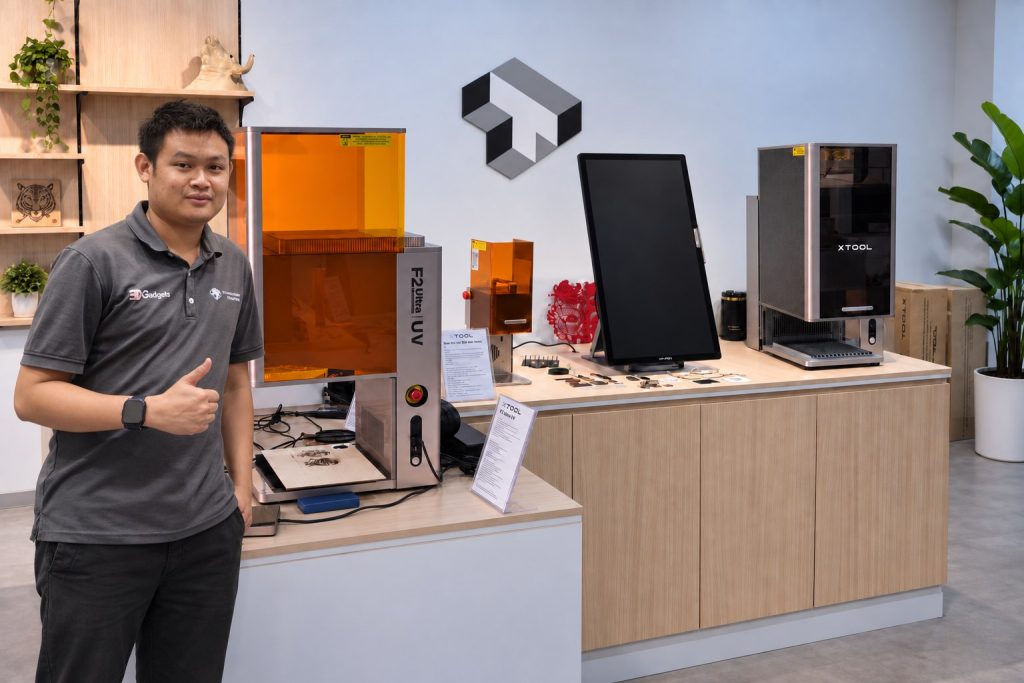
Our Kuala Lumpur showroom. Bring your product and we will engrave it in front of you, so you see the real result before you buy.
Laser engraving is easiest to judge in person. Tell us what you want to mark and bring a sample to the showroom, or send us a photo and we will tell you which machine and power fits the job.