3D Printer Price Malaysia
Quick verdict: a desktop FDM printer starts around RM 2,000, and a machine a small business can run daily usually sits between RM 3,000 and RM 15,000. Large-format and industrial systems move into five and six figures, and metal (SLM) systems start around RM 500,000. The tables below give the ranges we work with for the models we carry — and the sections after them explain what actually changes the number.
3D printer prices in Malaysia span a very wide range — from under RM 2,000 for a beginner desktop FDM machine to well over RM 500,000 for an industrial metal system. The right budget depends almost entirely on four things: the printing technology, the build volume, the materials you need to print, and the level of local support, warranty and training you want.
This guide breaks down realistic price ranges by technology and by brand so you can shortlist the right machine for your budget — and compare quotes that are actually quoting the same thing.
1. 3D printer price ranges by technology
| Technology |
Typical price (RM) |
Best for |
| FDM (desktop) |
1,000 – 15,000 |
Beginners, prototyping, hobby, education |
| Resin (SLA / DLP / MSLA) |
1,500 – 30,000 |
Detailed parts, dental, jewellery |
| Large-format FDM |
30,000 – 300,000+ |
Large parts, industrial production |
| Metal (SLM / DMLS) |
500,000+ |
Aerospace, medical, tooling |
The four technologies price very differently, and the gap is not only about size. Resin machines buy detail; FDM buys volume and material choice; metal systems are a different manufacturing process altogether. Match the technology to the part you need to make before you match it to a budget.
2. Popular models & price ranges by brand
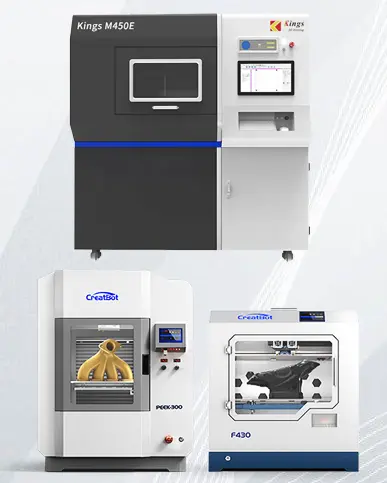
CreatBot — industrial FDM
Bambu Lab — consumer & prosumer FDM
MINGDA — FDM
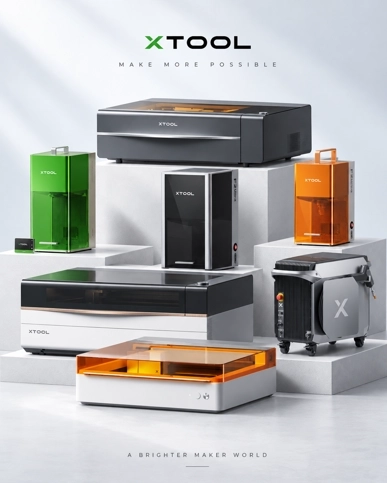
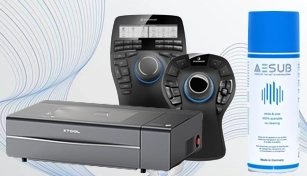
xTool — laser cutting & engraving
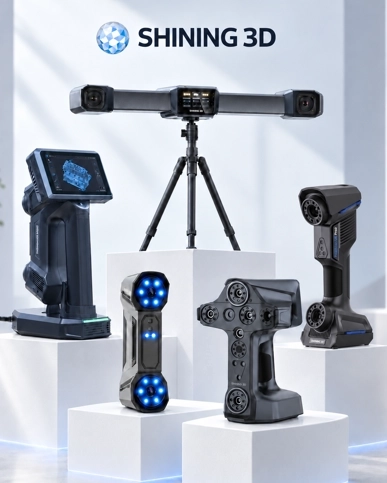
Shining 3D — 3D scanners
These are the ranges we currently quote for the models we carry. To see the machines themselves, browse CreatBot, Bambu Lab, MINGDA, xTool and Shining 3D — or the full 3D printer range in one place.
3. What you get at each budget tier
- Under RM 3,000 (Budget) — hobby FDM printers. Great for learning, prototyping and education. Expect PLA/PETG printing and manual calibration.
- RM 3,000 – 15,000 (Mid-range) — prosumer FDM with multi-colour and enclosed chambers, desktop CO2 lasers, and entry handheld scanners. The sweet spot for small businesses.
- RM 15,000 – 60,000 (Professional) — industrial FDM, fibre lasers and professional handheld scanners with local training and warranty.
- RM 60,000+ (Industrial) — large-format and metal systems for production, aerospace and tooling.
4. What affects 3D printer price?
- Technology — resin and metal cost far more than FDM; fibre lasers cost more than CO2.
- Build volume — a 1,000 mm large-format machine costs multiples of a 250 mm desktop unit.
- Materials — high-temperature and engineering materials (PEEK, ULTEM, carbon-filled) need specialised hardware.
- Support — local warranty, installation, training and spare parts add long-term value that a cheaper grey-import can’t match.
- Class — a large-format or multi-laser metal system sits in a different bracket entirely from a desktop machine, whatever the build plate says.
5. What the price includes — and what it doesn’t
Two quotes for the same machine can differ by a wide margin because they are not quoting the same thing. Before you compare numbers, ask what is inside each one:
- Delivery, installation and commissioning — crating, rigging and first-run calibration are easy to leave out of a quote.
- Training and documentation — who teaches your operators, and in what form the setup and maintenance documents arrive.
- The warranty channel — who performs warranty work locally, how quickly parts arrive, and whether support is handled in Malaysia or from overseas.
- Software and licences — which slicer, inspection or CAD modules are included, and for how long.
- Materials handling — filtration and extraction for lasers, gas and powder handling for metal systems.
- Consumables and accessories — build plates, nozzles, lenses, starter material.
What usually sits outside the number: the materials you will consume every month, any electrical or extraction works in your building, software upgrades after the licence period, and the cost of waiting when a part has to come from overseas. A complete quote tells you both sides.
6. Why the same model costs different amounts in Malaysia
If two suppliers quote very different prices for the same machine name, the difference is almost always in one of five places:
- Configuration. A metal system is sold with one, two or four lasers; a scanner changes with its lens set; an FDM machine changes with its extruders, chamber heating and filtration. Same name, different machine.
- Channel. An authorised local purchase carries local installation, warranty and stock; a parallel import does not. The sticker is lower; the total often is not.
- Timing. Most of these machines are imported, so promotions and exchange-rate movements show up in the price you are quoted this month.
- Package contents. Whether training, spares, materials and software are bundled in or billed separately.
- Condition. New, ex-demo and second-hand units of the same model can sit far apart — with very different service histories.
The practical rule: compare like for like. Same configuration, same package, same support terms — then look at the number.
7. Buying routes compared
| Route |
What you get |
What it costs you later |
Best for |
| Authorised local dealer |
Local installation and training, warranty performed in Malaysia, spare parts and consumables from local stock, a team you can call |
A higher sticker price than a parallel import — the difference is the support |
Machines that earn money: a week of downtime usually costs more than the saving |
| Overseas / parallel import |
Lowest sticker price; you arrange shipping, duty and clearing yourself |
No local warranty service, parts lead times measured in weeks, no training — calibration and troubleshooting are on you |
Low-cost desktop machines where you accept the risk and can maintain them yourself |
| Second-hand / ex-demo |
Entry to a class of machine you could not otherwise reach |
No factory warranty, unknown wear, consumables often due — check the service history and part availability first |
Buyers who can inspect and repair machines themselves |
8. Machine price vs running cost
The purchase price is the entry fee, not the whole cost. What you spend after delivery depends on the machine: filaments, resins or metal powder; nozzles, build plates and wipers; laser tubes and lens protection; gas, filtration and extraction; power; servicing; and spare parts over the life of the machine. On machines that run daily, those costs accumulate quickly — which is why a quote that includes consumable pricing is worth more than one that only names the machine price. Budget for both columns before you decide.
9. How to choose within your budget
- Start with what you make — small detailed parts (resin), big functional parts (FDM), metal (SLM), or reverse engineering (scanner).
- Set a materials requirement — if you need PEEK or carbon-filled nylon, budget for a high-temp machine.
- Factor in support — a local vendor with training and spare parts protects your investment.
- Shortlist, then demo — ask for a sample print or scan of your actual part before committing.
Frequently asked questions
What is the cheapest 3D printer in Malaysia?
Entry-level FDM printers start around RM 1,000. They are fine for learning and simple prototyping, but expect more manual setup and fewer material options.
How much is a good 3D printer for a small business?
Most small businesses land in the RM 3,000 – 15,000 range, where the machine is reliable enough to run daily and local support is available.
Why are industrial 3D printers so expensive?
Build volume, heated chambers and industrial motion systems, materials handling such as gas, powder and filtration, and certified local support all drive the price. An industrial machine is not just a bigger desktop printer — it is a production system.
Do 3D printer prices include installation and training?
On professional and industrial systems from Trinventor Solution, local installation, commissioning and operator training are part of the package. Ask for the full quotation so you can see exactly what is included — delivery, training, warranty channel and spare parts.
Do you publish 3D printer prices?
The ranges on this page are the ones we work with for the models we carry. Exact prices are always quoted per configuration, because options, software, delivery and training change the final number. Tell us what you need to print and we will quote against it.
Can I buy the same machine cheaper from overseas?
Sometimes the sticker price looks lower. Once shipping, duty and clearing are added — and you allow for no local warranty service, no training and parts lead times measured in weeks — the gap narrows or disappears, especially on machines that earn money while they run.
How do I get an exact quote?
Tell us the parts you need to make: size, material, quantity per week and the finish you expect. We will shortlist the machines that suit that work, show a sample part or a demonstration, and quote the complete package. Contact us to start.
Talk to our team
Get a recommendation matched to your project, budget and materials — contact Trinventor Solution for a live demo, a sample part from your own files, and a full quotation. If you are also budgeting for scanning or laser work, the 3D scanner price guide follows the same format.