Serial Number and QR Code Marking in Malaysia: Traceability That Can’t Be Removed
Serial Number and QR Code Marking in Malaysia: Traceability That Can’t Be Removed
Quick verdict: If codes must stay readable for the life of the part, laser marking is the only reliable option — it is written into the material, not applied to it. Confirm readability on your own part before you buy.
A serial number that peels off isn’t a serial number. For manufacturing, electronics, automotive and medical parts, identification has to survive the lifetime of the product — through cleaning, heat, handling and wear.
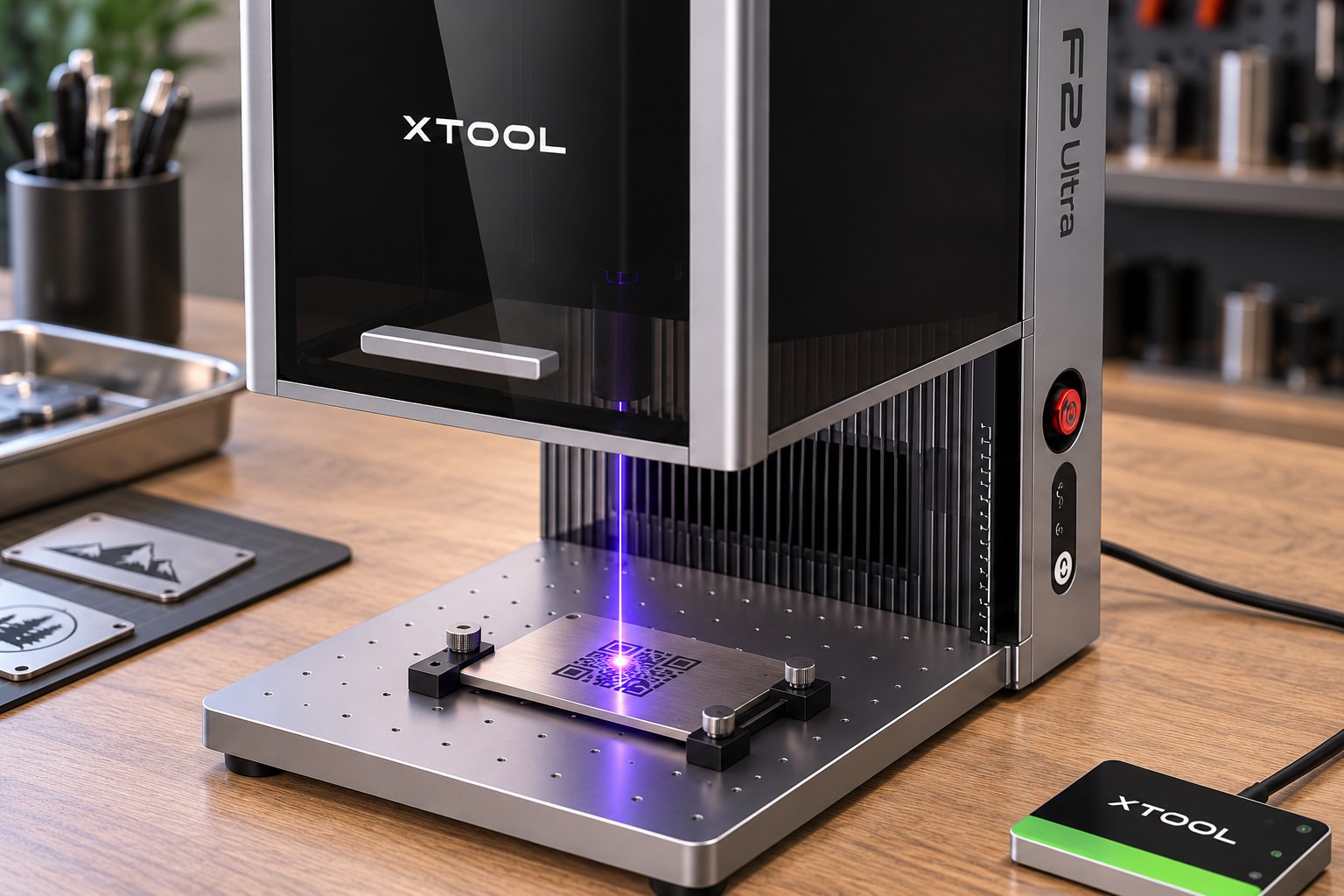
Laser marking is how you get that permanence, and how you get machine-readable QR and Data Matrix codes that scan reliably every time.
Why laser for serial numbers and codes
Method
Permanent?
Machine-readable?
Notes
Sticker / label
No — peels, fades
Yes (when new)
Fails over time
Inkjet
No — fades
Yes
Not durable
Dot peen
Yes
Hard to read
Low contrast, slow
Laser marking
Yes
Yes — crisp, high-contrast
The industry standard
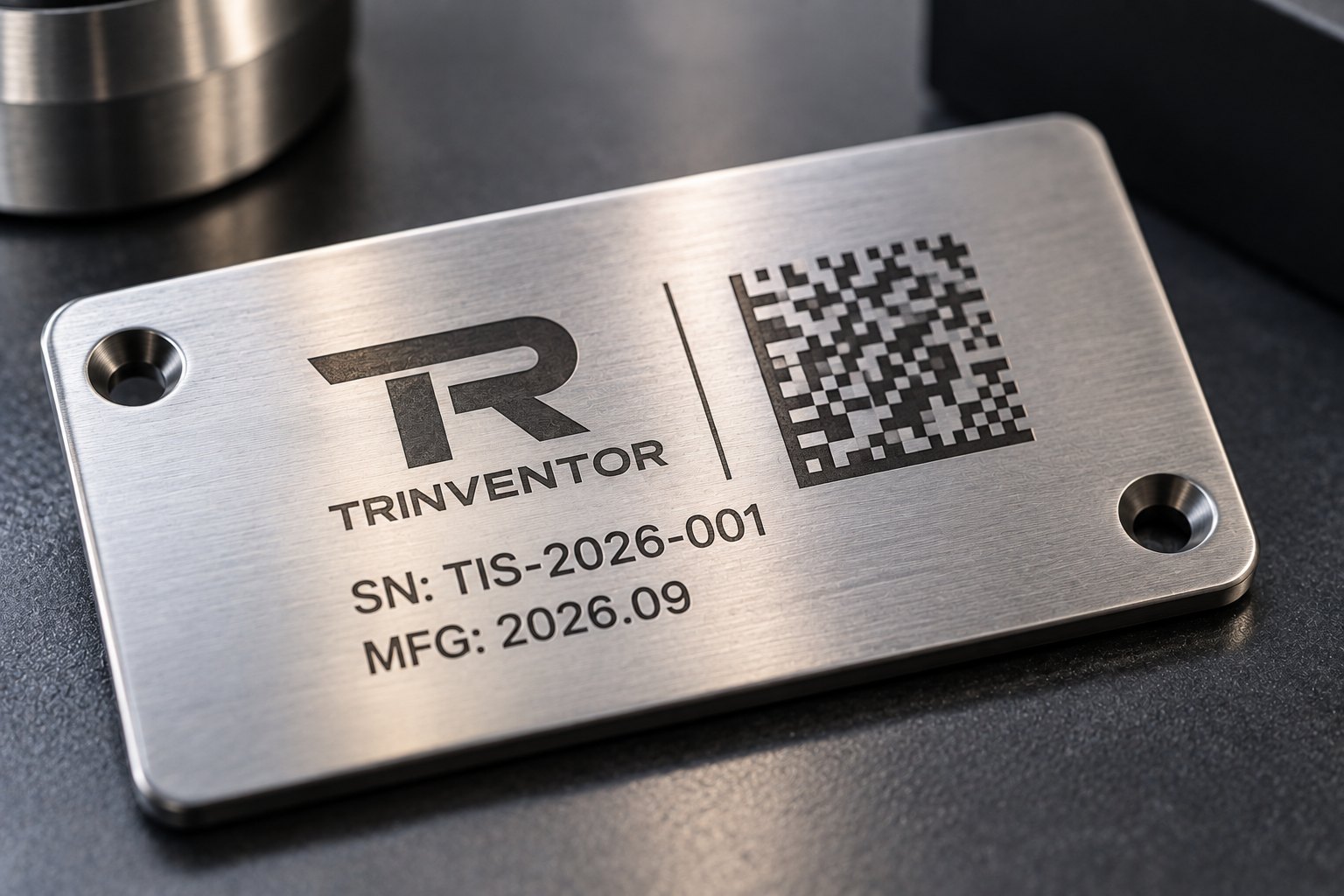
Laser marking produces a flat, high-contrast code that scanners read cleanly — and because it’s written into the metal or plastic, it can’t be removed without removing the material with it.
What you can mark
Application
Technology
Typical use
Serial numbers on steel
Fiber / MOPA
Parts, tools, assets
QR codes on aluminium
Fiber
Product ID, warranty
Data Matrix on stainless
Fiber / MOPA
Medical, aerospace, automotive
Codes on plastic
UV
Electronics enclosures, PCB
Tool & asset marking
Fiber
Workshop tool tracking
The machines
Model
Best for
xTool F2 Ultra
High-speed serial numbers, QR and Data Matrix on metal and plastic; colour marking on stainless
xTool F2 Ultra UV
Cold marking on heat-sensitive plastic, PCB and electronics
xTool MetalFab
Engraving plus welding, cutting and cleaning on heavy metal parts
For most part-marking and traceability work, the F2 Ultra is the standard choice — it marks at up to 15,000 mm/s and handles both metal and plastic.
Code readability is the spec that matters
A QR code isn’t “good” just because a machine marked it — it’s good when your scanner reads it, every time, at your required speed. Contrast, size and resolution decide that, not the marketing spec. That’s why we test on your actual part before you buy.
Contrast, cell size and the quiet zone
A scanner reads the difference in reflected light between the marks and the substrate. That difference decides most failures.
Contrast separates them. A shallow mark on polished metal can look clear to the eye and still return too little signal. Cell size matters next: each module must be wide enough for the optics to resolve.
The quiet zone is the clear margin around the code. Without it, a scanner cannot find where the code starts, so keep that margin free of other marking.
Marking serial numbers at volume
One marked part is a demonstration. A production run is a process.
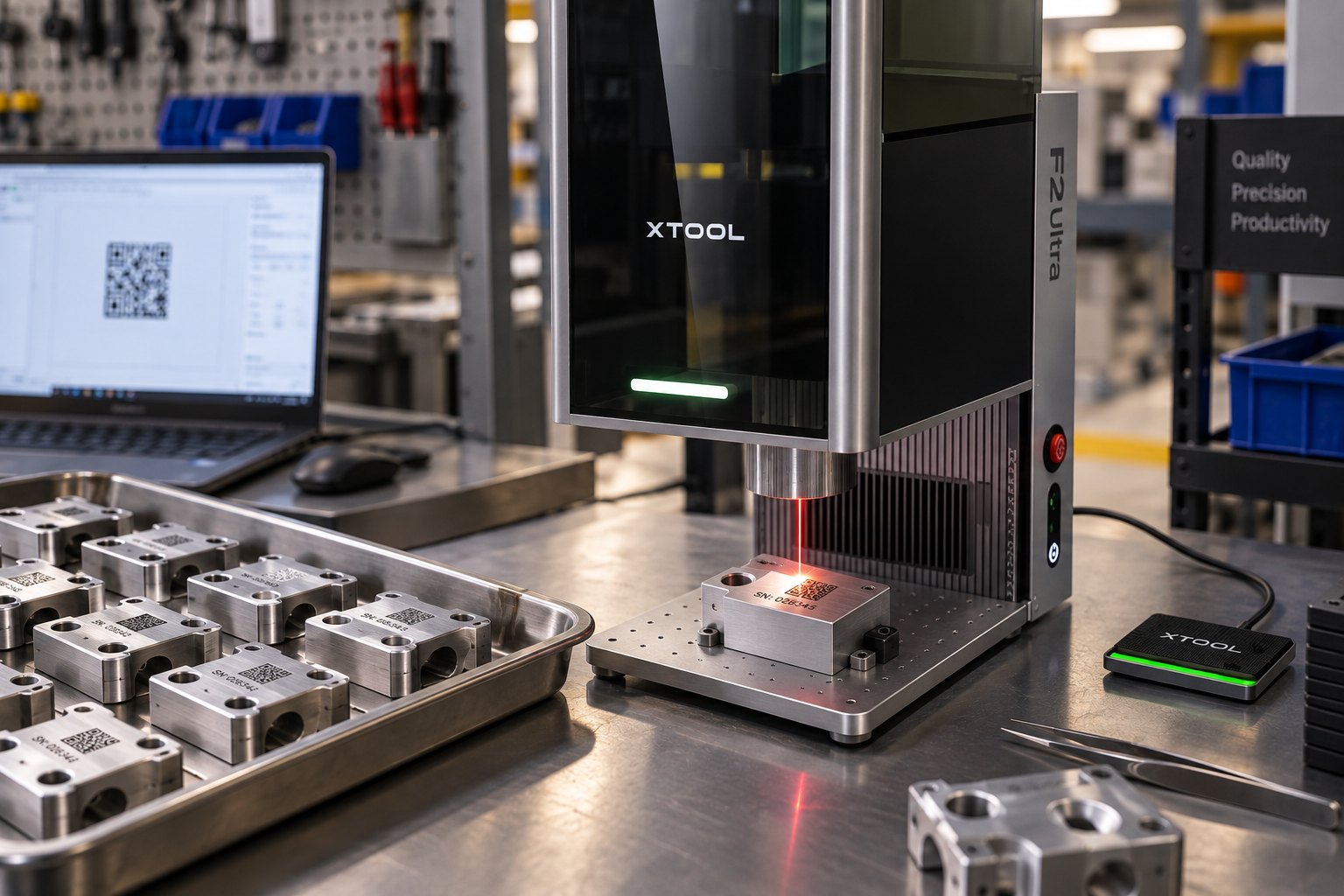
Sequential generation does the numbering: set the start value and the step, and the software advances it down the job. Batch layout arranges many parts on the bed, so one job marks the whole tray.
The F2 Ultra suits this, with two 48MP cameras to place parts and confirm layout. Volume work also means scanning each code, so a misread is caught at marking rather than at the customer.
What goes wrong without traceability
Traceability feels optional until something goes wrong.
Take a recall. If one batch is faulty, the question is which units it reached. With no readable identifier there is no way to narrow that down, so the safe answer becomes the expensive one: everything shipped.
Warranty disputes follow the same pattern when you cannot confirm a failed part came from you. Counterfeits sold as yours are hard to prove when your own parts carry no mark a buyer can check.
Send us a sample part or a photo with your code requirements. We’ll mark it, scan it, and give you an honest answer on contrast, readability and the right machine for your volume.
Visit our showroom
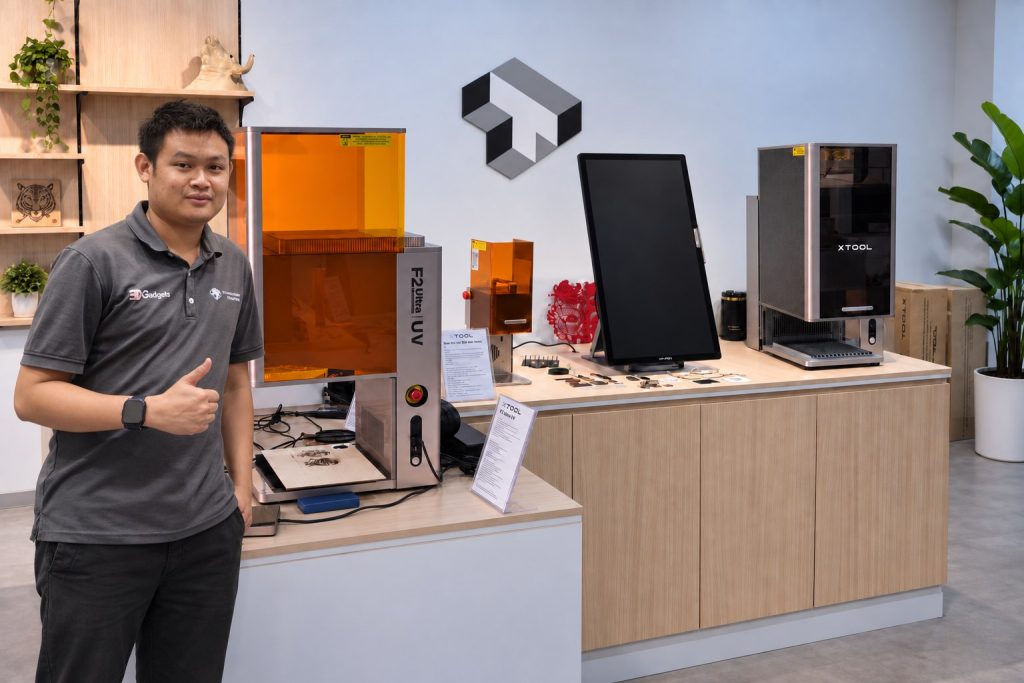
Our Kuala Lumpur showroom. Bring your product and we will engrave it in front of you, so you see the real result before you buy.
Is a laser mark really permanent?
It is created in the surface rather than applied on top, so it cannot peel or wash off.
Can you mark a code on a curved or uneven surface?
Yes, within limits. The focus has to hold across the whole code, so a flatter area reads more reliably.
How small can a readable code be?
It depends on your scanner, the contrast and the surface. Test the smallest code your scanner reads reliably, then stay with it.
Do you need special software to generate serial numbers?
No. Numbering runs inside xTool’s own software, where you set the start value and the step.
Can you mark onto anodised or coated metal?
Yes. Both mark well, and the mark can differ in tone from the surrounding finish so the code stays readable.