Handheld 3D scanner with robotic arm for automated data capture
3D Scanning Solutions by Industry in Malaysia
Whatever your industry — automotive, mold making, aerospace, marine, energy, medical or education — 3D...
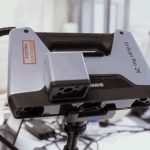
3D scanning for education and research
3D Scanning for Education & Research in Malaysia
For universities, polytechnics and research institutes in Malaysia, 3D scanning turns physical objects...
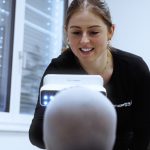
3D scanning an infant's head for a cranial helmet
3D Scanning for Medical, Dental & Orthotics in Malaysia
For orthotics, prosthetics and dental labs in Malaysia, 3D scanning replaces messy plaster casting with...
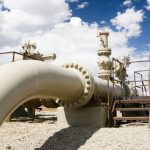
3D scanning an energy pipeline for corrosion inspection
3D Scanning for Energy & Heavy Equipment Inspection in Malaysia
For energy operators and heavy-equipment manufacturers in Malaysia, portable 3D scanning replaces slow...

An xTool Retail Studio in-store workshop counter with engraving machines and personalised products on display
In-Store Personalization and Live Engraving: Turn Walk-Ins into Buyers
Live engraving converts browsers into buyers — a customer who watches their own name go onto a product...
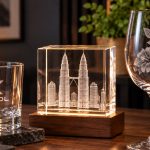
A frosted XTOOL logo on a whisky tumbler beside a crystal block with the Kuala Lumpur skyline engraved inside it
Glass and Crystal Laser Engraving in Malaysia: From Frosting to 3D
Glass needs a UV laser. A CO2 or fiber laser heats the glass and cracks it; a UV laser marks cold, so...
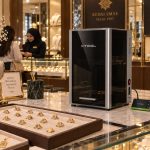
The xTool F2 Ultra on a jewellery shop counter beside trays of gold rings and custom engraving signboards
Jewelry Laser Engraving in Malaysia: Names, Dates and Logos That Last
Laser engraving is the standard for jewellery because it is non-contact — no clamping, no pressure, no...
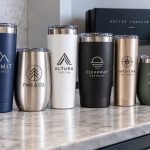
Six personalised tumblers in assorted finishes, each engraved with a different corporate logo
Tumbler Engraving in Malaysia: The Product That Pays for Itself
Tumblers are the best product to start a personalised-gift business with: constant demand, a cheap blank,...
  • Article
  • >
  • CO2 vs Fiber Laser Engraving: Which Is Right for Your Business?

CO2 vs fiber Laser Engraving: Which Is Right for Your Business?

CO2 laser cutter

Quick verdict: Choose a CO2 laser for wood, acrylic, leather, glass and other organic materials. Choose a fiber laser to mark and engrave metals — steel, aluminium, brass and titanium. They are not interchangeable: the laser source determines what you can cut. Here is how to pick the right one for your business.

What is a CO2 laser?

A CO2 laser uses a gas-filled tube to generate a long-wavelength infrared beam (10.6 µm). That wavelength is absorbed strongly by organic materials — wood, acrylic, leather, paper, glass, rubber and fabric — which makes CO2 the workhorse for sign-making, packaging, crafts and prototyping.

CO2 lasers cut and engrave with equal skill. On thicker materials they cut cleanly; on surfaces they engrave crisp, high-contrast marks. The trade-off: they cannot mark bare metal effectively without a coating spray.

Machines we recommend: the xTool P2 & P2S for a desktop 55 W CO2 workhorse, and the xTool P3 for higher-volume work.

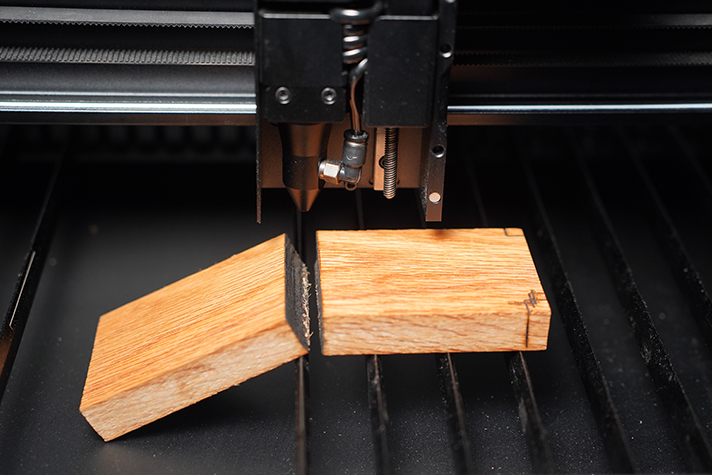
CO2 laser cutting wood

What is a fiber laser?

fiber laser metal engraving

A fiber laser generates a shorter-wavelength beam (1.064 µm) that metals absorb far more efficiently. It is the standard tool for permanent marking and engraving on metal — serial numbers, logos, barcodes and decorative work on steel, aluminium, brass, copper and titanium.

fiber lasers are fast, precise and low-maintenance — sealed solid-state sources that last tens of thousands of hours. The trade-off: they do almost nothing to wood, acrylic or leather, so they are a metal specialist, not a generalist.

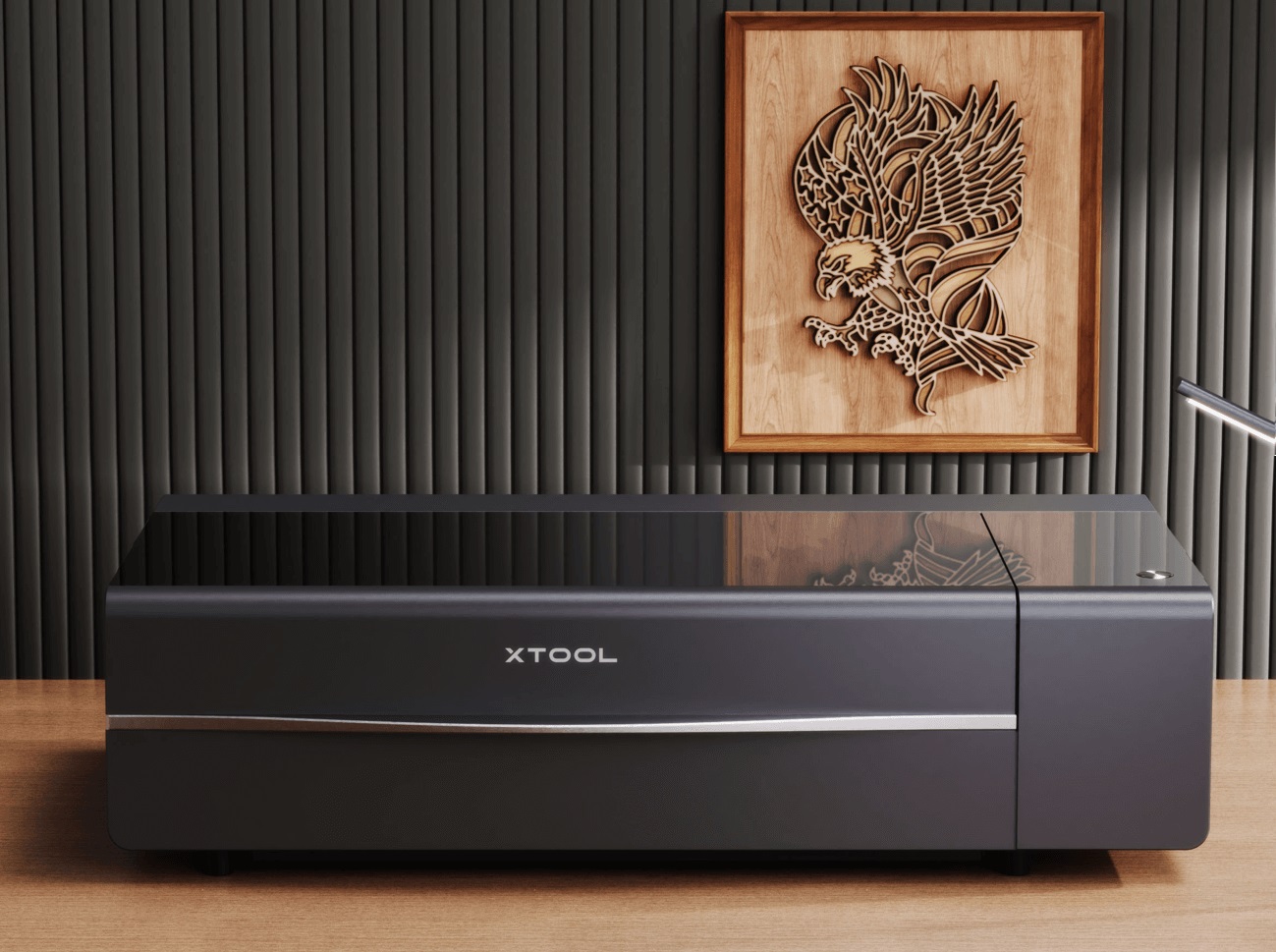
Machines we recommend: the xTool F2 Ultra (dual fiber + diode) for metal marking, and the xTool MetalFab for fiber welding and cutting.

CO2 vs fiber: the full comparison

Factor CO2 laser fiber laser
Wavelength 10.6 µm 1.064 µm
Wood, acrylic, leather, glass Excellent — cuts & engraves Very limited
Metals (steel, aluminium, brass) No (needs coating spray) Excellent — permanent marking
Engraving speed Fast on organics Very fast on metal
Laser source lifespan ~1,000 – 10,000 hours ~100,000 hours
Maintenance Moderate (mirror alignment, tube) Low (sealed source)
Best for Signage, crafts, packaging, prototyping Metal marking, serials, logos

What does each cost?

CO2 laser fiber laser
Desktop entry RM 8,000 – 30,000 RM 15,000 – 40,000
Professional / industrial RM 30,000 – 150,000+ RM 40,000 – 200,000+
Consumables Low (occasional tube/mirror) Very low
Running cost per part Low Low

When to choose which

Choose CO2 when…

  • You work with wood, acrylic, leather, glass or paper
  • You need to cut materials, not just mark them
  • Your products are signage, gifts, packaging or prototypes
  • You want one general-purpose machine for many materials

Choose fiber when…

  • You need to mark or engrave metal permanently
  • You are adding serial numbers, barcodes or logos
  • You want the lowest maintenance and longest lifespan
  • You serve manufacturing, jewellery or aerospace

Malaysia-specific considerations

  • Humidity — keep laser optics and electronics in a dry, air-conditioned room to prevent condensation and corrosion.
  • Ventilation & fume extraction — cutting acrylic and wood produces fumes; a proper extractor is essential, not optional.
  • Power stability — laser tubes and sources last longer on stable, surge-protected power.
  • Local support — laser alignment and tube replacement are easier with a vendor who stocks spares and provides training.

Our honest recommendation

If you are a sign-maker, crafter or prototyper working in wood and acrylic, start with a CO2 laser like the xTool P2. If your business is marking metal parts — names, serials, logos on steel or aluminium — a fiber laser like the xTool F2 Ultra is the right investment.

Many growing workshops run both: a CO2 machine for general materials and a fiber machine for metal marking. That combination covers nearly every engraving job in Malaysia.

FAQ

Can a CO2 laser engrave metal?
Not bare metal — it needs a marking spray or coating. For direct metal marking you need a fiber laser.

Can a fiber laser cut wood?
Very poorly. fiber wavelengths pass through organic materials rather than cutting them — that is CO2 territory.

Which laser lasts longer?
fiber. A sealed fiber source can run ~100,000 hours versus roughly 1,000 – 10,000 for a CO2 tube.

Do I need both a CO2 and a fiber laser?
Only if you work with both organic materials and metal. If you mainly do one, buy the machine that matches it.

Related reading

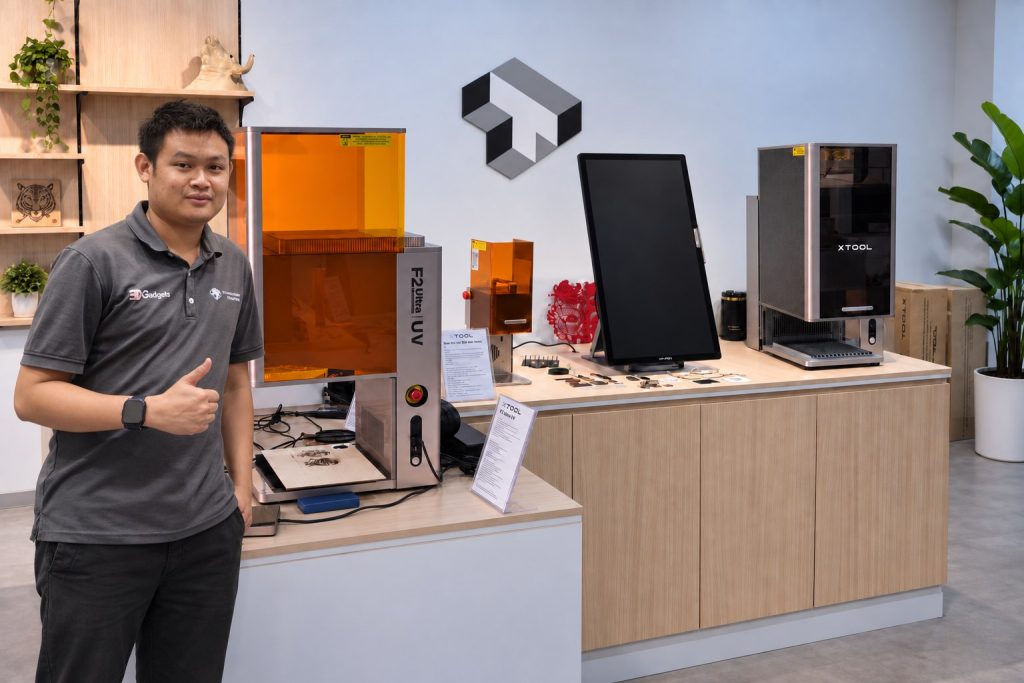
A Trinventor staff member giving a thumbs up beside xTool laser engravers in the Kuala Lumpur showroom
Our Kuala Lumpur showroom. Bring your product and we will engrave it in front of you, so you see the real result before you buy.

Laser engraving is easiest to judge in person. Tell us what you want to mark and bring a sample to the showroom, or send us a photo and we will tell you which machine and power fits the job.

Thank you for signing up. You will be the first to know the Industry news, upcoming products, latest technology and special promotion.

Stay Tuned.