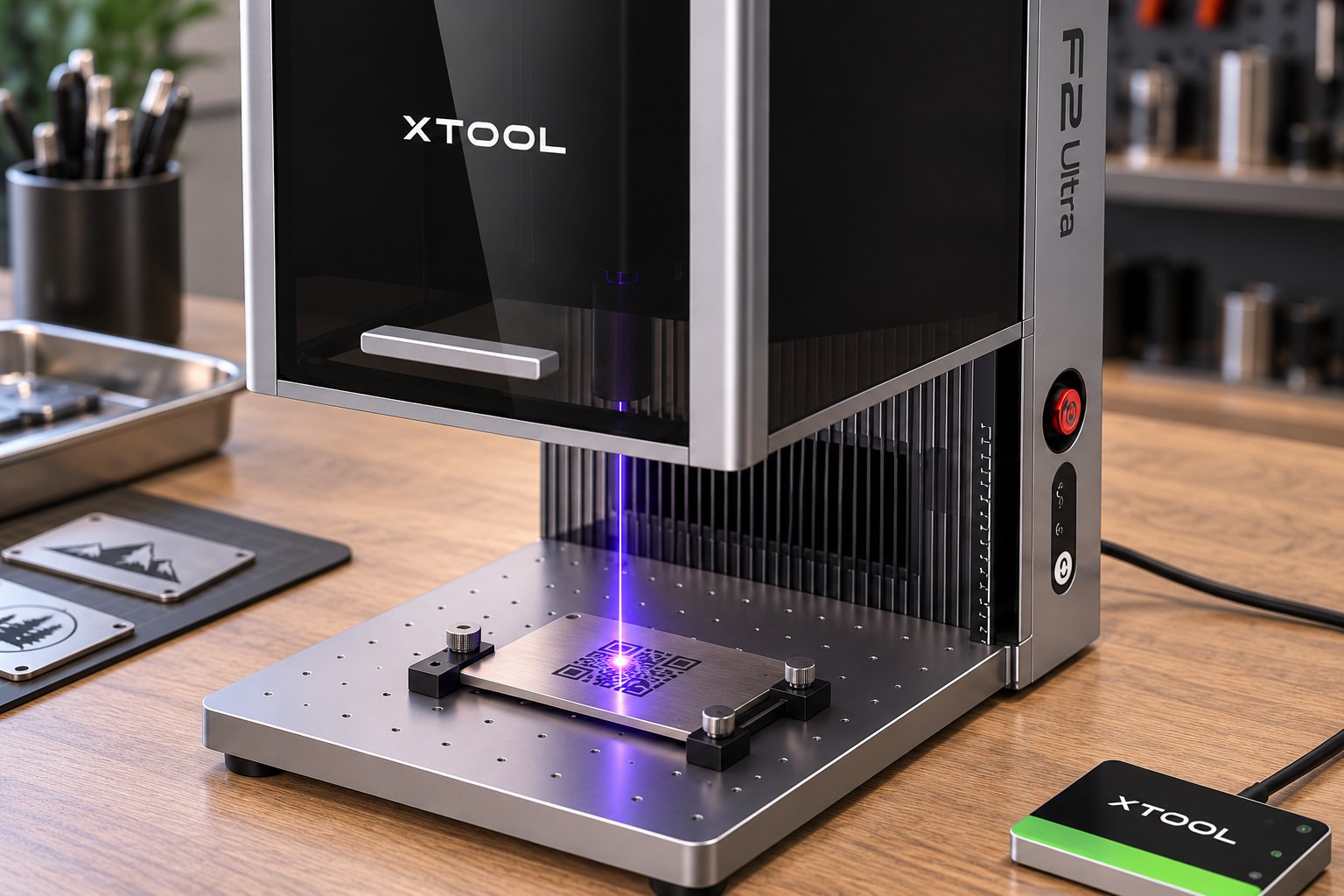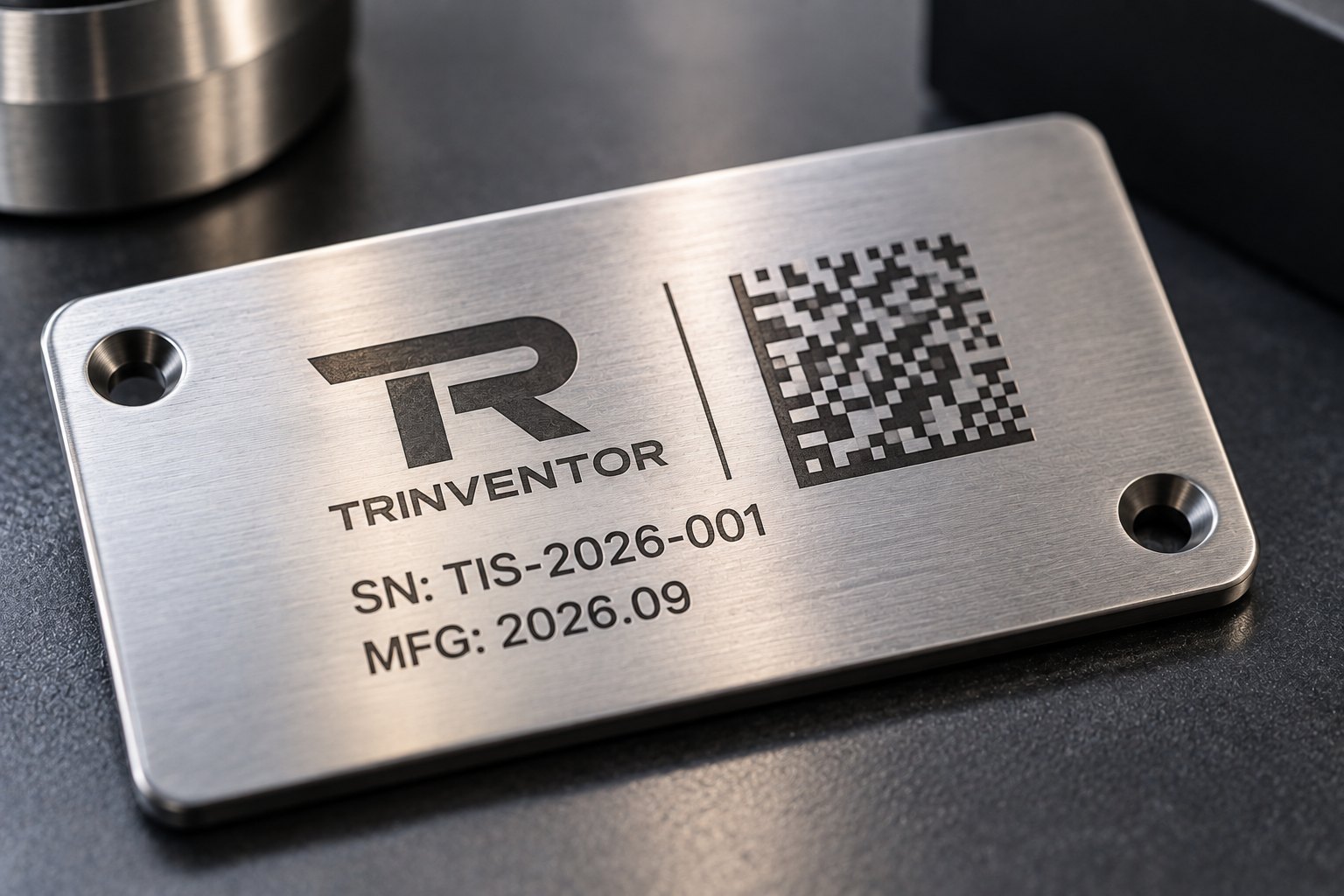
If you need to put a serial number, QR code or logo on a product that has to survive for years — and survive cleaning, heat and handling — you’re looking for a laser marking machine, not a printer. Labels peel. Ink fades. A laser mark is permanent because it’s written into the material itself.
This guide explains the marking technologies, what each one marks, and which xTool machine fits which manufacturing job in Malaysia.
| Method | Durability | Readability | Cost per mark | Best for |
|---|---|---|---|---|
| Inkjet / label | Fades, peels | Good | Low | Short-lifetime consumer packaging |
| Dot peen | Permanent | Low contrast | Low | Hard metal, low-legibility needs |
| Laser marking | Permanent | High contrast, high resolution | Near zero after machine | Serial numbers, QR, logos, traceability |
For regulated parts, medical instruments, electronics and anything that needs machine-readable codes (QR, Data Matrix, barcode), laser is the standard — and once the machine is bought, the marginal cost per mark is effectively nothing.
| Technology | Best for | Marks | Notes |
|---|---|---|---|
| Fiber (1,064 nm) | Metals, some plastics | High-contrast black/white, deep engraving | The workhorse for industrial marking |
| MOPA | Stainless steel, titanium | Colour marking (black, white, blue, gold, rainbow) | Fiber with pulse control — colour is the differentiator |
| UV (355 nm) | Plastics, glass, electronics | Cold, burn-free marks | Won’t melt heat-sensitive plastic or PCB |
| Material | Technology | Typical application |
|---|---|---|
| Stainless steel | Fiber / MOPA | Serial numbers, logos, colour marks |
| Aluminium (anodised or bare) | Fiber | Part numbers, QR codes |
| Brass, copper | Fiber | Nameplates, decorative marks |
| Titanium | Fiber / MOPA | Medical implants, aerospace parts |
| ABS, PC, PP plastic | UV or fiber | Enclosures, buttons, keycaps |
| PCB and electronics | UV | Board marking, component IDs |
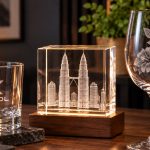
| Glass and crystal | UV | Fine surface and internal marks |
| Carbon steel | Fiber / MetalFab | Tool marking, asset tags |
| Model | Technology | Marks | Best fit |
|---|---|---|---|
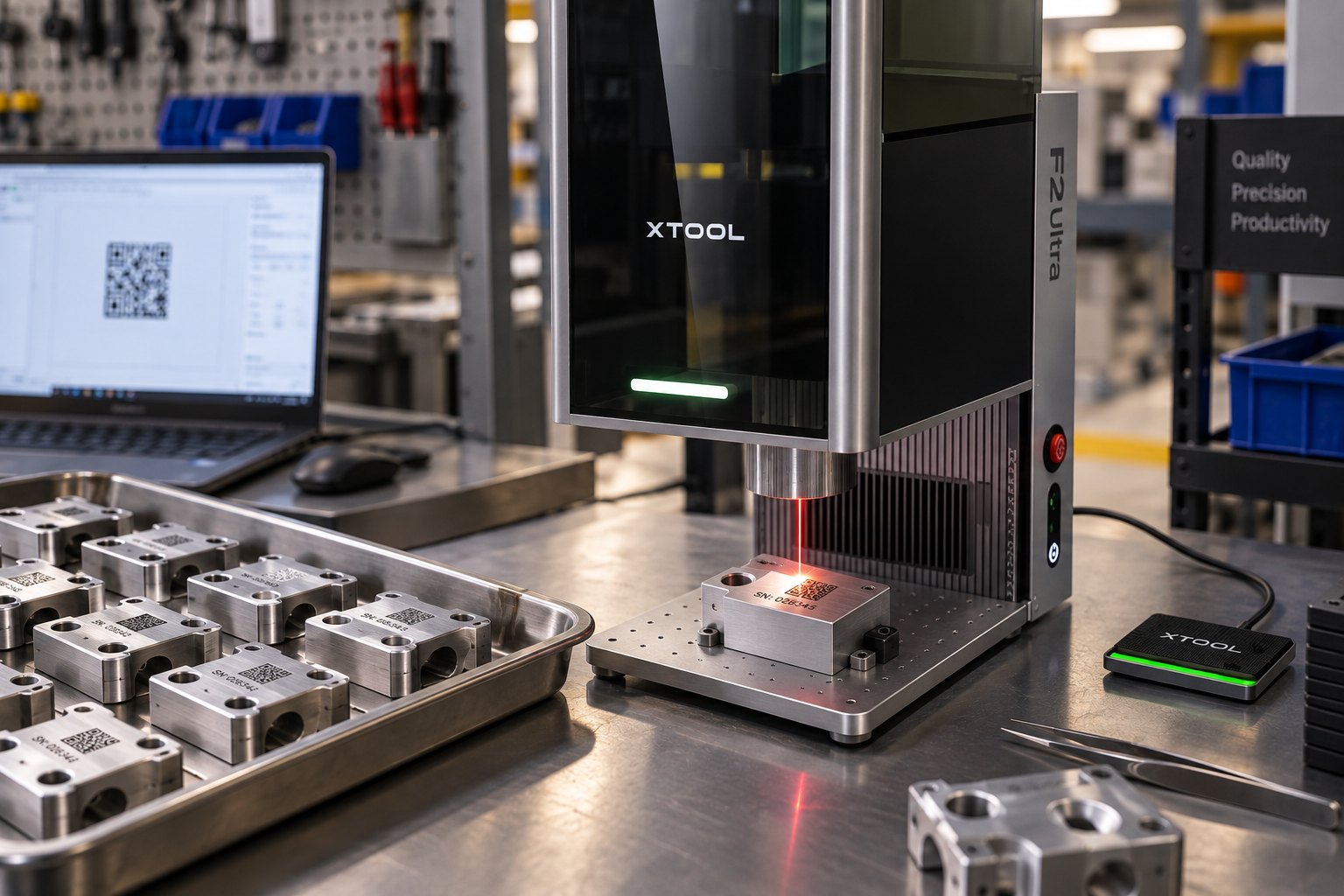
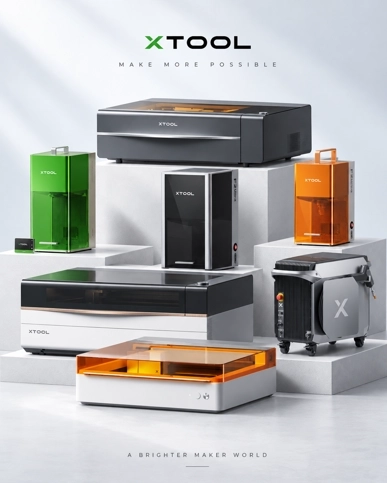
| xTool F2 Ultra | 60W MOPA + 40W diode | Metal marking with colour, deep engraving, serial numbers, QR/Data Matrix | Manufacturers, engraving services, jewellers |
| xTool F2 Ultra UV | 5W UV (355 nm) | Cold marking on plastic, glass, PCB, coated metal | Electronics, medical, cosmetics |
| xTool MetalFab | 800W/1200W fiber | Engraving plus welding, cutting and cleaning | Metal fabricators, workshops |
For most marking and traceability work in Malaysia, the F2 Ultra is the answer — it marks metal and plastic, does colour on stainless steel, and reads QR and Data Matrix codes reliably. For heat-sensitive parts and electronics, the F2 Ultra UV is the safer choice.

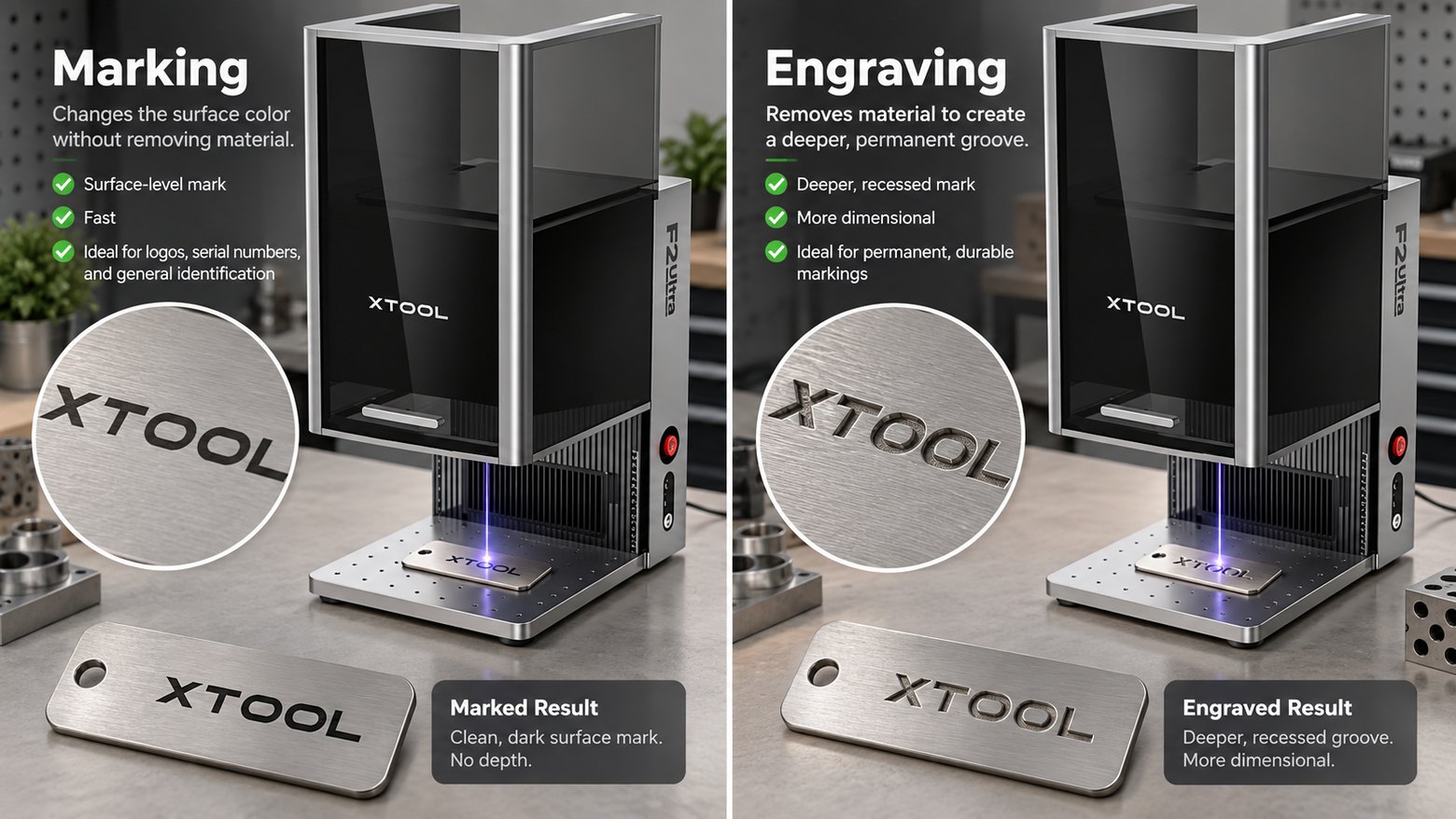
If your parts need to be read by a scanner, you want marking — a flat, high-contrast mark that a camera reads cleanly. If you need depth (for tooling or wear resistance), you want engraving. A MOPA fiber laser does both, which is why it’s the default for industrial identification.
The only way to know a laser marks your material the way you need is to test it. Trinventor Solution will mark a sample on your actual part — free — so you can verify contrast, code readability and cycle time before committing.
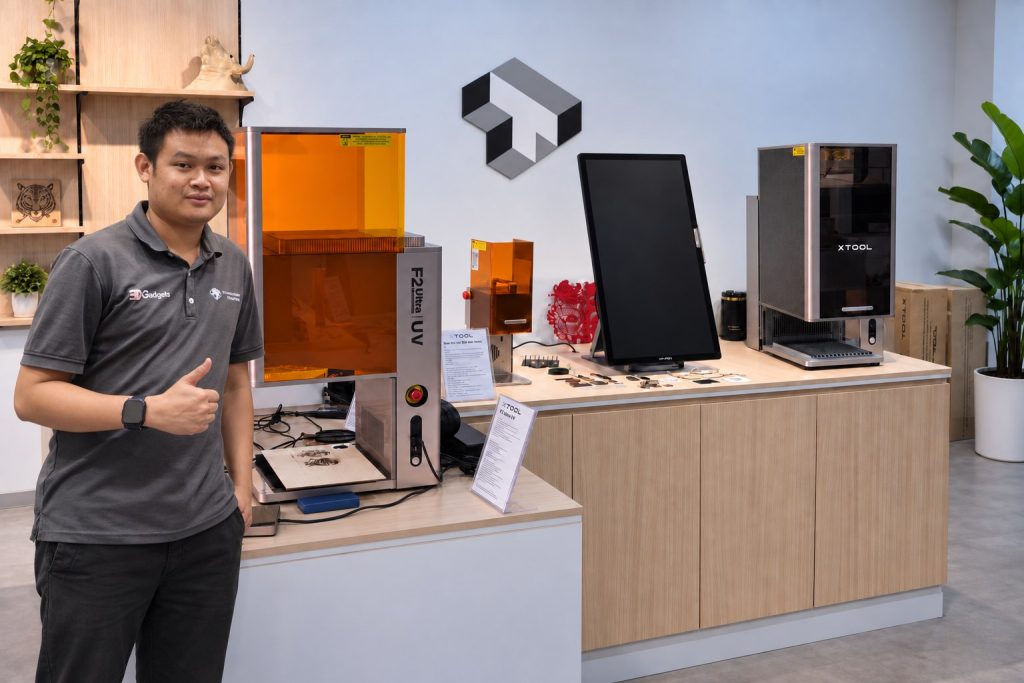
Visit our showroom

We’ll mark it, photograph the result and give you an honest read on which machine fits.


What’s the difference between fiber and CO2 for marking?
CO2 lasers mark organic materials (wood, acrylic, leather) but not bare metal. Fiber lasers mark metal and most plastics. For product and part marking on metal, you want fiber.
Can a laser marking machine do colour?
Yes — MOPA fiber lasers produce colour on stainless steel and titanium by controlling pulse width and frequency. The xTool F2 Ultra does this out of the box.
How permanent is a laser mark?
Permanent for practical purposes — it’s not a coating that wears off. This is why laser marking is required for many medical, aerospace and automotive parts.
How fast is marking?
The F2 Ultra marks at up to 15,000 mm/s. A simple serial number or QR code is typically a fraction of a second to a few seconds depending on size and depth.
Do you support Malaysian manufacturers?
Yes — we provide local demos, material testing, training and after-sales support from our Kuala Lumpur showroom.
Thank you for signing up. You will be the first to know the Industry news, upcoming products, latest technology and special promotion.
Stay Tuned.
Thank you!
Your submission has been received. Someone from our team will contact you soon.
If you have any urgent issue,
please contat us by phone
@ +60 12716 8839