The Best Machine for Engraving Rings and Jewellery
The Best Machine for Engraving Rings and Jewellery
Quick verdict: For rings and jewellery a fiber laser is the standard: non-contact, fine enough for inside-ring text, and safe on delicate settings. Hand and rotary engraving cannot match the consistency.
Engraving a ring is unforgiving: the surface is tiny, often curved, and usually expensive. One slip with a hand tool ruins a piece worth hundreds of ringgit. That’s why jewellers have moved to laser — it’s precise, repeatable and safe on delicate settings.
Here’s how the methods compare, and what to buy.
The three methods
Method
Precision
Speed
Risk
Best for
Hand engraving
Skilled, variable
Slow
High — one slip ruins it
Bespoke art
Rotary / drag engraving
Limited detail
Medium
Surface pressure
Flat plates
Laser engraving
Extremely fine
Seconds
Low — no contact
Names, dates, fine logos
Why laser wins for rings
Non-contact — the beam marks without clamping or pressing, so thin settings and delicate pieces stay intact.
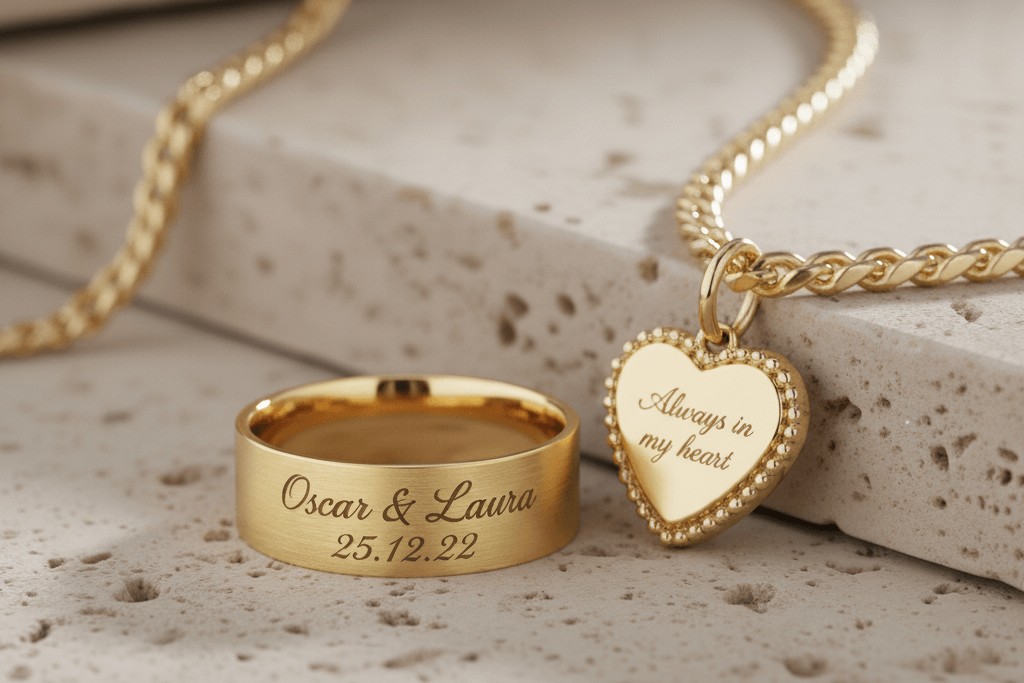
Fine enough for inside-ring text — names, dates, coordinates in a tiny font.
Marks any jewellery metal — gold, silver, stainless steel, titanium, brass.
Repeatable — the same result every time, which matters for a service business.
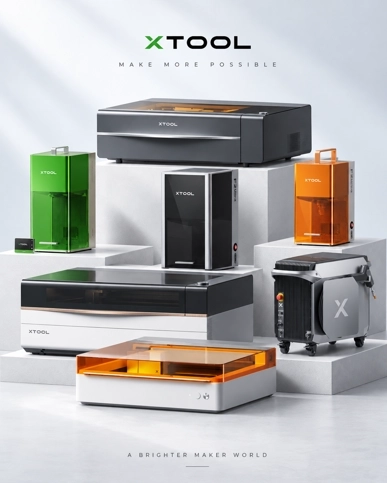
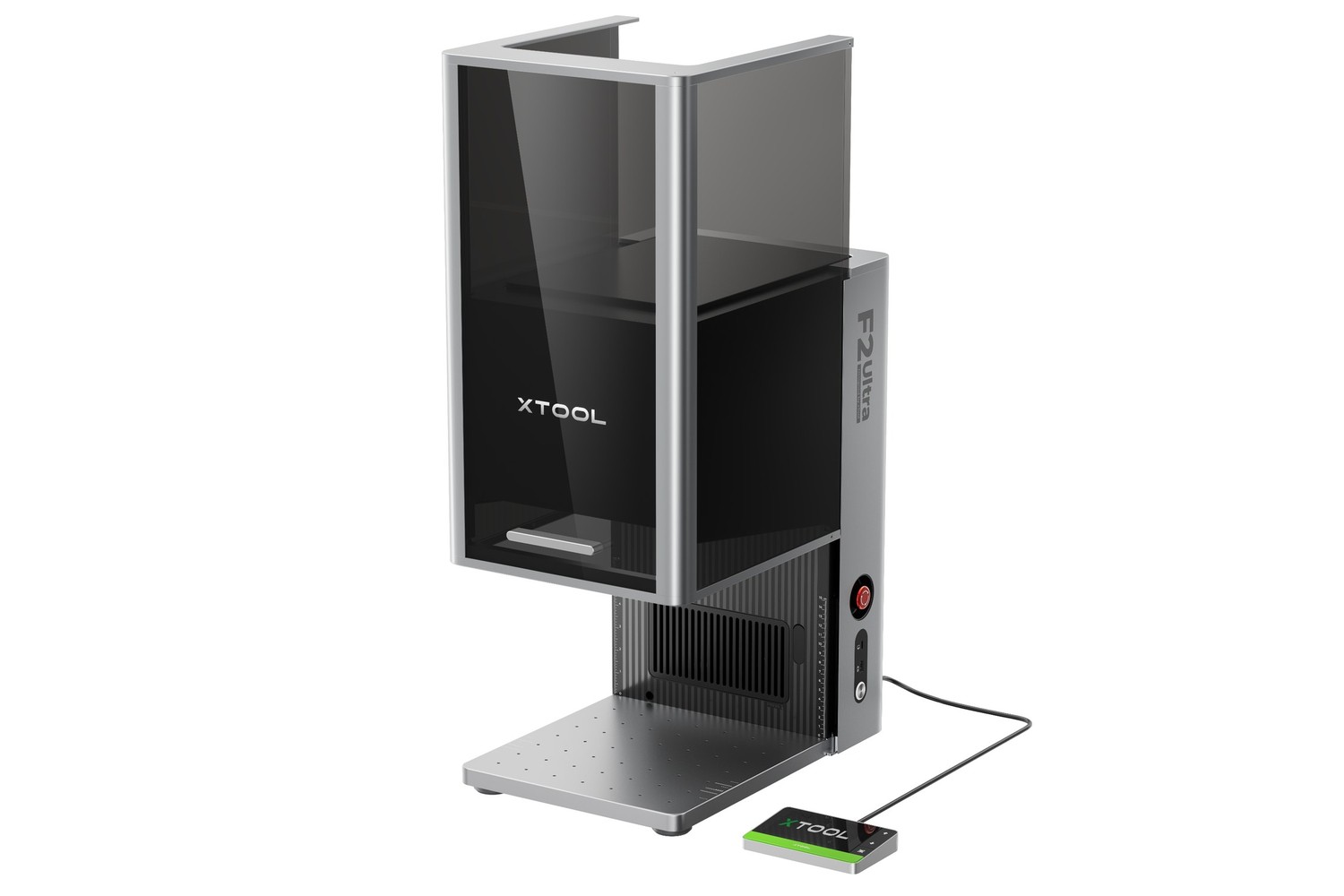
The machine: xTool F2 Ultra
The F2 Ultra is the standard for jewellery:
60W MOPA fiber laser — marks gold, silver and stainless cleanly.
Fine spot size — legible text inside a ring band.
Colour marking — black, white and colour on stainless and titanium.
Dual cameras — precise positioning on small pieces.
What a fiber laser actually does to precious metal
A fiber laser does not cut a groove, and it does not sit on the surface like ink. The beam vaporises a microscopic layer of the metal, so the mark is part of the piece rather than something applied to it. That is why an engraved name survives polishing, buffing and daily wear.
Gold, silver, stainless steel, titanium and brass all absorb the 1,064nm fiber wavelength, so all of them mark. Settings do not transfer between alloys. MOPA fiber lasers go further by controlling surface oxidation, which is how black, white and colour marks are produced on stainless and titanium.
Inside-ring engraving: the real constraints
An inside-ring engraving is the hardest job on the bench. A typical band gives you 6 to 8 millimetres of usable width, the surface curves away from the lens in both directions, and that curvature moves the metal out of focus as the beam travels around the inside.
Lose focus and the letters go pale at the edges. Lose positioning and a name sits crooked. A crooked name is worse than no name, because the customer sees it every time the ring comes off.
The F2 Ultra’s dual 48MP cameras address that: you can place the artwork on a small, curved piece and see where the mark lands before you fire.
What to consider before buying
The metals you work with — fiber marks all jewellery metals; a CO2 or diode laser will not mark gold or silver.
Inside-ring vs surface — inside-ring engraving needs fine positioning; the F2 Ultra’s cameras handle it.
Throughput — for same-day service, speed matters; a fiber laser marks in seconds.
If you already outsource engraving
Many Malaysian jewellers still send engraving out. The work disappears for a day or more and comes back at someone else’s quality standard.
Outsourcing holds up when volumes are low and the wording is simple. It stops holding up when you are turning away same-day requests, when a misspelt name means a second trip across town, or when the margin is being earned by someone else. A laser on the bench turns a two-day job into a two-minute one. It is a capital purchase, quoted by configuration.
Mistakes that ruin a jewellery engraving
Most ruined engravings are not the machine’s fault. They come from the setup around it.
Engraving before the stones are set — setting presses metal and applies heat, either of which can disturb a fresh mark.
The wrong laser type — CO2 (10,600nm) and diode (around 445nm) lasers do not mark bare gold, silver or stainless. Metals need fiber at 1,064nm.
No test piece — every alloy behaves differently. Run the setting on an offcut of the same metal first.
Text too small — next to the spot size, the letters fill in and merge into a smudge.
Bespoke one-offs vs repeatable volume
Hand engraving still has a place. A hand-cut scroll pattern on a bespoke commission is art, it takes hours, and no laser reproduces the individual cut marks a collector wants.
Names, dates, coordinates and repeat orders are the opposite problem. The customer wants the same result as last time, in the same place, in the same weight of line, and they want it before they leave the counter. That is laser work, marked in seconds and repeated exactly from the same file.
Most jewellers run both: the laser for text and same-day work, the hand tools for the pieces where the cut itself is the point.
The only way to judge is to engrave a ring you’d actually sell. Send us a sample or bring one in — we’ll engrave a name or date on it, free, so you can see the finish and decide.
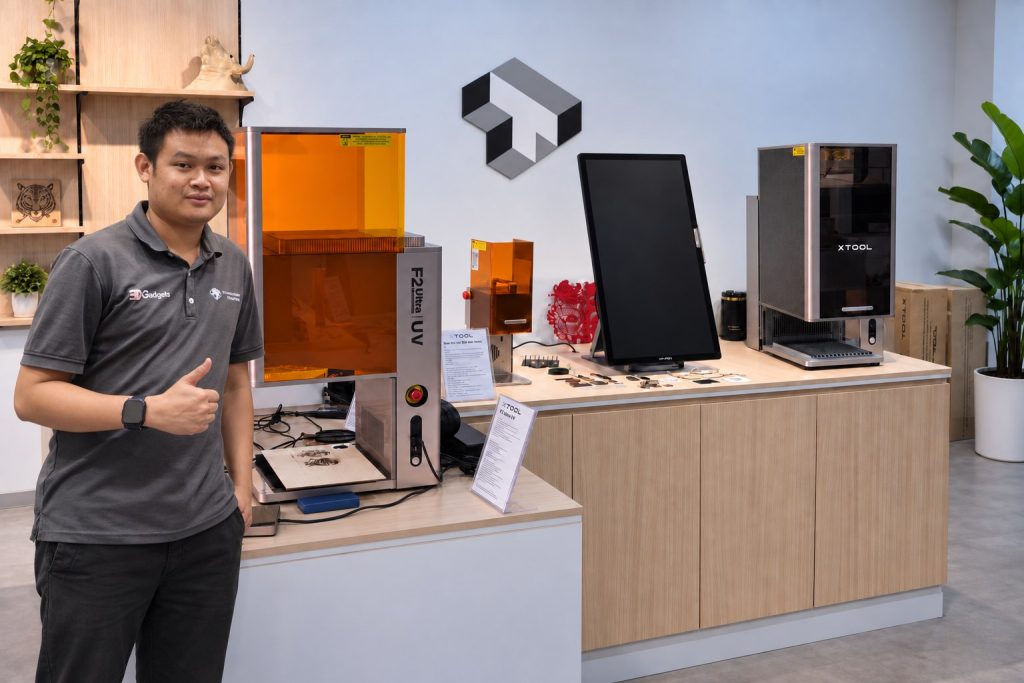
Visit our showroom
Our Kuala Lumpur showroom. Bring your product and we will engrave it in front of you, so you see the real result before you buy.