Tumbler Engraving in Malaysia: The Product That Pays for Itself
Tumbler Engraving in Malaysia: The Product That Pays for Itself
Quick verdict: Tumblers are the best product to start a personalised-gift business with: constant demand, a cheap blank, high perceived value and a mark that takes seconds to run. Only a fiber source marks bare stainless steel, and the rotary attachment that wraps a design around the body is an optional accessory sold separately.
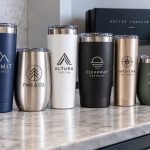
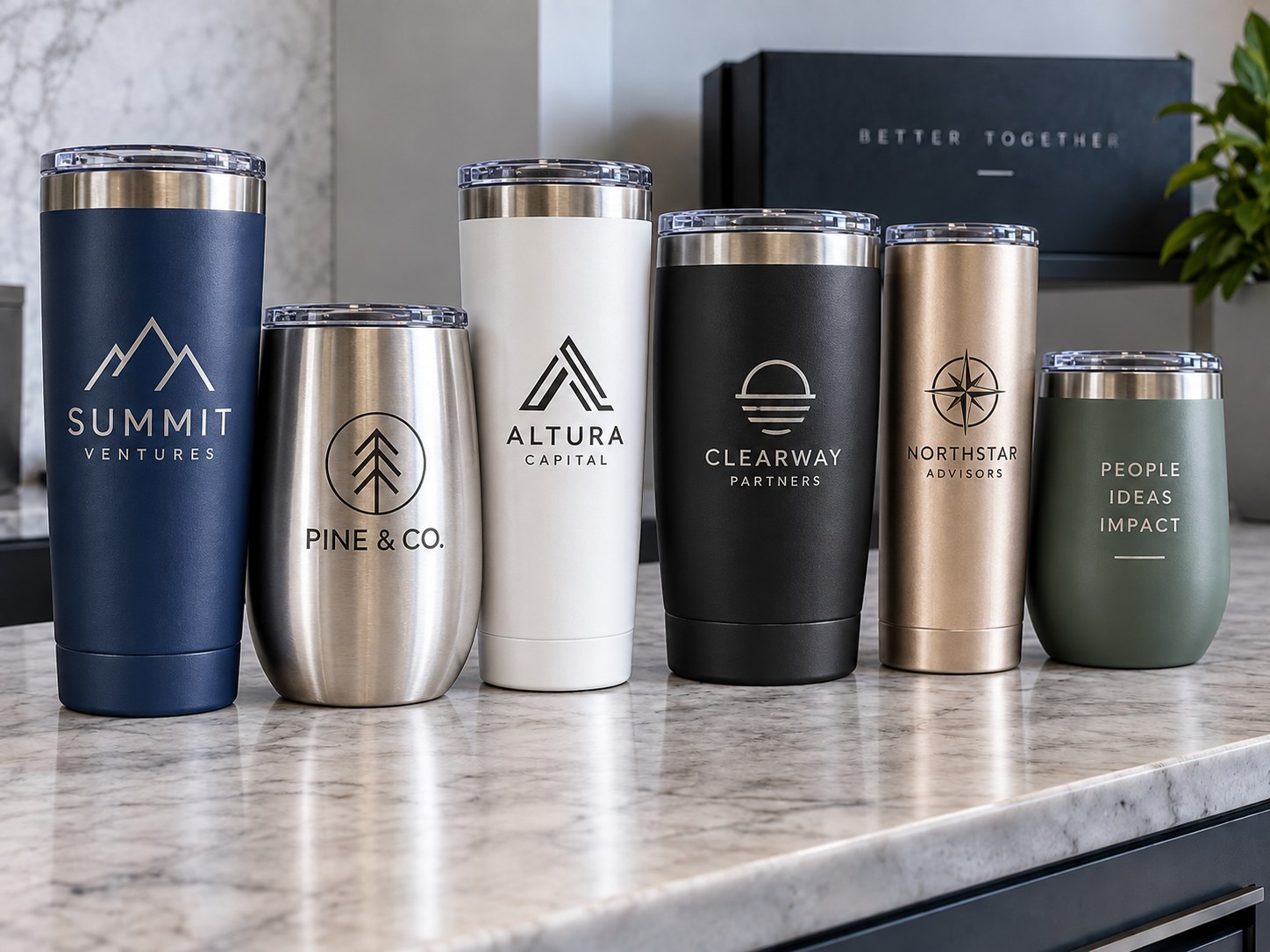
A plain stainless steel tumbler is a commodity. The same tumbler with a company logo, a name or a date marked into the metal becomes a corporate gift, a wedding favour, a keepsake.
That is why tumbler engraving is the most reliable entry product for a personalisation business in Malaysia: a cheap blank, fast marking and repeat buyers.
Why tumblers?
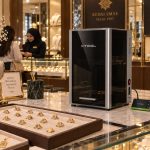
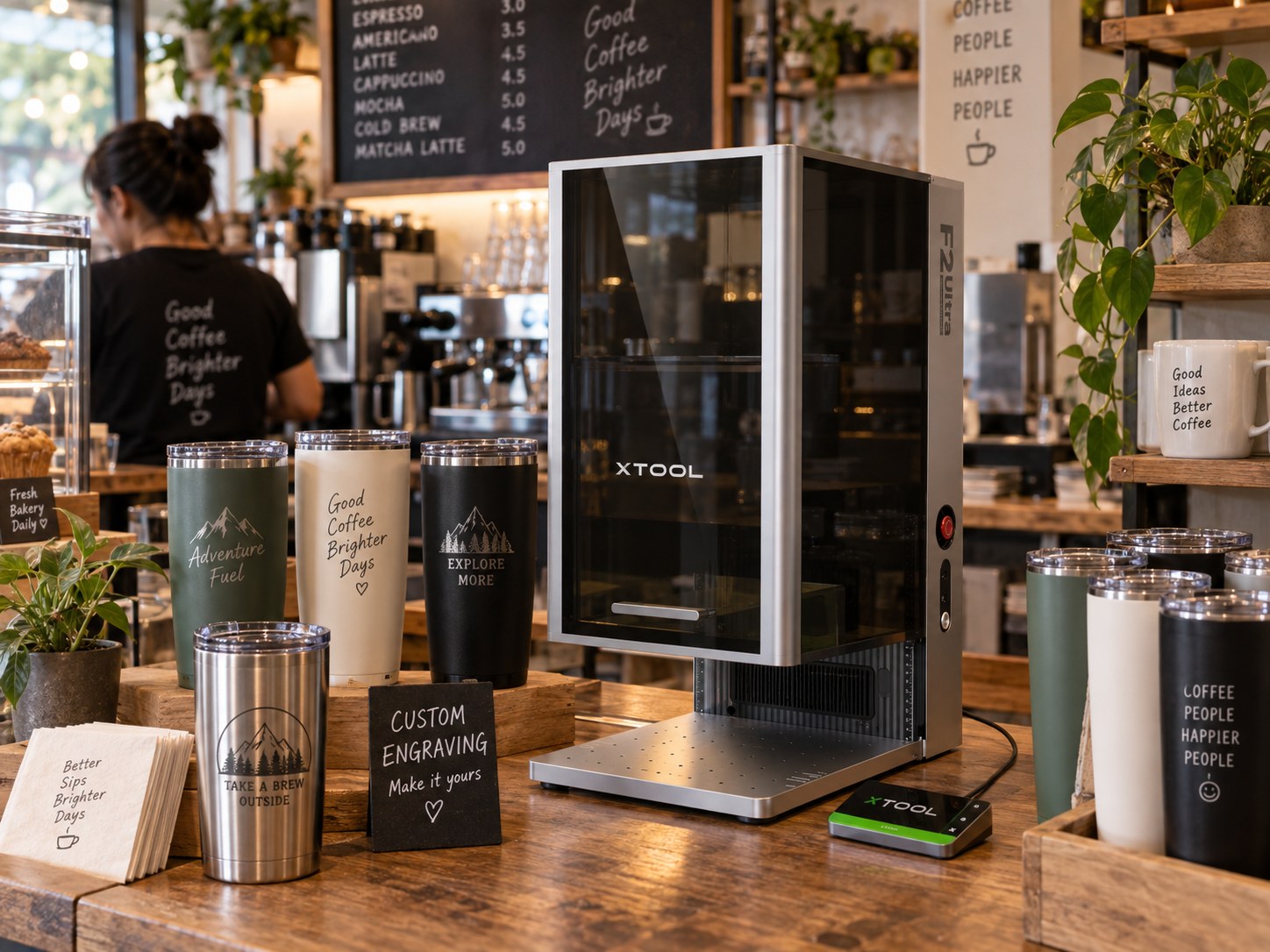
Personalised drinkware sells where people already gather: cafés, gift shops and studios run engraving as an in-store service.
Drinkware is the product most personalisation businesses start with, for practical reasons:
Constant demand — corporate gifts, events, weddings and graduations, most repeating annually.
A cheap blank, a high perceived value — the margin sits in the marking, not the stock.
Fast to mark — a logo runs in seconds to a couple of minutes, so a batch clears in a day.
A mark that lasts — lasered steel does not peel or lift like a vinyl wrap.
Easy to ship — light and unbreakable, which suits made-to-order selling.
What the laser does to stainless steel
There is nothing to burn away on steel. A fiber or MOPA laser marks stainless by driving energy in fast enough to change the surface itself: a thin oxide layer forms, and depending on the settings it reads dark grey to black, or light against a darker background. The mark is in the metal, not on it.
That also explains why one file behaves differently on different blanks: the alloy, the finish and any coating change how the surface absorbs the beam. Bright stainless takes the darkest annealed mark; a brushed body scatters more of it and comes out softer unless you adjust power, frequency and speed.
Never quote a new blank delivery before test-engraving one unit from it.
Tumbler finish
What the laser does to it
Mark you get
Bare / bright stainless
Anneals the surface into an oxide layer
Dark grey to black, high contrast
Brushed or satin stainless
Same reaction, spread across the grain
Softer, lighter grey; slower for more depth
Powder-coated colour
Removes the cured coating to expose the steel
Crisp silver on colour; contrast comes from the coating
Plated finishes (gold-tone, rose-tone)
Ablates the plating, reacts with the layer beneath
A tone shift, sometimes near-black; test first
Anodised aluminium
Removes the anodised layer
Light mark on a coloured body
Powder-coated and plated tumblers
Powder-coated tumblers are the blanks beginners misjudge most often. The laser is not marking steel — it removes cured powder coat to expose the metal, so the contrast comes from the coating.
That changes the setup. Too much power cuts past the coating into the steel and throws a halo of scorched powder around the design; too little leaves a milky partial removal that looks like a mistake. Two lighter passes usually beat one heavy pass, and a new supplier’s batch must be retested even at the same colour name.
Plated finishes are the least forgiving. Gold-tone and rose-tone platings are thin and the beam removes them rather than reacting with them, so the result lands between a subtle tone shift and a near-black shadow — but they are the blanks a marketplace seller cannot copy.
Where heat is a real risk — thin-walled bodies, coated plastics, glass liners — a cold-marking UV source such as the xTool F2 Ultra UV reacts with the surface instead of heating it.
The right technology: fiber, not CO2
This is the mistake that catches beginners. A CO2 laser cannot engrave bare stainless steel — the beam reflects off the metal instead of being absorbed. You need a fiber laser to mark metal permanently.
Technology
Marks stainless steel?
Result
CO2
No (needs a coating)
Coating burns off, mark wears
Diode
No
No effect on bare metal
Fiber / MOPA
Yes
Permanent, high-contrast mark
MOPA (colour)
Yes
Black, white or colour mark
The wavelengths are three different tools: CO2 at 10,600 nm for wood, acrylic, leather and glass; fiber and MOPA at 1,064 nm for metals; UV at 355 nm for glass, crystal, fine plastics and coatings. A CO2 machine can mark a coated tumbler by burning the coating away, but that is a removed layer and it degrades. For drinkware washed daily, fiber is the only sensible choice for the metal itself — see CO2 vs fiber vs UV lasers.
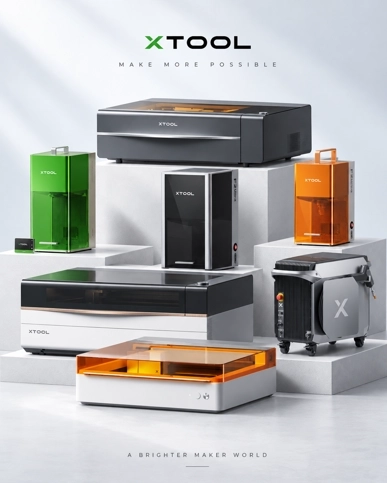
The machine: xTool F2 Ultra
The xTool F2 Ultra marks stainless tumblers permanently, and its MOPA source adds something a plain fiber laser cannot: colour on stainless steel.
60W MOPA fiber + 40W diode — pulse and frequency control is what enables colour marking on stainless. It cuts brass and stainless up to 2 mm.
220 × 220 mm work area, extending to 220 × 500 mm with the conveyor, so a batch runs in sequence.
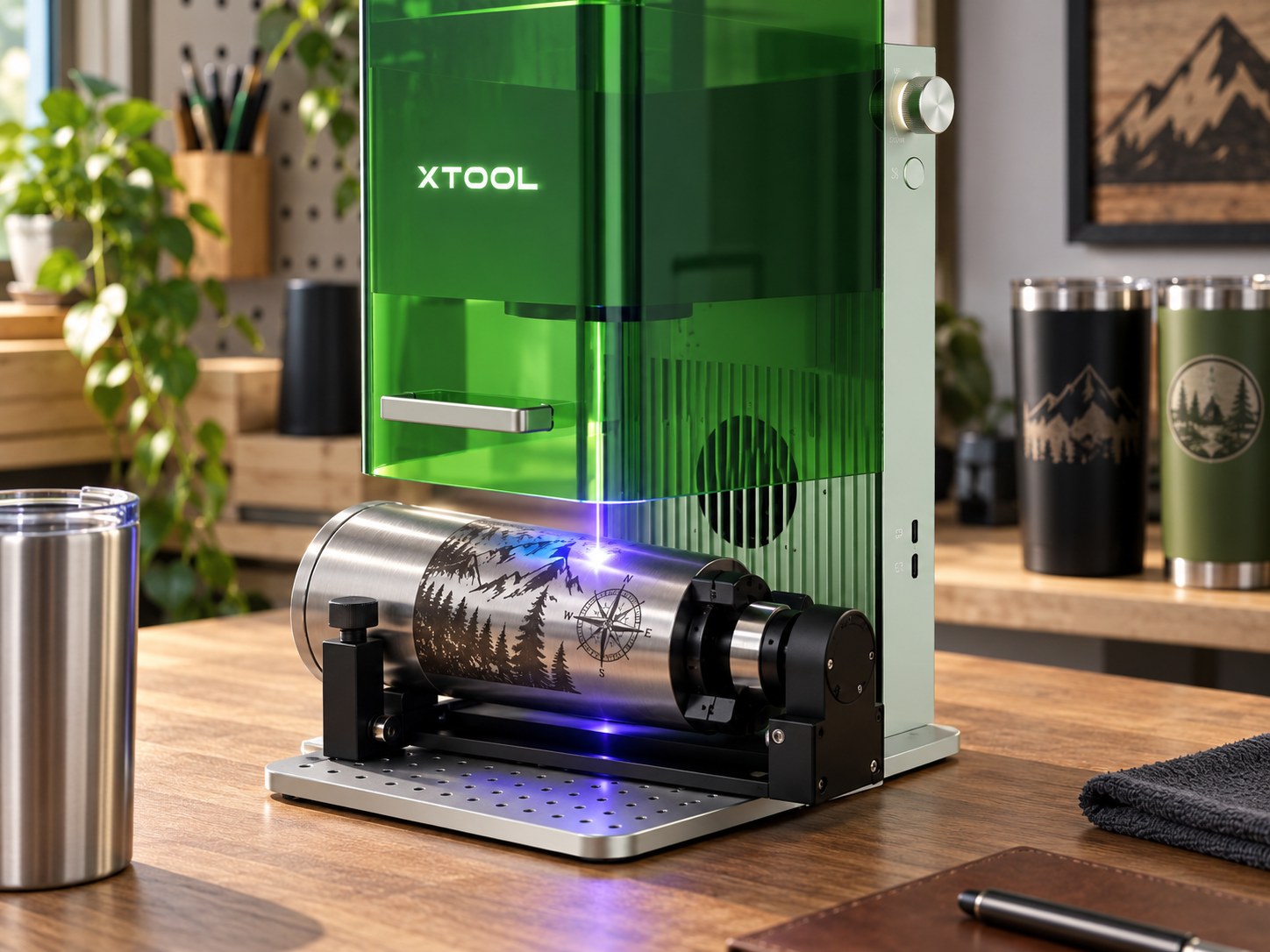
Rotary attachment — an optional accessory, sold separately, for the full circumference of a tumbler.
Dual cameras — alignment that puts a logo exactly where you planned it on a curved, reflective surface.
The rotary attachment carries the tumbler through the beam, so the design wraps the full circumference and meets cleanly at the back.
The rotary attachment is an optional accessory
The rotary attachment is sold separately. It is not part of the machine and it is not needed for every job — but for drinkware it is the difference between a flat logo on one face and a design that wraps the body.
You need it when artwork runs past the curve: full wraps, marks that must sit opposite each other on the same flask, names running around the body. A single small logo on one face does not need it.
Because it is a separate purchase, plan for it before the first bulk order rather than after. A customer who asks for a wrap-around design and hears the hardware is not there yet will take the next order elsewhere.
Pricing the job: blank, time and margin
The most common commercial error is pricing off the blank, which is the smallest part of the job. Build the figure from three things:
The blank — landed cost, including shipping and the units that arrive dented.
Machine time — file preparation, alignment, the rotary pass and any re-run. Time is what you are really selling.
Consumables and risk — electricity, jigs and the occasional blank destroyed while dialling in a new delivery.
Then apply margin to the whole job, not just the blank. One unit takes almost as long to prepare as ten, so ten units in one setup can be offered at a better rate per unit and still be the more profitable job. Quote per job, after you have seen the blank and run a test.
Corporate and bulk orders
Single-unit orders come from marketplaces; the money comes from organisations. A corporate order is fifty or two hundred identical flasks with one logo, one delivery date and one invoice.
One setup, many units — file, fixture and alignment are done once.
Cleaner blanks — volume buys a consistent batch, which removes the biggest source of rework.
Higher-value add-ons — colour marking, wrap-around designs, individual names over a logo.
Win these accounts with a sample, not a quotation: a marked tumbler left with the decision-maker achieves more than any email. Individual names over a corporate logo are a strong upsell — same batch, one extra variable, and the recipient keeps the gift. More on that in engraving corporate gifts and awards.
Applications
Corporate gifts — company logos on bulk tumblers and flasks.
Wedding favours — names and dates for guests.
Retail — personalised tumblers as made-to-order marketplace listings.
Brand merchandise — custom drinkware for events, launches and pop-ups.
Clubs, schools and teams — repeat orders, same artwork, changing names.
Common mistakes
Quoting a new blank delivery before test-engraving it. Suppliers change alloy and finish without changing the carton description.
Marking too large. A big design magnifies curvature distortion and alignment drift. Smaller marks look more precise.
Buying a CO2 or diode machine for metal. Neither will mark bare stainless, and no settings will change that.
Assuming the rotary attachment is included. It is an optional accessory, sold separately.
Pricing from the blank cost alone. That ignores machine time and setup, where the profit lives.
Selling only single units. One-off retail orders do not build a business the way a repeat account does.
What it takes to start
One fiber laser — the xTool F2 Ultra, plus the rotary attachment as a separate purchase if you want to offer wrap-arounds.
A blank supplier — settle on one or two consistent local sources rather than chasing the cheapest carton.
Samples — engrave a few so buyers can see and feel the finish.
A marketplace listing — personalisation converts well because it is made-to-order.
A test routine — one marked unit from every new delivery, kept against your settings notes.
Can a CO2 laser engrave a stainless steel tumbler? Not bare stainless — a CO2 beam reflects off the metal instead of being absorbed, so it leaves no permanent mark. It can strip a powder coating, but that wears.
Do I need a rotary attachment? Only for artwork that runs around the body; a single logo on one face is marked in the flat work area. It is an optional accessory sold separately, so plan for it before quoting wrap-arounds.
Can you engrave in colour on stainless steel? Yes, with a MOPA source: pulse and frequency control produces black, white and warm tones rather than only dark annealed grey, and colour is normally priced as a premium finish.
Will the engraving fade or wash off? No. The mark changes the metal surface rather than adding ink or film, so washing and daily handling do not remove it. On coated blanks it is the coating around the mark that ages.
Can I engrave tumblers I already own? Usually, yes — bring it in and it can be tested first. The body material and the coating decide the result, and both are easy to check.
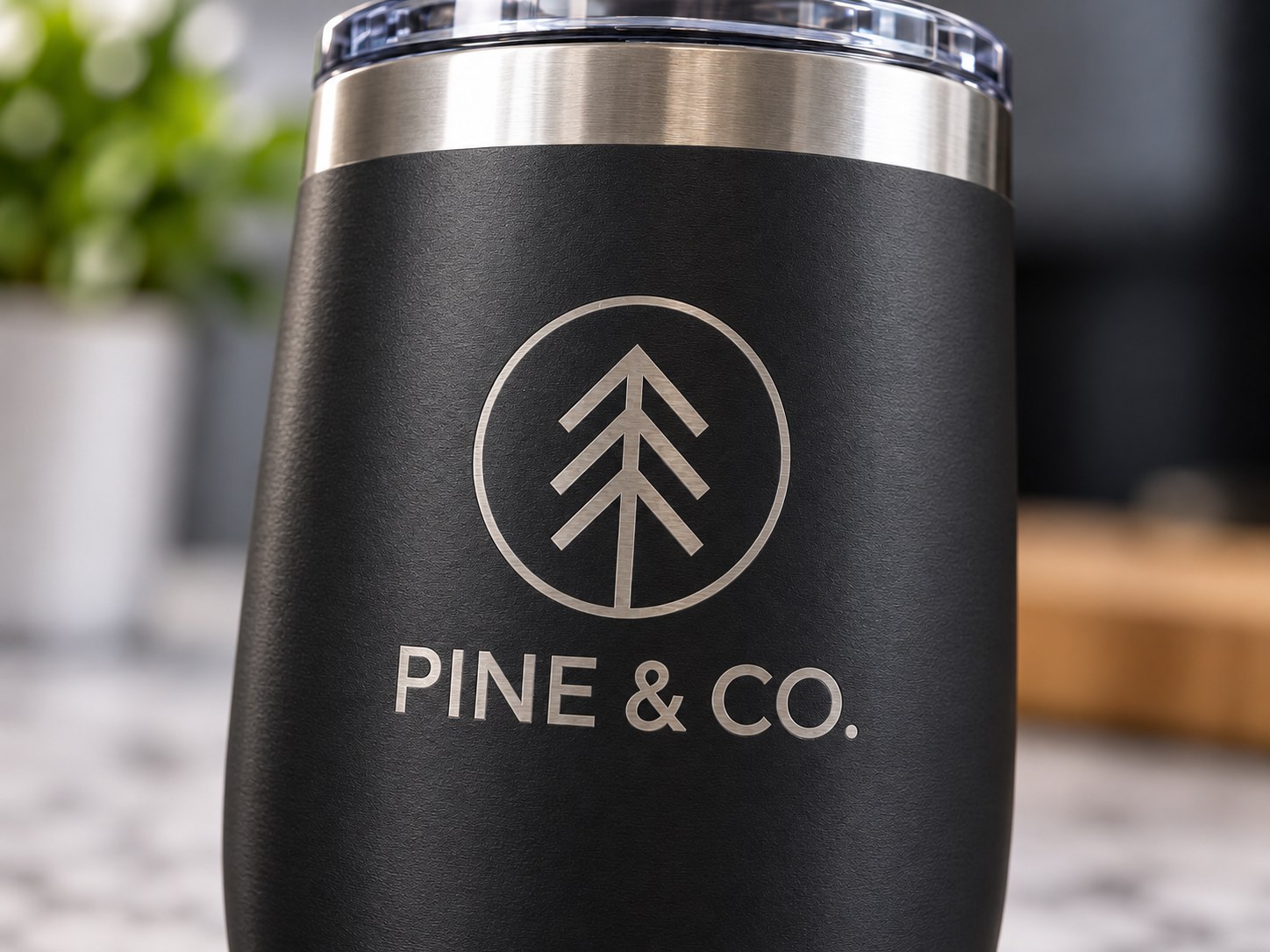
The mark is what customers judge: crisp and even, cut through the coating to the stainless beneath, so it will not peel or lift.
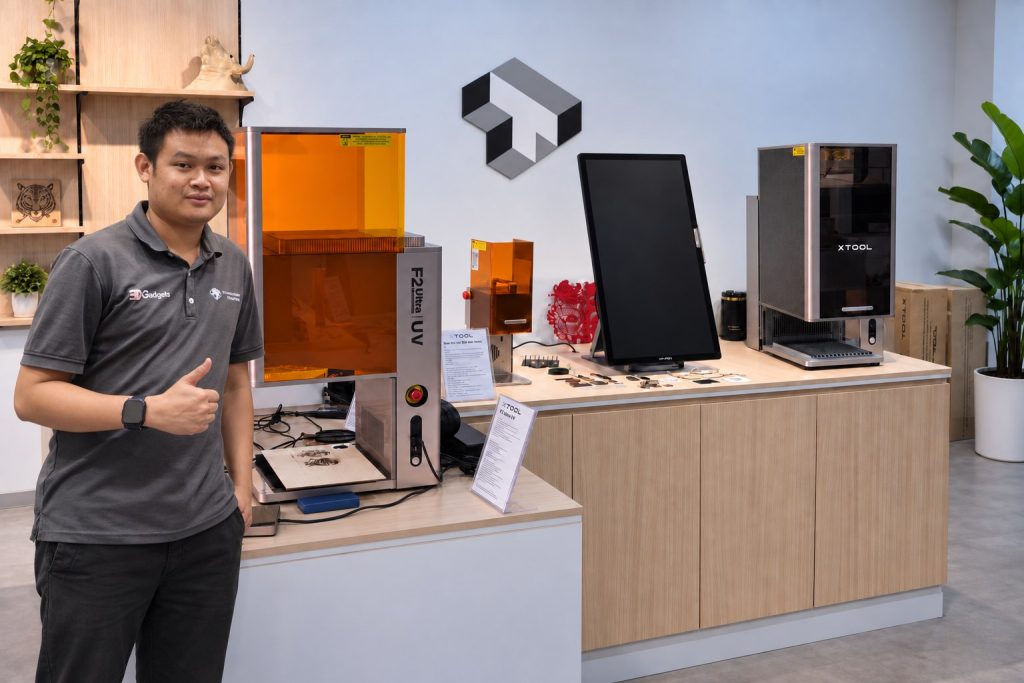
Bring a tumbler to our Kuala Lumpur showroom and we’ll engrave your logo or a name on it in front of you — you’ll see the quality and the speed, and leave with a sample you can show customers.
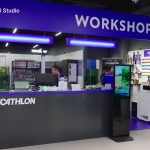
Our Kuala Lumpur showroom. Bring your product and we will engrave it in front of you, so you see the real result before you buy.
Laser engraving is easiest to judge in person. Tell us what you want to mark and bring a sample to the showroom, or send us a photo and we will tell you which machine and power fits the job.