Quick verdict: Stickers, printing and CO2 lasers all fail on bare metal. A fiber laser marks the metal itself — permanent, high-contrast, and available in colour on stainless with MOPA.
Putting a logo on metal sounds simple until you try it and watch the mark rub off, fade or peel. The methods most people reach for — stickers, printing, even a CO2 laser — all fail on bare metal.
The method that works is a fiber laser. Here’s why, and how.
Why most methods fail on metal
Method
Works on bare metal?
Why it fails
Sticker / label
No (peels)
Adhesive gives out
Screen / pad printing
Poorly
Ink doesn’t bond to bare metal
CO2 laser
No
Wavelength bounces off metal
Fiber laser
Yes
Marks the metal itself
Etching and electro-chemical marking need masks and acids
Chemical etching and electro-chemical marking both produce a permanent mark, but both need a mask, a stencil or an electrolyte that has to be made, aligned and cleaned off every part. Acid baths and stencils add handling steps, consumables and disposal duties. A fiber laser needs none of that. There is no ink, no stencil, no acid and no per-part consumable, only the file and the metal in front of it. A one-off sample and a batch of 200 identical tags run the same way.
Marking, engraving or cutting: three different jobs
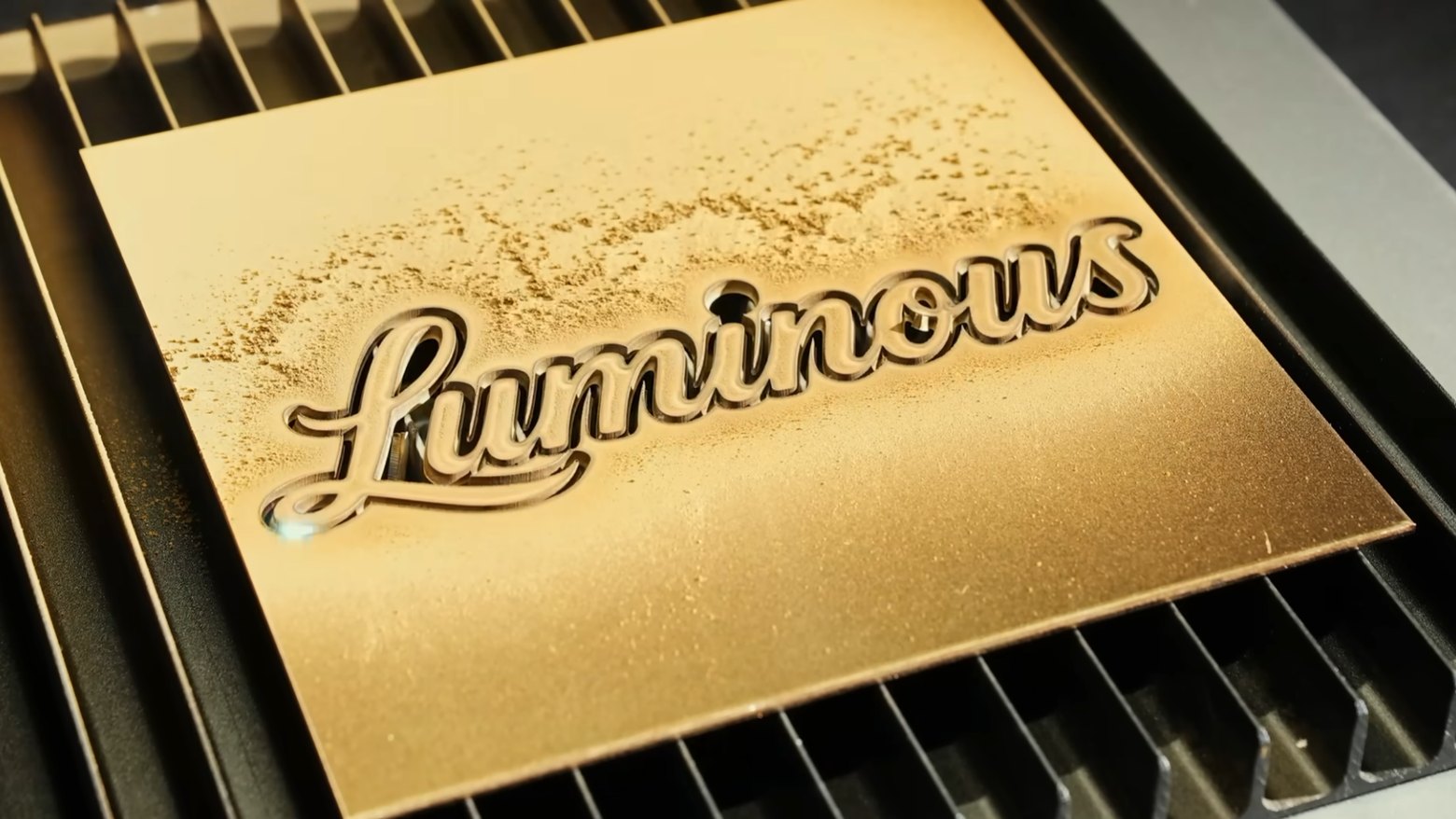
These three are often treated as one thing, but they do different work on metal. Marking anneals or lightly ablates the surface and leaves a mark flush with the metal, which suits a logo, a serial number or a QR code. Engraving removes material to a set depth, so it gives a tactile mark you can feel. Cutting goes right through the sheet, which is how flat badges, tags and shaped panels are made. If the mark only needs to be read, mark it. If it needs to be felt, engrave it. If the outline has to be the part, cut it.
How a fiber laser marks metal
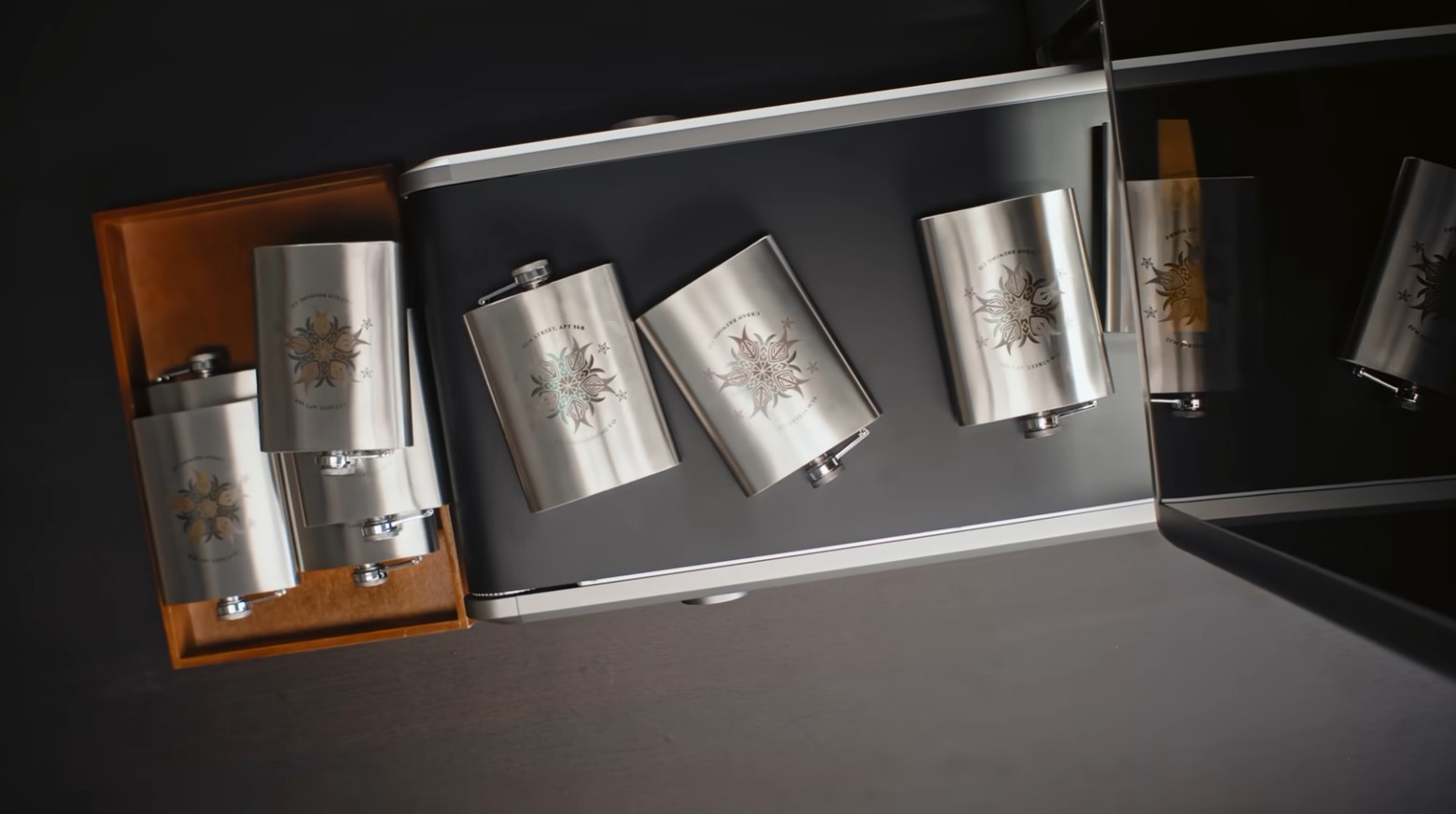
A fiber laser’s 1,064 nm wavelength is absorbed by metal, so it marks the surface itself — not a coating on top. The result is a permanent, high-contrast mark that can’t be peeled, washed or worn off.
Which metals mark, and how the mark looks
Stainless steel is the best behaved. A MOPA fiber laser produces black, white and colour marks on it by controlling the oxide layer that forms on the surface, and titanium behaves in much the same way. Anodised aluminium marks to white or light grey, because the laser removes the dyed oxide layer rather than colouring the metal. Bare aluminium, brass and copper mark with lower contrast and rarely take colour. Polished surfaces give a weaker mark than brushed or matte ones. Coated and painted metals are unpredictable: the laser may burn the coating instead of marking the metal beneath. Test the alloy and finish you will actually use.
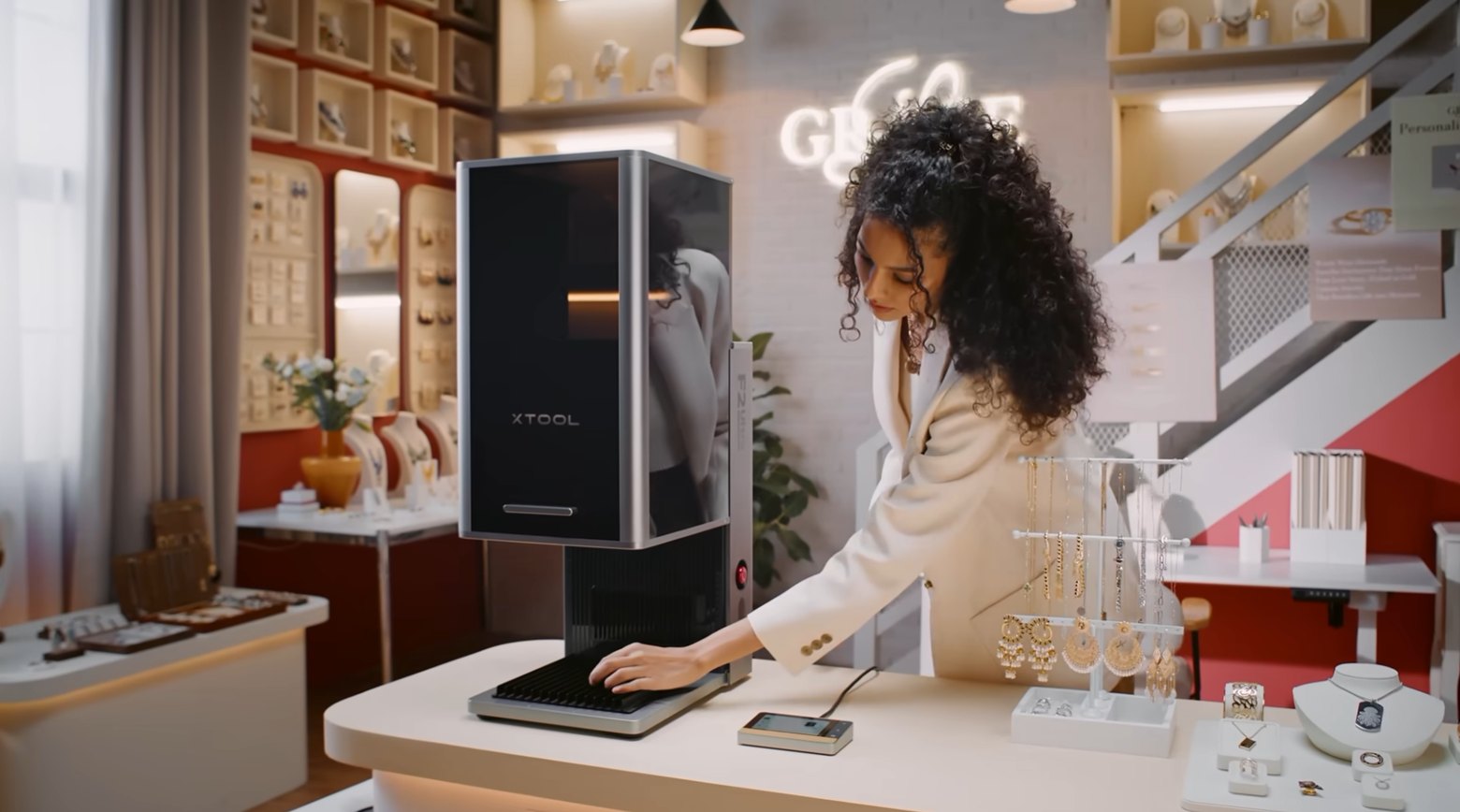
The machine: xTool F2 Ultra
The F2 Ultra is built for this:
60W MOPA fiber laser — marks stainless steel, aluminium, brass, titanium, gold and silver.
Colour marking — the MOPA laser produces black, white and colour marks on stainless steel, not just a single tone.
Dual cameras — precise positioning so your logo lands exactly where you want.
Rotary attachment (optional — sold separately, not included with the machine) — logos on curved items like tumblers and bottles.
What you can logo
Stainless steel tumblers and bottles
Aluminium nameplates and badges
Brass and copper plaques
Tools and equipment
Jewellery
Readability and placement on real parts
Small text has a legibility floor. Below roughly a 1 mm cap height, letters start to fill in and read as a smudge rather than a word. Give fine details room, keep stroke weights consistent, and judge the result at arm’s length rather than under a loupe. On curved items such as tumblers, bottles and tools, a rotary attachment holds focus and scale even around the barrel. The rotary is an optional accessory rather than part of the standard machine, so budget for it if curved work will make up a large share of your output. Keep the logo clear of welds, seams, stamped numbers and mill marks, which change the contrast and where the mark lands. On polished parts, expect a softer mark and adjust the artwork or the placement to suit the surface.
Proving a mark is permanent
A mark is permanent when it survives the abuse the product will actually meet, and that is a test, not a claim. Scrub it with an abrasive pad, wipe it with solvent and alcohol, and for parts used outdoors plan a salt spray or humidity cycle. Items that get washed should go through a dishwasher cycle and the handling a customer gives them. For traceable products, batch codes, serial numbers, part numbers and data-matrix or QR marks stay readable after the finish is applied, which is what regulated and medical work depends on. Record the settings that passed so the next batch matches, and the mark becomes a repeatable process.
Metal finish, alloy and coating all change how a logo marks. The only honest test is to engrave your product. Send us a sample or bring it in — we’ll mark your logo on it, free, so you can see the finish before you buy.