
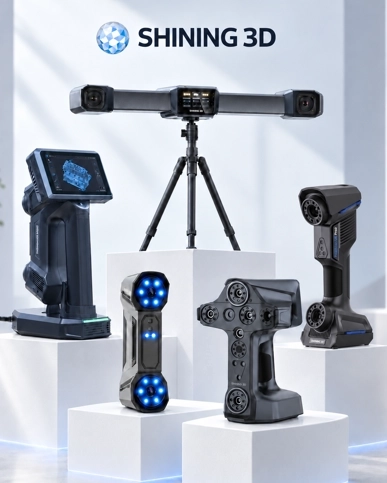
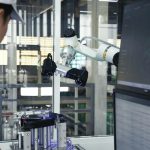
Handheld 3D scanner with robotic arm for automated data capture
3D Scanning Solutions by Industry in Malaysia
Whatever your industry — automotive, mold making, aerospace, marine, energy, medical or education — 3D...
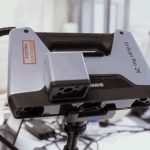
3D scanning for education and research
3D Scanning for Education & Research in Malaysia
For universities, polytechnics and research institutes in Malaysia, 3D scanning turns physical objects...

3D scanning an infant's head for a cranial helmet
3D Scanning for Medical, Dental & Orthotics in Malaysia
For orthotics, prosthetics and dental labs in Malaysia, 3D scanning replaces messy plaster casting with...
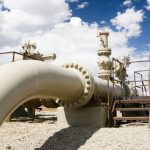
3D scanning an energy pipeline for corrosion inspection
3D Scanning for Energy & Heavy Equipment Inspection in Malaysia
For energy operators and heavy-equipment manufacturers in Malaysia, portable 3D scanning replaces slow...

An xTool Retail Studio in-store workshop counter with engraving machines and personalised products on display
In-Store Personalization and Live Engraving: Turn Walk-Ins into Buyers
Live engraving converts browsers into buyers — a customer who watches their own name go onto a product...
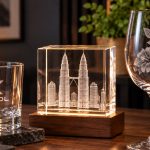
A frosted XTOOL logo on a whisky tumbler beside a crystal block with the Kuala Lumpur skyline engraved inside it
Glass and Crystal Laser Engraving in Malaysia: From Frosting to 3D
Glass needs a UV laser. A CO2 or fiber laser heats the glass and cracks it; a UV laser marks cold, so...

The xTool F2 Ultra on a jewellery shop counter beside trays of gold rings and custom engraving signboards
Jewelry Laser Engraving in Malaysia: Names, Dates and Logos That Last
Laser engraving is the standard for jewellery because it is non-contact — no clamping, no pressure, no...

Six personalised tumblers in assorted finishes, each engraved with a different corporate logo
Tumbler Engraving in Malaysia: The Product That Pays for Itself
Tumblers are the best product to start a personalised-gift business with: constant demand, a cheap blank,...
  • Article
  • >
  • FDM vs Resin 3D Printing: Which Should You Choose in Malaysia?

FDM vs Resin 3D Printing: Which Should You Choose in Malaysia? (2026)

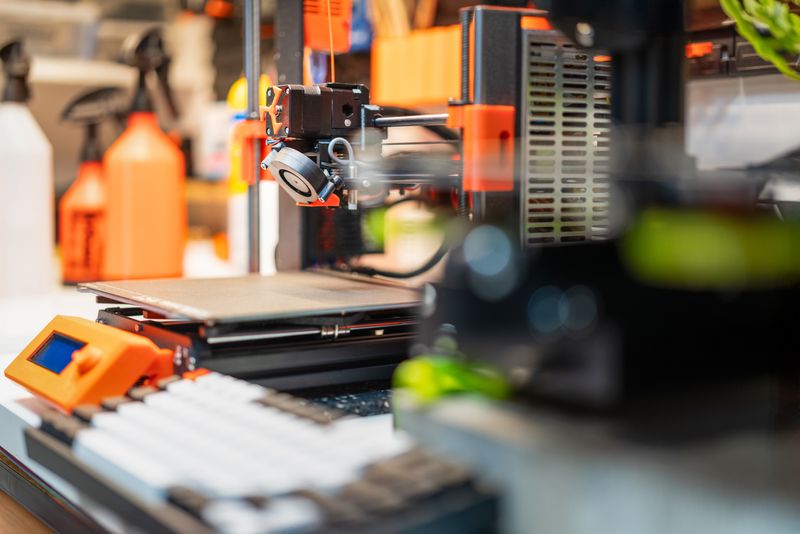
3D printer in a workshop

Quick verdict: FDM is the workhorse for functional parts, prototypes and anything large — it is cheaper to run and prints stronger parts. Resin wins on fine detail and smooth surfaces — the choice for dental, jewellery and miniatures. Most serious Malaysian workshops run both. Here is the full breakdown so you can pick the right one.

What is FDM printing?

FDM (Fused Deposition Modelling) extrudes melted thermoplastic filament through a heated nozzle, laying down material layer by layer. It is the most common and affordable 3D printing technology — and the most versatile when it comes to materials.

Because FDM melts real engineering plastics, the parts are strong and functional — you can print working prototypes, jigs, fixtures and even production parts. The material choice is huge: from everyday PLA and PETG, to engineering nylon, carbon-fibre-filled polymers, and high-temperature PEEK and ULTEM.

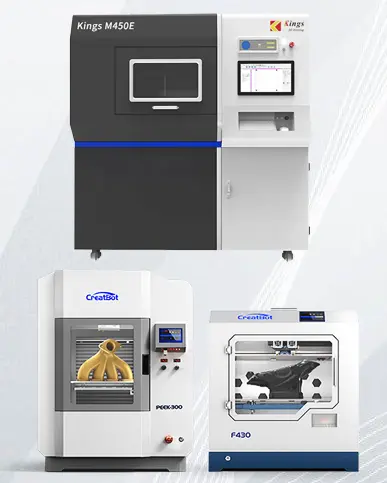
Machines we recommend: the Bambu Lab A1 Mini for beginners, the Bambu Lab X1 Carbon for prosumer work, and the CreatBot D600 Pro2 HS for industrial production.

FDM 3D printer printing a part

What is resin printing?

Resin 3D printer printing an object

Resin printing (SLA / DLP / MSLA) uses light to cure liquid photopolymer resin into solid layers. Because the light can be focused far more precisely than a nozzle, resin prints achieve much finer detail and smoother surfaces — often indistinguishable from injection-moulded parts.

The trade-off is materials and workflow. Resin parts are more brittle and less heat-resistant than FDM, and every print needs washing and UV-curing before it is usable. But for detail-critical work, nothing else comes close.

Machines we recommend: the Soonser Mars Pro for budget entry, the E-Plus EP-A800 for professional SLA, and the WaxJet 510 for castable jewellery patterns.

FDM vs resin: full comparison

Factor FDM Resin (SLA/DLP/MSLA)
Surface finish Visible layer lines Smooth, near-moulded
Detail resolution 50–300 microns 25–50 microns
Part strength Strong & functional Brittle, lower impact resistance
Heat resistance High (PEEK up to ~250°C) Low to moderate
Materials PLA, PETG, ABS, nylon, carbon-filled, PEEK, ULTEM Photopolymers: standard, tough, flexible, castable, dental
Build volume Up to 1 m+ (large format) Smaller (typically under 300 mm)
Post-processing Minimal (remove supports) Wash + UV cure (essential)
Running cost Low (filament RM 50–200/kg) Higher (resin + IPA + curing)
Safety Low (ventilation for some filaments) Moderate (resin is a skin irritant)
Best for Functional parts, jigs, large prototypes Detailed models, dental, jewellery, miniatures

Cost breakdown: it’s not just the printer

The sticker price is only part of the story. Running costs and post-processing equipment add up quickly, especially with resin.

FDM Resin
Printer (entry) RM 1,000 – 5,000 RM 1,500 – 8,000
Printer (professional) RM 15,000 – 300,000+ RM 15,000 – 30,000
Consumables Filament RM 50–200 / kg Resin RM 150–500 / L
Extra equipment None essential Wash station + UV curing unit
Typical cost per part Low Moderate

When to choose which

Choose FDM when…

  • You need functional, load-bearing parts
  • Parts are large (over 300 mm)
  • You want engineering materials (nylon, carbon-filled, PEEK)
  • You want the lowest running cost and simplest workflow
  • You are prototyping jigs, fixtures and end-use parts

Choose resin when…

  • You need fine detail and smooth surfaces
  • Parts are small and precise (dental, jewellery, miniatures)
  • You need castable patterns for jewellery or investment casting
  • You print visual models and display pieces
  • You are producing high-detail batches of small parts

Malaysia-specific considerations

  • Humidity — Malaysia’s high humidity absorbs into filament, so FDM users need dry-box storage or a filament dryer to keep prints consistent.
  • Resin handling & disposal — uncured resin is a skin irritant; you will need gloves, ventilation and proper disposal of resin waste and IPA.
  • Local support matters — both technologies benefit from a local vendor for spare parts, resin/filament supply and training.
  • Air-conditioning — resin printers print more reliably in a temperature-controlled room, which is worth planning for.

Our honest recommendation

If you are buying your first machine or making functional parts, start with FDM — it is cheaper, safer and more forgiving. Add a resin printer when you have a clear need for detail-critical work like dental, jewellery or display models.

Many of our customers run one of each: an FDM machine for day-to-day functional printing, and a resin machine for the high-detail jobs. That combination covers almost every application in Malaysia.

FAQ

Which is cheaper to run, FDM or resin?
FDM is cheaper — filament is inexpensive and there is no mandatory wash/cure step. Resin adds resin, isopropyl alcohol and a curing station to the running cost.

Can resin parts be used functionally?
Some “tough” or “engineering” resins can handle light functional use, but resin parts are generally more brittle and less heat-resistant than FDM engineering plastics.

Is resin printing dangerous?
Uncured resin is a skin irritant and should be handled with gloves in a ventilated area. Once parts are fully washed and cured, they are safe to handle.

Looking for the right solution for your application? Our team is here to help. Talk to our 3D solution specialist today.

Thank you for signing up. You will be the first to know the Industry news, upcoming products, latest technology and special promotion.

Stay Tuned.

Trinventor Solution Malaysia logo

Thank you! 

Your submission has been received. Someone from our team will contact you soon.

If you have any urgent issue,
please contat us by phone
@ +60 12716 8839

Book a Demo

sla-bg

FDM vs Resin 3D Printing: Which Should You Choose in Malaysia?

On-site demos are available in most areas of Peninsular Malaysia, and depend on the product model. For some locations or models we may need to arrange a different format - we will confirm within one working day.

Product Inquiry Form

sla-bg

FDM vs Resin 3D Printing: Which Should You Choose in Malaysia?