Collaborative Robot Safety in Malaysia: ISO 10218 & ISO/TS 15066 Explained
Collaborative Robot Safety in Malaysia: ISO 10218 & ISO/TS 15066 Explained
Quick verdict: a cobot is not automatically safe — it is a robot designed to make safety simpler to achieve. The protection comes from three things working together: the arm’s power-and-force limits, a proper risk assessment of the actual cell, and the right operating mode (monitored stop, speed and separation, hand guiding or power-and-force limiting). The standards that define all of this are ISO 10218-1, ISO 10218-2 and ISO/TS 15066 — and understanding them before installation is the difference between a cobot cell and a project delay.
“It is a collaborative robot, so it is safe” is the single most expensive sentence in cobot automation. The arm being collaborative is a precondition; the safety of any specific application is established by what surrounds it — the tool it carries, the parts it moves, the speed it runs, and where a person can physically be. This guide explains the standards that govern how that is done (ISO 10218-1, ISO 10218-2 and ISO/TS 15066), the four collaborative operating modes, and what all of it means in a Malaysian factory where the cell is next to real people.
The three standards, in plain terms
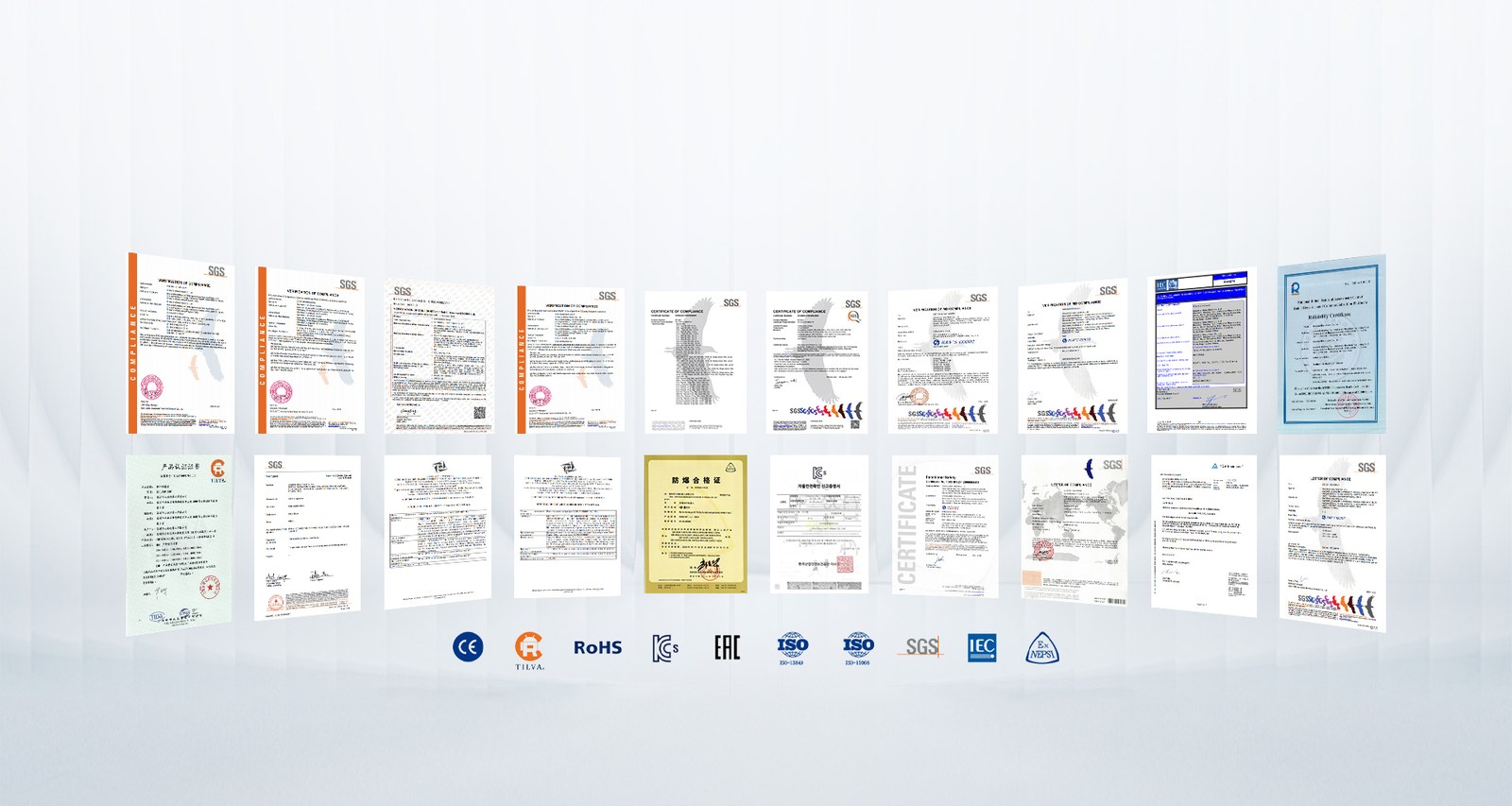
ISO 10218-1 — the robot itself. The safety requirements a robot manufacturer must build into the arm: emergency stop, protective stop, safety-rated inputs, limits on power and force, and the documentation that goes with it. If you buy a compliant cobot from Huayan’s range — the Elfin, Elfin-Pro or S Series — this is the layer the manufacturer is responsible for.
ISO 10218-2 — the cell around the robot. The integration standard: risk assessment of the whole application, safeguarding where hazards remain, layout, and verification before handover. This is the layer that matters most on your floor, and it is the integrator’s responsibility. It is also where a cobot installation either gets its fenceless freedom or loses it: the standard does not say “cobot means no fence”; it says the outcome must be safe, and shows how to demonstrate it.
ISO/TS 15066 — collaborative operation in detail. The technical specification that extends the two above for collaborative applications. It defines the four modes below and — the part everyone quotes — quantifies what a human body can tolerate in a quasi-static or transient contact, which is how a power-and-force-limited cell can be validated rather than guessed at.
Note what none of the three say: nothing exempts a cobot from assessment. A caged industrial robot avoids assessing human contact by preventing it; a collaborative cell assesses contact properly — which is more work at the design stage and much less steel afterwards.
Monitored zones and reduced speeds are configured in the controller — the robot behaves predictably around people.
The four collaborative operating modes
ISO/TS 15066 formalises the ways a person and a robot can share work. Real cells mix them:
Safety-rated monitored stop. The simplest: the robot stops when a person enters a defined zone, and stays stopped until the person leaves. Used where contact should not happen at all, but a fence would be overkill — for example an operator inspecting a part beside a machine-tending cell.
Speed and separation monitoring. The robot slows as a person approaches, stops before contact becomes possible, resumes as they leave. Zone shapes and speeds are set from stopping distance and the risk assessment. This mode is what makes a fenceless cell practical in a busy workshop — the robot behaves politely and predictably around people instead of panicking at every intrusion.
Power and force limiting. The robot may operate close to people with its contact forces engineered below the limits of ISO/TS 15066. This is where the cobot’s own design does the protecting — but only for the speeds, tools and body areas the assessment covers. A fast arm with a sharp tool is a different situation from a slow arm with a soft gripper, and the two get different conclusions.
Hand guiding. A person holds the arm and moves it directly — the teaching method that makes cobots approachable, done with a qualified operator under conditions the assessment sets.
What actually gets assessed — the questions that decide fencing
A cobot risk assessment is not a form; it is a set of engineering judgments about the specific cell. The ones that move the fence question most:
Tools and edges. A gripper’s rounded jaw is a different hazard from a knife-edged tool or a welding torch. Sharp or hot tools push the assessment toward safeguarding despite the arm being collaborative.
The parts themselves. Sheet-metal panels and machined castings have sharp edges that travel fast; the hazard is the payload, not the arm. Heavy parts also carry more kinetic energy at the same speed.
Speed and posture. A speed-and-separation cell at reduced speed near people is straightforward; the same arm racing at full speed changes the analysis. Posture matters too — an elbow sweeping toward a person is a different contact than a wrist.
Pinch and crush zones. The gaps between the arm and its pedestal, the machine door plane, the turntable, a conveyor — the robot is not the only thing that can hurt a person in the cell. Good cell design eliminates the pinch points rather than guarding a promise.
Who can be where. The assessment is about actual people: an operator tending a machine, cleaners on the night shift, a technician fixing a conveyor. If someone can reach the cell, the cell is designed for them.
Environment. Wet floors, forklift traffic, and whether the cell is in explosive-atmosphere zoning (where the Elfin-Ex exists precisely for this) all enter the picture.
Usually fine without a fence
Moderate speeds with soft or rounded tooling
Light parts, blunt edges, gripped securely
Operators trained on the cell’s zones
Layout keeping bodies out of the main sweep
Usually keeps safeguarding
Sharp, hot or pointed tooling
Heavy parts or high cycle speed
Uncontrolled visitors or blind approaches
Pinch zones that cannot be designed out
The real answer
Comes from the assessment, per cell
We build it with you before installation
And verify it before handover
Power-and-force limiting is built into the arm; the cell assessment decides how far that protection reaches.
What safe looks like on the factory floor
Concrete measures that show up in a well-integrated Huayan cobot cell, beyond the arm itself:
Emergency stops where hands reach them — on the teaching pendant, on the cell, and wherever the standard requires another.
Monitored zones set in the controller, not painted to hope: speeds, stop distances and restart behaviour configured and tested.
The enabling device for teaching: motion only while a person is deliberately holding the button.
Floor marking and layout that make the cell’s working envelope visible — people are better at avoiding a boundary they can see.
Speed limits tuned to the task, and acceleration profiles that keep contact forces inside the studied limits rather than at them.
Training, recorded: operators who know the zones, the stop buttons and what not to do, plus a rule that only trained people program the arm.
Documentation: the risk assessment, layout drawings, verification results and the maintenance plan — the file your safety officer (and any auditor) will ask for.
Malaysia: OSHA 1994 and the employer’s duty
In Malaysia the general duty of care for workplace safety sits with the employer under the Occupational Safety and Health Act 1994 (OSHA), administered by DOSH. Machinery and workplace risk management expectations flow from that duty, and a robot cell is no exception: the employer is responsible for a safe installation, and having bought a certified collaborative arm does not transfer that duty to the robot. What certifications do is make the compliance work tractable — the manufacturer’s conformity (ISO 10218-1) plus a disciplined integration (ISO 10218-2) plus documented verification gives a safety file that stands up on inspection.
One local pattern is worth naming: cells are frequently installed into existing buildings — a machine bay, a shophouse unit, an extension floor — where the collaborative approach’s low-footprint, low-fencing design is often what makes compliance easier, because the layout can keep people out of the hazard by geometry rather than steel.
How we handle safety at integration
Safety is not an appendix to a cobot project; it is the first deliverable and the last check:
Assessment — task, hazards, people, environment, tools, parts: the ISO 10218-2 risk assessment, done with your team before hardware is ordered.
Cell design — zones, speeds, layouts and interventions designed so the assessment’s conclusions are met by design rather than by paperwork.
Integration and verification — hazards confirmed in the real cell: stopping distances measured, zones tested, emergency stops and enable devices proven, documentation completed.
Training and support — operators and supervisors trained on what the cell requires of everyone around it, with local support for the life of the installation. See the collaborative robots range and our machine tending solution for how this looks in practice.
Frequently asked questions
Do I need a fence around a cobot in Malaysia? Not automatically — and not never. The risk assessment decides. If the tooling, parts, speed and layout allow power-and-force-limited or speed-and-separation operation, the cell can run fenceless with monitored zones; if the hazards exceed what collaborative operation can cover, safeguarding is added for those zones. Two cells with the same robot can have two different answers.
Who is responsible for the safety of the cell — us or the robot supplier? Both, in different layers. The manufacturer certifies the robot to ISO 10218-1 and provides the safety functions; the integrator performs the cell risk assessment and verification under ISO 10218-2; and as the employer, the duty of care under OSHA 1994 stays with you. We deliver our layers fully documented, which is what makes your side of the file straightforward.
Can a cobot work without a safety-rated controller or safety PLC? Many collaborative cells are built entirely around the robot’s own safety-rated inputs and functions — that is one of the advantages. Where the application adds hazards the robot cannot see (a turntable, a machine door, a conveyor), those come with their own safeguards. The architecture follows the assessment, not a shopping list.
What is ISO/TS 15066 in one paragraph? It is the technical specification that tells you how collaborative operation is done safely: the four operating modes, and quantified limits for contact between robot and human — how much force and pressure, quasi-static or transient, for different body areas. It turns “the robot stops gently” into engineerable numbers that a cell can be designed and verified against.