What Does a Cobot Cost in Malaysia? The Factors Behind the Number
What Does a Cobot Cost in Malaysia? The Factors Behind the Number
Quick verdict: the price of a cobot is not one number, because the arm is never the whole purchase. A robot arm is a component; what you buy is a working cell — arm, gripper, part presentation, integration, safety and support. That is why serious integrators quote per cell and why a useful answer to “how much” starts with what the cell must do, not with a price list.
Every buyer starts in the same place: search for a price, find none, and assume the industry is hiding something. Nobody is. The honest situation is that the same collaborative arm can sit in a RM-something simple cell or in a cell costing several times more, and both quotes can be correct — because the arm was never what made them different. The gripper, the way parts arrive, the machine the robot talks to, the safety assessment and the software are where a cell gets its character, and its cost.
This guide explains what actually moves the number, how to read a quote, and what to have ready so the number you get is the number you can trust. (For what a cobot can do before you think about budget, see cobot vs industrial robot.)
Why nobody publishes a cobot price
There is a version of this market where arms sell like appliances with a list price. It is not the version that produces working automation. Consider two cells using the identical 12 kg arm:
Cell A: the arm unloads a CNC machine and drops parts into a tray. A two-finger gripper, a machine interface, a fixed tray, a fence-free layout in an existing bay.
Cell B: the same arm welds fabricated frames with a force-controlled torch package, handshakes with a positioner, works from vision-corrected part locations, and logs every weld for traceability.
The arm line is identical in both quotes. Everything else — tooling, fixtures, sensors, software, integration hours, safety work — differs enormously. A published “cobot price” would describe neither cell. So the number is built from the scope, and the scope is built from your part.
What actually drives the number
The robot class fits the load and the reach. Payload, reach and environmental rating (IP-rated arms for wet or dusty cells) decide which model — and sizing with margin is cheaper than living at the limit. The Elfin, Elfin-Pro and S Series ranges cover the band from bench work to 60 kg heavy payload.
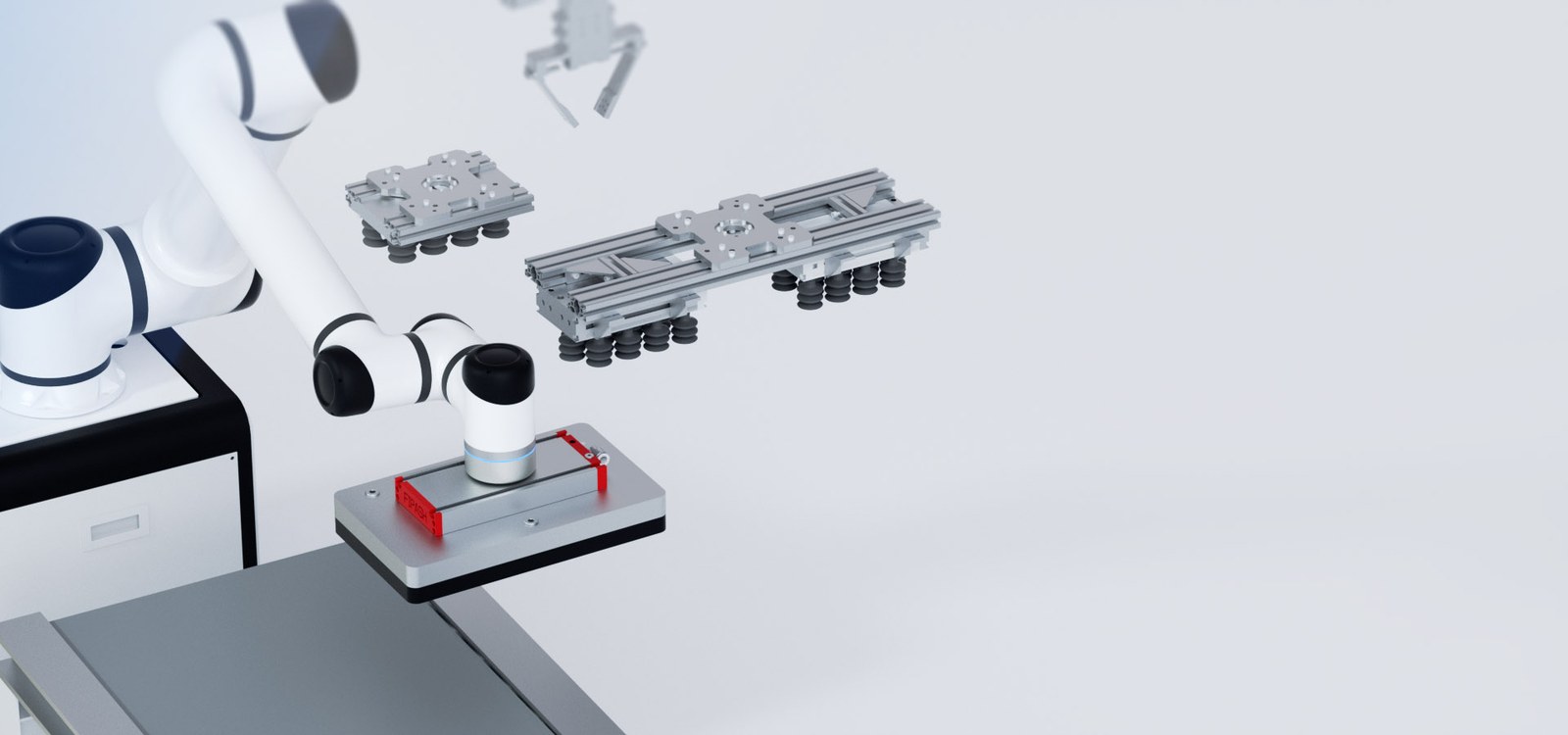
The gripper and tooling. A simple two-finger electric gripper is a modest line item; a force-controlled welding package, a custom vacuum array or a double gripper for cycle-critical tending are engineering exercises. This is often where a cell’s cost personality is decided — and where a lighter design saves money twice (cheaper arm class, faster cycle).
Part presentation. Parts that arrive in trays need trays. Parts that arrive randomly need feeding systems. Parts on a conveyor need a conveyor handshake. Presentation is the least glamorous and most underestimated line in any quote.
Integration and programming. The machine handshake (door, cycle start, completed signals), the teach process, the part programs, the logic that keeps robot and machine from colliding — this is skilled work, priced as such, and it is what makes the difference between a machine that moves and a cell that runs.
Safety work. The risk assessment, safety configuration and verification behind a collaborative cell are deliverables, not paperwork. A fenceless cell saves steel but never skips this step — see cobot safety in Malaysia for what it involves.
Software and data. If the cell reports to your systems — quality records, MES, traceability — that integration is scoped like any other: honestly, and only if you need it.
Installation, training and support. Commissioning on your floor, training your operators, spare consumables kept local, and a service relationship afterwards. Cells that are cheap to buy and expensive to own are a false economy, and the support line is where Malaysian buyers should look hardest.
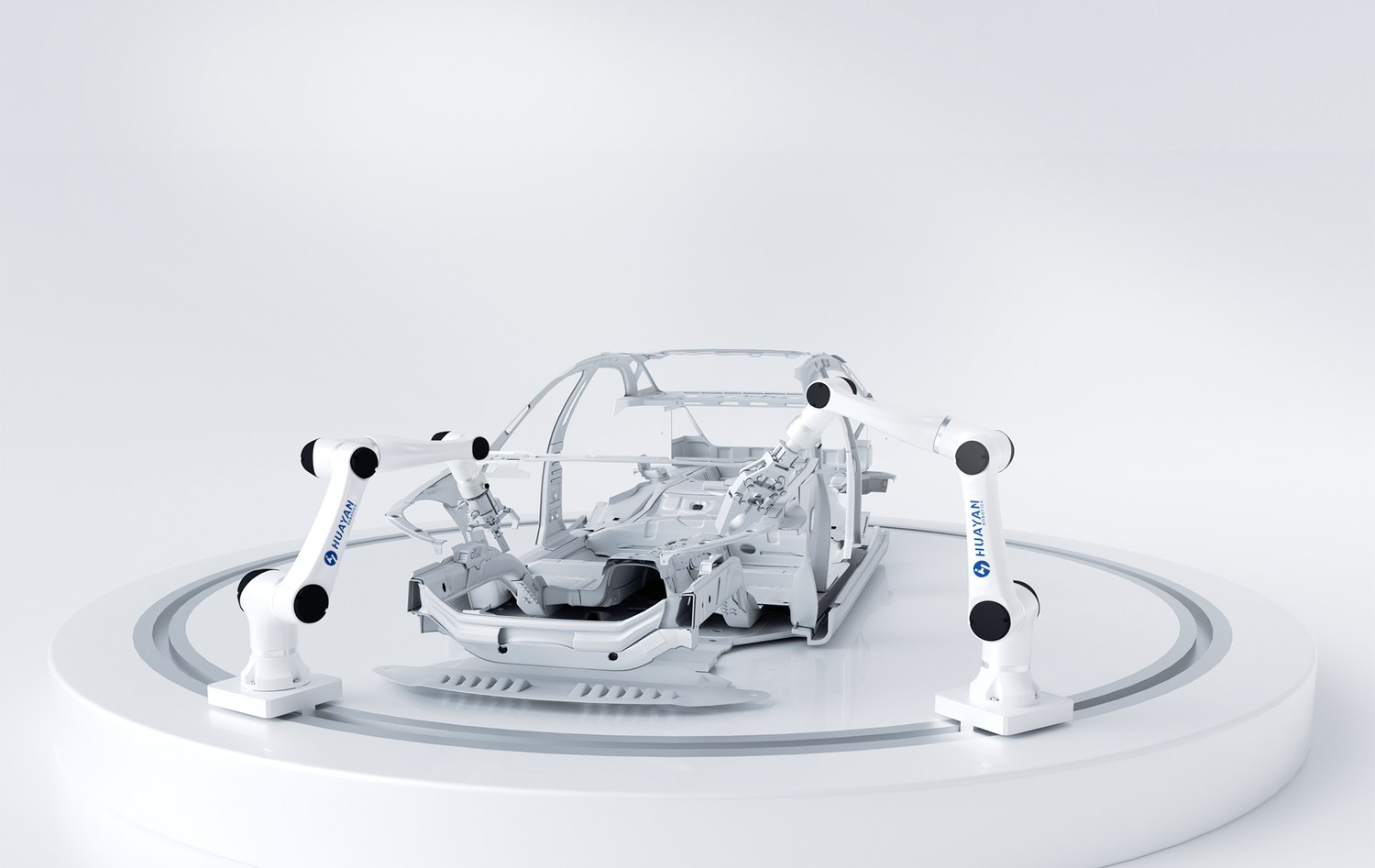
Tooling, presentation and integration — the lines that move the number.
Where the budget actually goes, and why
Element
What it includes
What moves it up
Robot arm
The cobot itself, controller, cabling
Payload, reach, IP rating; sizing margin
Tooling
Gripper, jaws, torch, vacuum, sensors
Force control, custom fingers, specialised processes
Part presentation
Trays, feeders, fixtures, conveyor handshakes
Random-arrival parts, high part variety
Integration
Machine interfaces, programming, logic, testing
Old machines without signals; complex cell logic
Safety
Assessment, config, verification, documentation
Sharp tools, heat, heavy parts, shared traffic routes
Data
Reporting, traceability, dashboards
MES/QMS integration, per-part records
Lifecycle
Training, spares, service, future part changes
Remote locations; unknown spare channels
Read a quote against this table. A quote that shows one “robot” line and silence is not a cheaper cell; it is an incomplete one, and the missing rows will find you later.
How to compare two quotes honestly
Same scope, or it is not a comparison. Put both quotes against the table above and mark every row present, absent or “assumed”. Quotes usually differ in what they assume you already have — trays, air, guarding, part programs — not in what they price.
Ask what happens on part number two. A cell is an asset for years; the cost of teaching the next part (and who can do it) matters more than the tenth of the invoice it never appears in.
Check the support footprint. Who answers in year three, from where, with what spares? Local support is part of the price you are paying; confirm it exists before you need it.
Insist on the demo. A quote built around running your actual part in a demo cell is worth more than a cheaper quote built around a slide.
The product decides the cell — and the cell, not the arm, decides the cost.
The number that actually matters: the case, not the cost
The purchase price is one side of an equation whose other side is what the cell changes: machine hours recovered when a spindle stops waiting, shift capacity added without hiring, scrap and rework avoided, injuries and turnover reduced in the jobs nobody wants. A cobot cell in Malaysia is usually justified by one of those, and the arithmetic uses your numbers — your cycle, your operators, your shifts, your rework rate.
That is the conversation we actually have. Bring the process, and we will build the cell scope and the case together — and tell you plainly when the numbers do not support automating yet. A robot sold into a job that cannot pay for it is a bad outcome for both sides; it is also the fastest way for a supplier to lose the next project.
Frequently asked questions
Why can’t I just get a cobot price list? Because the arm is one component of a system, and the system is what you buy. Published arm prices describe a robot in isolation — no gripper, no presentation, no integration, no safety, no support. They are a starting reference at best and a misleading anchor at worst. Per-cell quoting is how the two cells in this article end up with different numbers despite the identical arm.
What is the cheapest sensible way to start? Pick the job with the simplest presentation and the clearest payback: one machine, one part that arrives in a tray, one gripper. Prove the cell on the simple job, then expand its duties — the arm you bought for the simple job can be retaught for the next one. Starting with the most sophisticated job on the floor is how first projects die.
Can we save money with a used robot? Sometimes — but judge the whole risk: warranty, spare parts, software licensing, safety documentation and support. A used arm with no local support channel can void the savings in one downtime event. If a used arm is the right call for your cell, we will say so; we would rather scope a hybrid than sell a number you regret.
What do you need from us for a real quote? The part (drawings or photos and its weight), how it is made today, how many per shift, what the cell should change (unattended hours, output, quality), the machine it serves if any, and the space around it. That is enough to scope the cell honestly — and to tell you if the answer is “not yet”.