
Handheld 3D scanner with robotic arm for automated data capture
3D Scanning Solutions by Industry in Malaysia
3D Scanning Solutions by Industry in Malaysia Quick verdict: Whatever your industry — automotive, mold...
3D scanning for education and research
3D Scanning for Education & Research in Malaysia
3D Scanning for Education & Research in Malaysia Quick verdict: For universities, polytechnics and...

3D scanning an infant's head for a cranial helmet
3D Scanning for Medical, Dental & Orthotics in Malaysia
3D Scanning for Medical, Dental & Orthotics in Malaysia Quick verdict: For orthotics, prosthetics...

3D scanning an energy pipeline for corrosion inspection
3D Scanning for Energy & Heavy Equipment Inspection in Malaysia
3D Scanning for Energy & Heavy Equipment Inspection in Malaysia Quick verdict: For energy operators...
No posts found
  • Article
  • >
  • 3D Scanning for Manufacturing in Malaysia: A Complete Guide

3D Scanning for Manufacturing in Malaysia: A Complete Guide

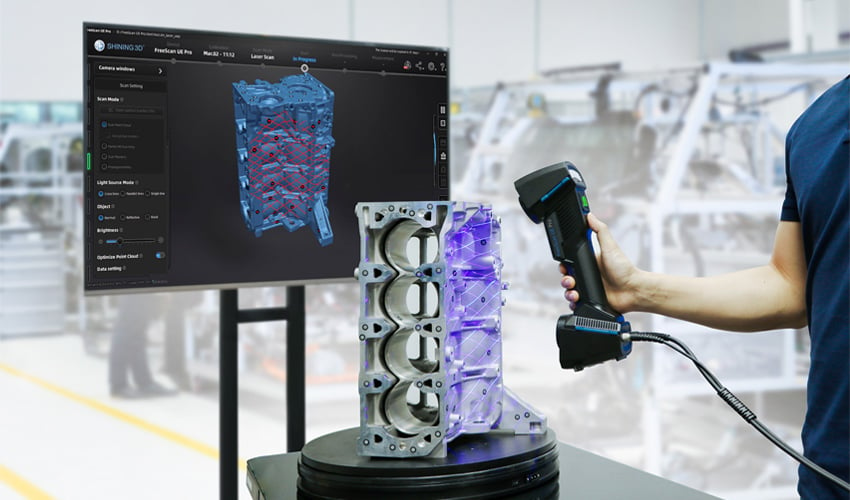
3D scanner

Quick verdict: 3D scanning captures a physical object as a digital model — essential for reverse engineering, quality inspection and digital archiving. Most manufacturing teams in Malaysia are best served by a handheld laser scanner plus reverse-engineering software as a complete solution. Here is everything you need to choose the right one.

What is 3D scanning?

A 3D scanner measures an object’s shape and converts it into a point cloud, then a mesh — a digital twin you can modify in CAD, inspect against a reference, or reprint. Unlike manual measuring, scanning captures complex curved surfaces in minutes, with accuracy down to tens of microns on metrology-grade machines.

For manufacturing, three uses dominate: reverse engineering (copying a legacy part into CAD), quality inspection (checking a produced part against the design), and digital archiving (preserving tooling, moulds and fixtures).

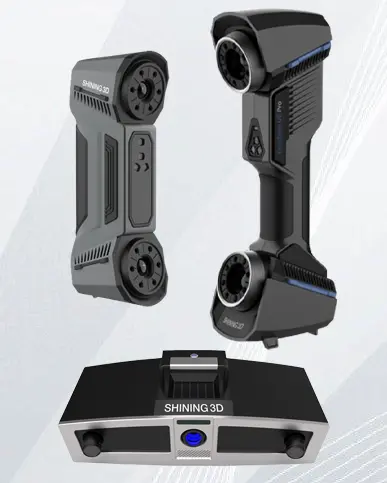
Solutions we recommend: the Shining 3D FreeScan Combo or the wireless FreeScan Combo+ Wireless for handheld versatility, and the OptimScan Q12 for metrology-grade inspection.

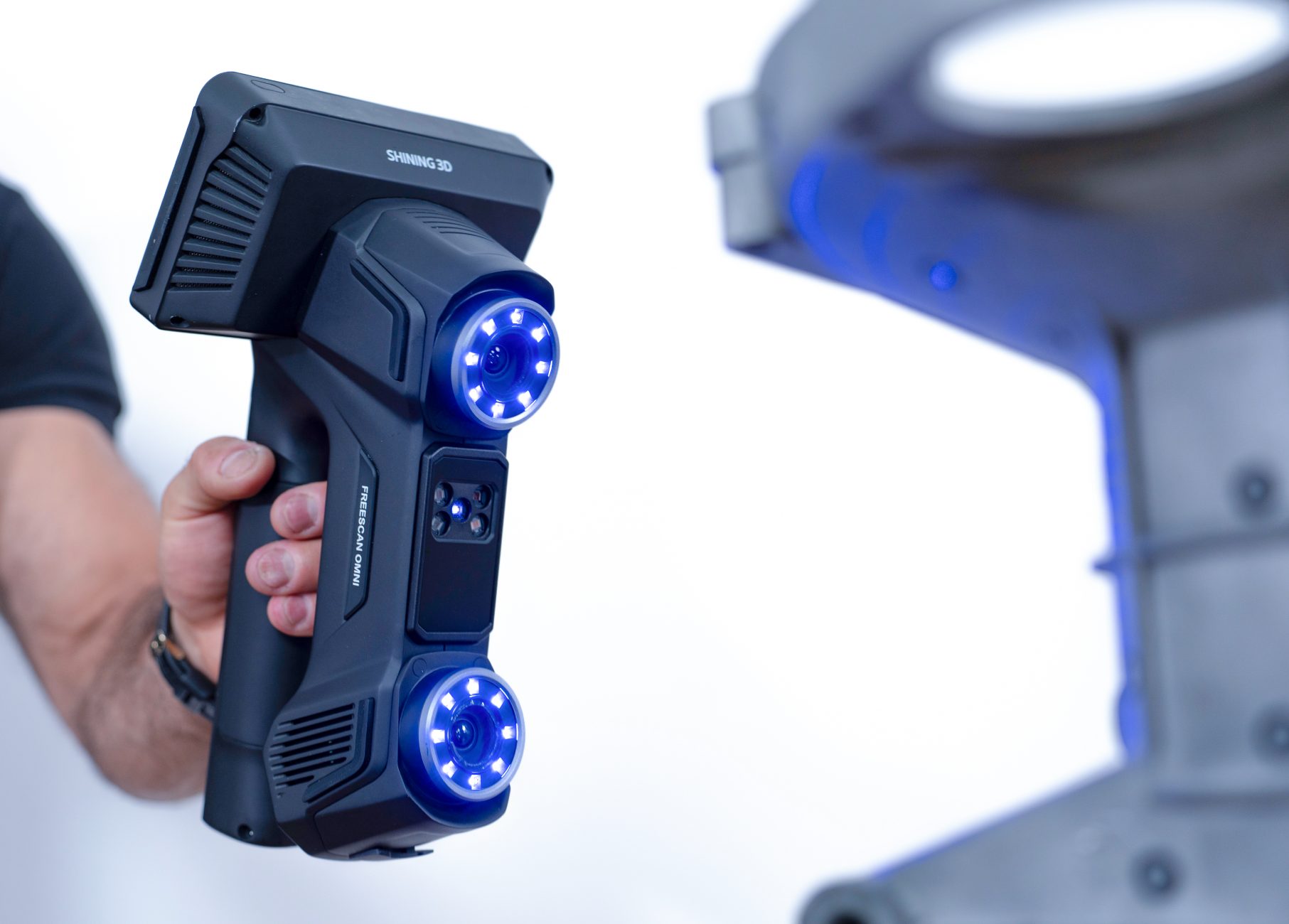
FreeScan Omni handheld 3D scanner

Types of 3D scanner

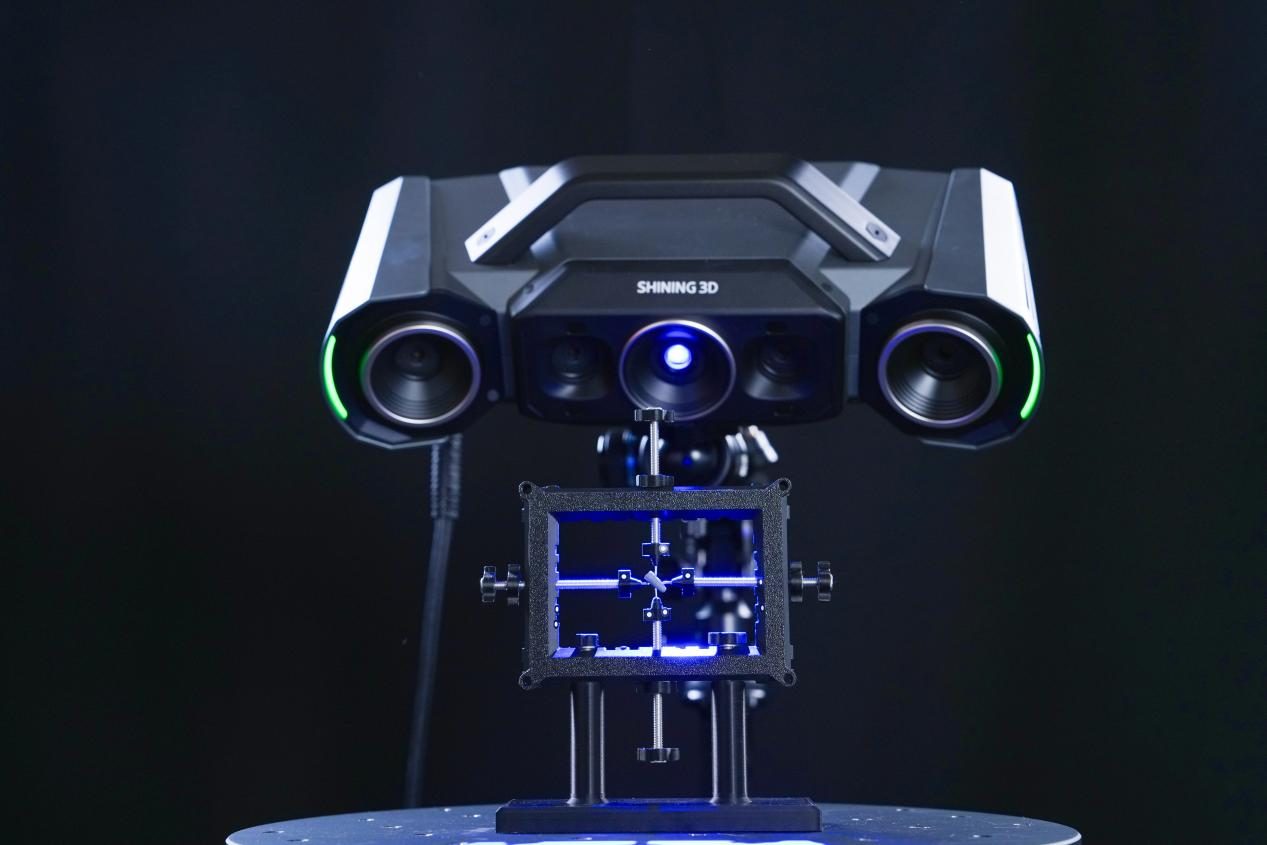
OptimScan Q12 desktop 3D scanner

Handheld laser scanners are the most versatile — you walk around the part and the scanner tracks position, so you can capture large or complex objects freely. Models like the FreeScan UE Pro2 are fast and easy to use.

Desktop structured-light scanners sit on a tripod and capture an object placed on a turntable. They offer the highest accuracy for small- to medium-sized parts and are ideal for metrology and inspection.

Automated inspection systems like the AutoScan Inspec scan batches of parts automatically — the choice when you need to check hundreds of parts per shift.

Scanner types compared

Type Accuracy Best for Example
Handheld laser 0.02 – 0.05 mm Reverse engineering, large parts FreeScan Combo
Handheld metrology Up to 0.02 mm High-accuracy on-site work FreeScan UE Pro2
Desktop structured-light 0.005 – 0.02 mm Inspection, small precision parts OptimScan Q12
Automated inspection 0.005 – 0.02 mm High-volume QC AutoScan Inspec

What does a scanning solution cost?

Tier Price range (RM) What you get
Entry handheld 20,000 – 50,000 Handheld scanner for reverse engineering
Professional handheld 50,000 – 100,000 High-accuracy handheld + software
Metrology / automated 100,000 – 300,000+ Desktop or automated inspection systems

Note: a complete solution bundles the scanner + software (such as Geomagic Design X for reverse engineering or Geomagic Control X for inspection). Budget for both.

Which scanner for your need?

Handheld laser if…

  • You reverse-engineer parts into CAD
  • Parts are large or awkward to move
  • You scan on-site or in the field
  • You need speed and flexibility

Desktop / metrology if…

  • You need inspection-grade accuracy
  • Parts are small and precise
  • You do batch quality control
  • You require repeatable, documented measurements

Malaysia-specific considerations

  • Humidity — keep scanners calibrated and store them in a dry, temperature-stable room; moisture affects optics over time.
  • Surface prep — shiny or dark parts may need matting spray; budget for it in your workflow.
  • Software licensing — confirm reverse-engineering and inspection licences cover your team size.
  • Training — a scanner is only as good as the operator; factor in training and support from your vendor.

Our honest recommendation

For most manufacturing teams, a handheld laser scanner plus reverse-engineering software is the best starting point — it covers reverse engineering, inspection and archiving in one flexible package. Add a desktop metrology scanner when you need documented, inspection-grade accuracy on small parts.

See how to choose CAD software for reverse engineering to complete your digital workflow.

FAQ

Do I need a 3D scanner for reverse engineering?
Yes — a scanner captures the part’s geometry accurately, and software like Geomagic Design X turns that scan into editable CAD.

How accurate are handheld 3D scanners?
Typically 0.02 – 0.05 mm. Metrology-grade desktop scanners reach 0.005 mm and above.

Can a 3D scanner scan shiny or black parts?
With difficulty — a light matting spray usually solves it and is standard practice.

Is scanning a service or do we buy the equipment?
It is a solution you own — a scanner plus software package — not an outsourced service.

Need help choosing a scanner?

Bring a sample part and we will scan it live, then recommend the right scanner + software for your accuracy and budget. Contact Trinventor Solution today.

Thank you for signing up. You will be the first to know the Industry news, upcoming products, latest technology and special promotion.

Stay Tuned.