Pick & Place Robot & Material Handling Solution Malaysia
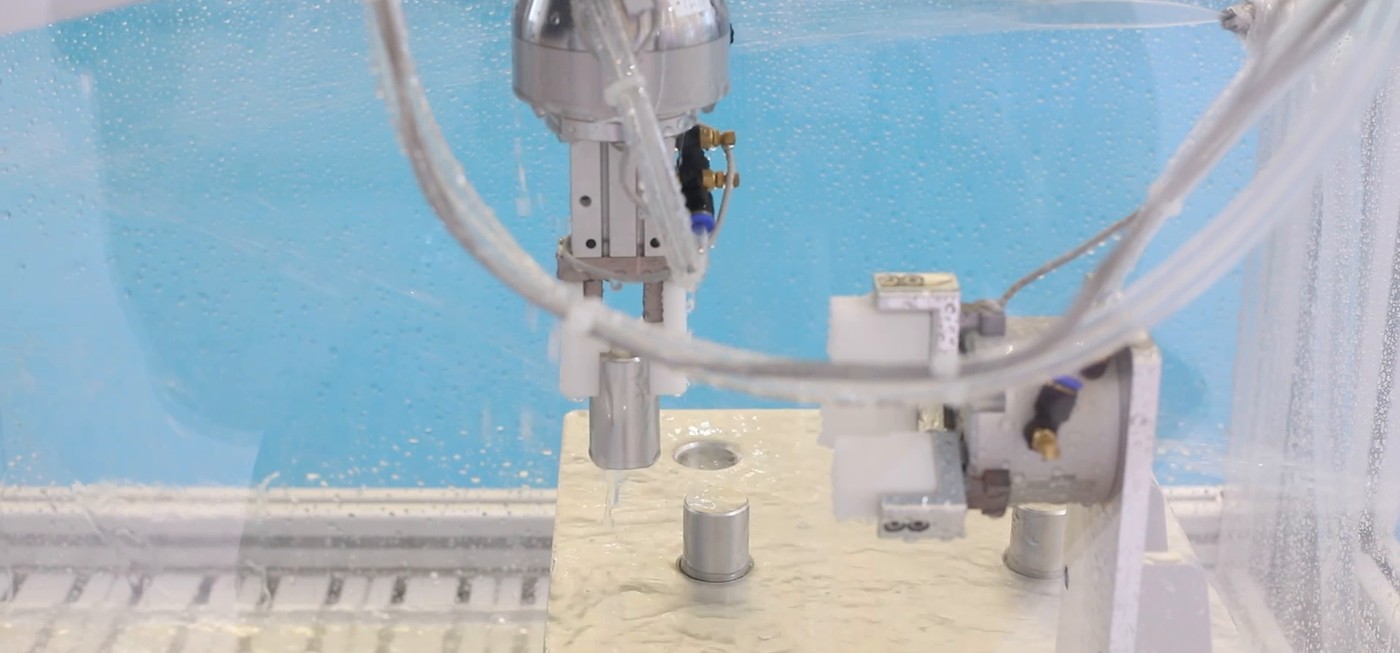
Pick and place at its most demanding: a two-finger gripper placing a bushing to position — part after part, the same way
Quick verdict: a pick and place robot pays off when the same part moves the same way thousands of times — into a machine, out of a tray, onto a conveyor — and a person is standing there doing it all day. If every cycle is a new part in a new orientation, that is a vision problem first; tell us which one you have before anything else.
Picking and placing is the most common robot job in a factory and the least glamorous: the part goes from the tray to the fixture, the machine to the conveyor, the conveyor to the box. It is also the job most likely to be done by the person you can least afford to lose — repetitive, attention-hungry, and unforgiving of a lapse at hour nine of a shift.
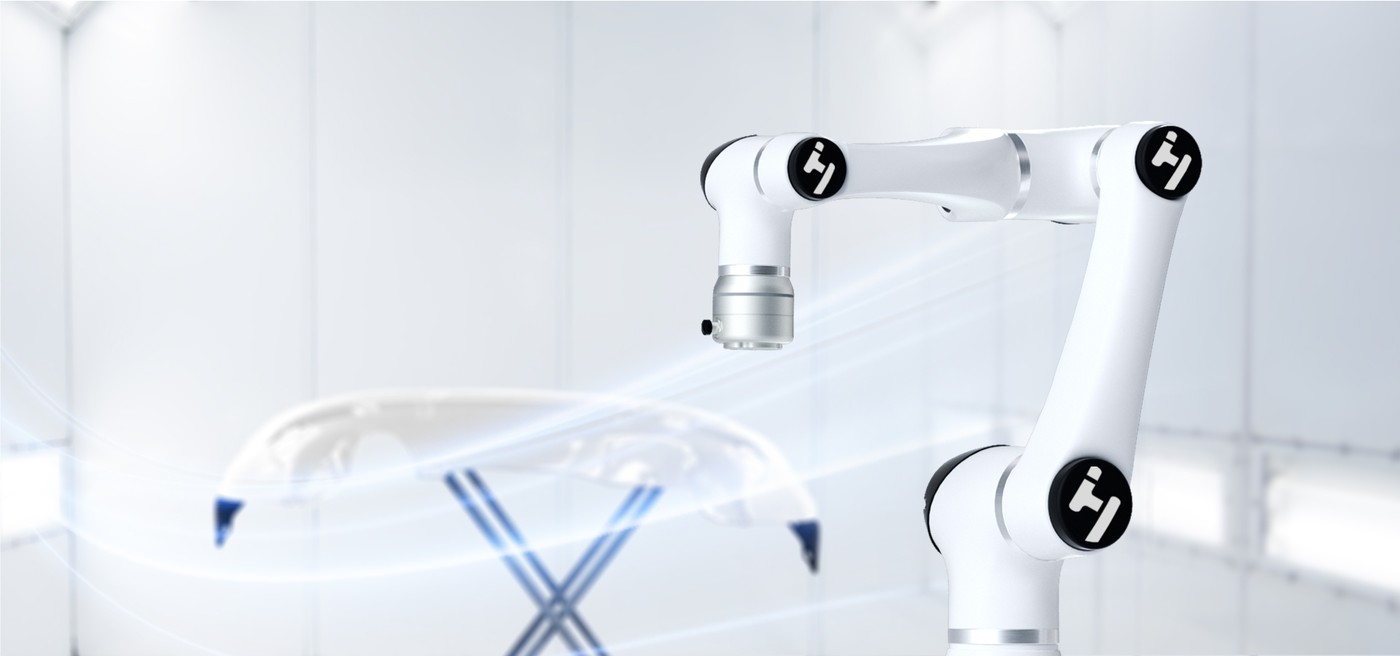
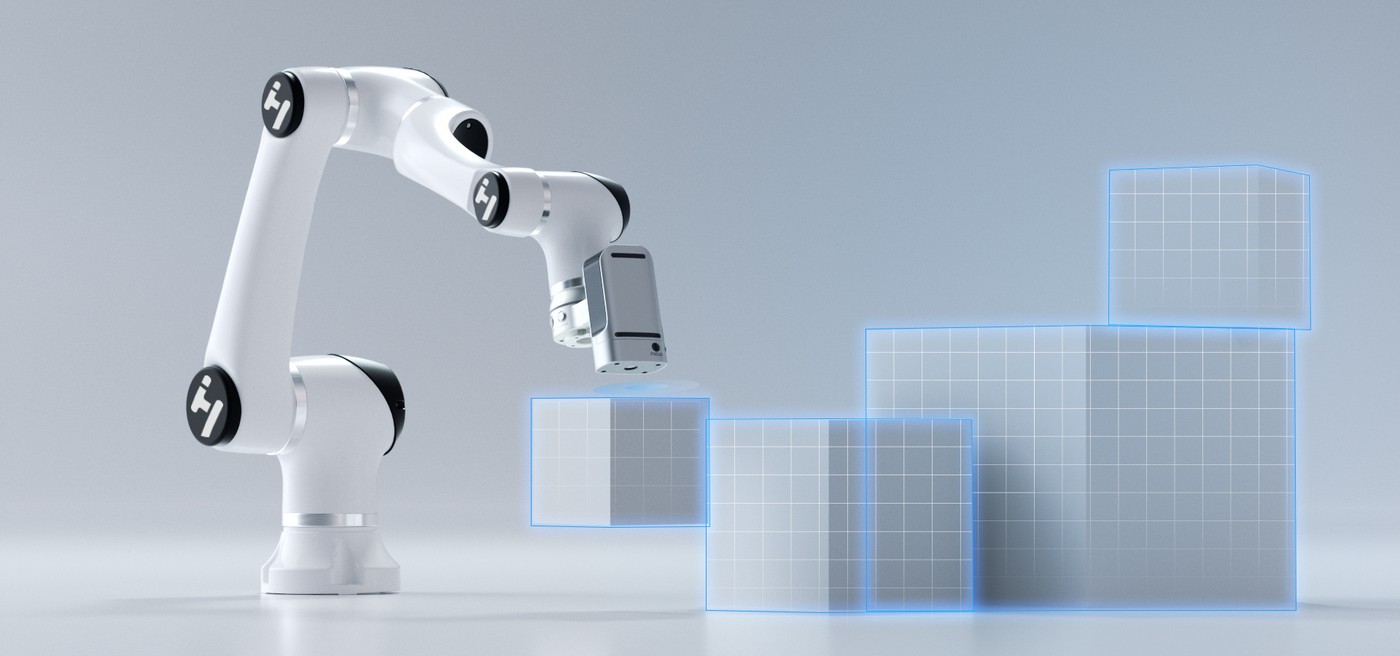
Trinventor Solution supplies and integrates Huayan collaborative robots for pick and place work in Malaysia — the Elfin line for bench-side handling and machine tending, the Elfin-Pro line where force control and AI vision are part of the job, and the S Series where the parts get heavy. As the authorized distributor we scope the whole cell: gripper or vacuum, part feeding, vision where it is needed, machine handshakes, safety and after-sales support. This page covers where a pick and place robot fits, how the cell is built, and which arm suits which part.
When pick and place automation pays off
The economics are simple when the movement repeats, and they do not work when it does not. The cases where a robot wins:
The part and the motion repeat. Same part, same tray, same fixture position, same sequence — thousands of cycles per week. Every repetition is where the robot looks best.
A person is feeding a machine all day. Loading and unloading one machine, or tending one conveyor, is the classic case: the operator becomes a part of the machine, and the machine waits every time they step away.
Consistency is a quality issue. Seating a part in the fixture the same way every cycle stops the scrap that comes from half-seated parts and hand-loading variation.
Finish matters. Painted, polished or soft parts cannot be handled roughly — a robot with the right gripper never dents the work with a thumb.
Shifts do not stop. The robot handles the last hour of the day as carefully as the first, which is exactly when manual handling goes wrong.
Where it does not fit: one-off work, parts that arrive in random orientations without a feeding plan, or volumes so low the arm would sit idle. We will say so at the assessment — better now than after the purchase order.
The pick and place cell we set up
Presentation of the part. How the part arrives decides how easily it can be picked: trays with nests are simple, belts need tracking, bins need vision. We start from how your parts actually reach the cell, not from how they would in a brochure.
The gripper. Electric two-finger grippers for defined shapes, vacuum for flat and sealed surfaces, soft grippers for finish-sensitive parts, magnetic for steel. The gripper is chosen for the part — the arm is chosen afterwards.
The cycle. Pick position, path, place position, and the handshake with whatever receives the part: a machine door, a fixture clamp, a conveyor, a tray nest. Where a machine is involved, the interlock is wired so neither side can move before the other is ready.
Verification. Where a dropped or missed part would be expensive, a simple check — a sensor in the gripper, a vision pass, or a presence check at the nest — tells the cell the pick worked before it moves on.
A pick and place workstation: the arm works in the space the operator already uses, so the cell fits a bench instead of demanding a new building
Which robot for which part
Payload is the part plus the gripper, and reach decides how many positions one arm covers. Size for around 80 % of the rated payload and let the arm be the reliable part of the cell:
Heavy parts, crates and components that run out of cobot payload
The gripper and the feeding decide the cell
Two choices determine how well a pick and place cell runs, and neither of them is the robot:
Gripper — electric two-finger for defined geometry, vacuum for flat sealed surfaces, soft grippers for painted or delicate parts, magnetic for steel. Fingers are usually made for the part, and that is normal.
Part feeding — trays and nests are the easy case; belts need tracking; bins and randomly oriented parts need vision. The feeding plan is what separates a demo cell from one that runs every shift.
Vision, where it earns its place
If parts arrive jumbled, on a moving belt, or with a position that drifts, fixed mechanical stops stop being enough — that is where vision earns its cost. Huayan’s integrated AI vision option lets the arm find and pick parts that are not indexed, verify what it picked, and check the result after placing. We scope vision into the cell only where it solves something real: for a tray of identical parts in nests, it is money better spent on a better gripper.
Vision-guided picking: the arm finds each part’s position and orientation instead of relying on mechanical stops
Safety and the machine handshake
Collaborative arms are built for work alongside people — the safety basis is ISO 10218-1 and ISO 10218-2, with ISO/TS 15066 covering collaborative operation. In a pick and place cell the practical questions are usually:
Machine interfaces. When the arm loads a machine, the interlock between robot and machine is designed so neither can move into the other — handshake signals, guards and status logic, wired and tested at installation.
Operator space. Where people and the arm share the bench, the cell is laid out with the risk assessment — typically no fence, with reduced-speed or monitored zones where the paths cross.
Gripper release. For heavy parts, holding the load safely on power loss is part of the gripper design, not an afterthought.
What we set up for you
We are the authorized distributor for Huayan robotics in Malaysia, and a handling cell is a system, not a robot. The scope we quote covers:
Assessment — which station to automate first, and whether the part presentation supports it
Demo — your part, picked and placed before you commit
Integration — gripper, feeding, vision where needed, machine handshakes and safety layout
Installation — on your floor, handover on your parts
Programming — every cycle taught and stored, positions documented
Training — your operators running and retasking the cell
Spares — gripper fingers, wear parts and consumables kept local
Service contract — scheduled support so the cell stays in production
What we need from you for a quote
Prices are quoted per cell: two handling projects with the same arm can differ by more than the robot costs once the gripper, feeding and machine interface are counted. To quote accurately we need:
The part: drawings or photos, weight, and how it can be gripped
Where it comes from and where it goes — tray, machine, conveyor, box
Cycle time you need, and how many pieces per shift
What the cell must connect to: machine model, door signals, conveyor
What the operators do today, and where it hurts
Frequently asked questions
How much does a pick and place robot cost in Malaysia?
We quote per cell, and the arm is rarely the largest line item — the gripper, feeding arrangement, vision and machine interface usually decide the number. That is why we do not publish a price list: one cell needs custom fingers and a tray, another needs a camera and a conveyor handshake. Send us the part and what it must connect to, and we will scope the total solution against your cycle time; if the volume does not justify a robot, we will tell you.
How fast can it pick and place?
The honest answer comes from your part, not a brochure: the cycle depends on the distance, the weight, the gripper and how quickly the machine or conveyor can hand the part over. Bring the part to a demo and we will cycle it — and if the line can only feed so fast, that is your real limit regardless of the arm.
Can it pick parts that are not in fixed positions — bins, belts, random orientation?
Yes, with vision. Parts that arrive jumbled or drift on a belt need the camera to find them, which is exactly what Huayan’s integrated AI vision offers; parts in trays or nests with mechanical stops usually do not need vision at all. We look at how the part actually arrives before recommending which route to take.
Will it damage surface-sensitive parts?
That is a gripper and control question, not a robot question. Soft grippers, vacuum with gentle surfaces and force-controlled motion handle painted, polished and soft parts routinely; the Elfin-Pro’s force control is designed for exactly this, including insertion work where the force has to be felt rather than programmed. Tell us the finish and the constraint and the gripper is built around it.
Do we still need operators if a robot picks and places?
Yes — the same operators, doing better work. The robot takes the repetitive cycle; people run the cell, handle exceptions, inspect and pack. Our training is aimed at exactly those people: your operators learn to run, retask and recover the cell without needing an engineer on call.
Can one robot serve several machines or stations?
Usually yes, and that is often where the payback comes from — one arm feeding two machines in sequence costs less than two dedicated loaders and is the reason reach matters in the table above. Where the stations cannot be served by one arm, a second arm is still cheaper than a second operator.
What support do we get after installation?
Local support from Kuala Lumpur: gripper fingers and spares kept locally, service contracts with scheduled support, and trained people who know your cell. Training, spares and service are all part of the quoted scope.
Talk to our team
Send us the part and what it has to keep up with — a photo, a drawing or a sample is enough to start — and we will tell you whether pick and place automation fits, what the cell would look like, and what the total solution involves. Contact Trinventor Solution for a live demo, consultation and local after-sales support in Malaysia.