CNC Machine Tending Robot & CNC Automation Solution Malaysia
The spindle should be cutting, not waiting: loading and unloading is a large slice of a CNC machine’s day, and it does not need a person
Quick verdict: a machine tending robot pays off when the machine stops waiting for a person. On most lathes and mills, load and unload is a big share of the day — and the operator doing it is standing at one machine when they could be running three. If the parts are also heavy, hot or sharp, the case makes itself.
Machine tending is the original cobot job: take the blank from the tray, present it to the chuck or fixture, close the door, wait for the cycle, open the door, take the finished part out. Done by hand, it means an operator is tied to one machine and the spindle idles every time they turn away. Done by a robot, the machine runs while the person moves on to the work that actually needs judgement.
Trinventor Solution supplies and integrates Huayan collaborative robots for CNC tending in Malaysia — the Elfin and Elfin-Pro lines for lathes, mills and grinders up to their payload range, and the S Series where castings and shafts get heavy. As the authorized distributor we scope the whole cell: gripper or double-gripper, door and chuck handshakes, part presentation, safety and after-sales support. This page covers where CNC tending automation fits, how the cell is built, and which arm suits which machine.
When CNC machine tending pays off
Automating the load and unload is the fastest route to more cutting hours per day, and the economics are strongest in these cases:
The machine waits for people more than it runs. When the operator loads one machine, then waits for the cycle, then loads again, the spindle utilisation is set by the operator’s attention, not by the machining time.
One operator could run several machines. With a robot loading, the same person supervises three or four machines — and the night shift becomes possible with fewer people, or with none on the floor.
Parts are heavy, hot or sharp. Shafts, castings and freshly cut parts with sharp edges are where manual loading wears people out and causes the injuries nobody reports until they are serious.
Seating consistency matters. A part that sits half a millimetre differently in the jaws machines differently; a robot presents it the same way every cycle.
The job keeps the operator idle. Long cycle times are perfect for tending — the robot handles the short work between cycles, and the operator’s time goes to inspection and other stations.
Where it does not fit: tiny batches with new setups every hour, parts that need hand-deburring between operations, or machines whose doors and controls cannot be interfaced without a rebuild. We check that before recommending anything.
The CNC tending cell we set up
The machine handshake. The robot opens the door, loads, closes the door and starts the cycle through the machine’s own signals — door status, cycle start, cycle complete — with interlocks so neither side can move into the other. Older machines without spare I/O get a signal interface wired as part of the installation.
Part presentation. Blanks arrive in trays, on conveyors or from a bar feeder’s output; finished parts leave to a tray, a conveyor or a gauging station. The cell is laid out so the operator can restock without stepping into the arm’s path.
Gripper and jaw loading. A two-finger gripper for most parts; a double gripper where cycle time matters, so the finished part comes out in one jaw while the blank goes in with the other, with no extra arm travel. Chuck blow-off to clear chips before seating is part of the design.
Verification. Where a mis-seated part would scrap a batch or crash a tool, a simple check — part-present sensing, a gauging pass, or a vision check on critical features — confirms the work before the cycle starts.
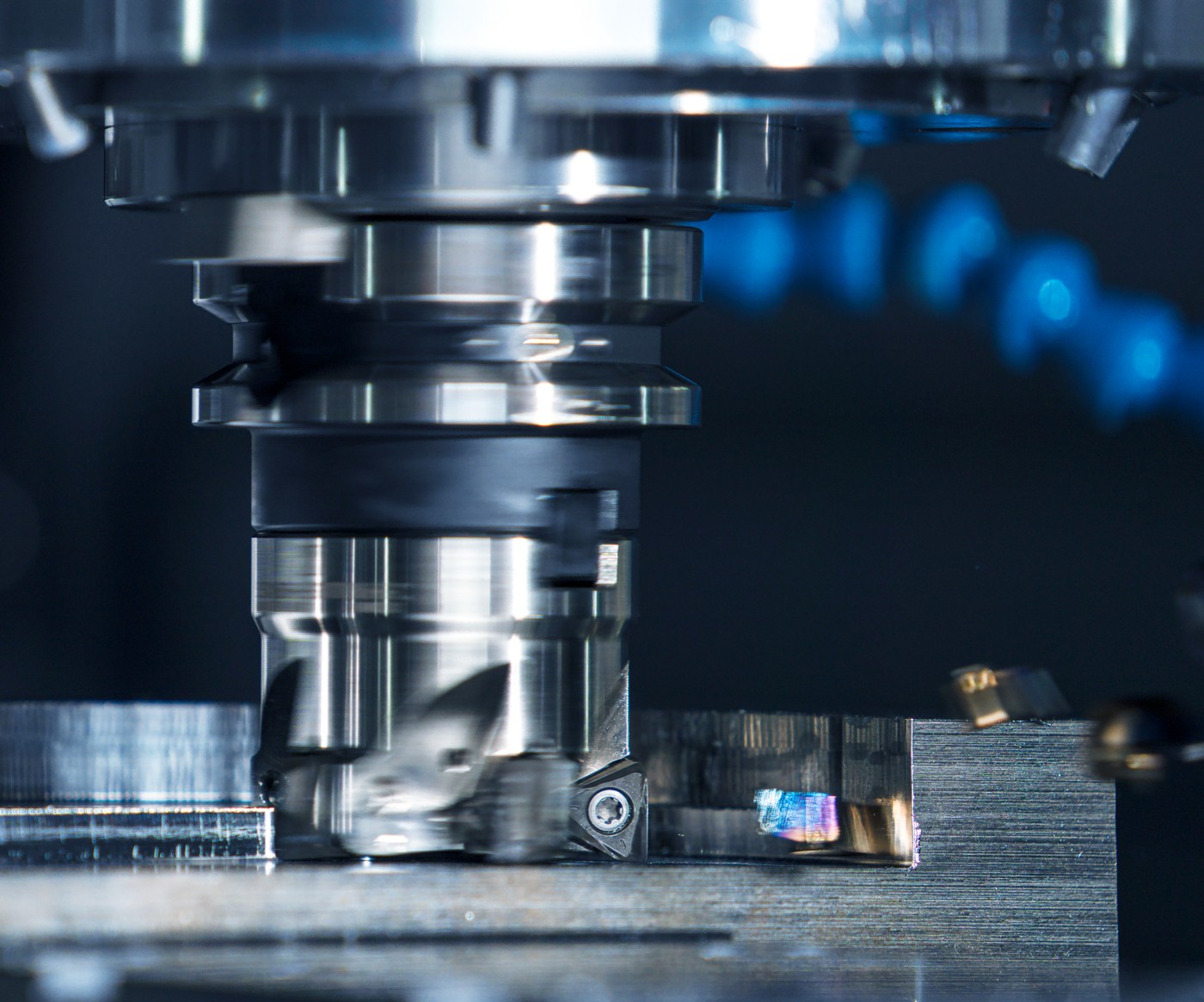
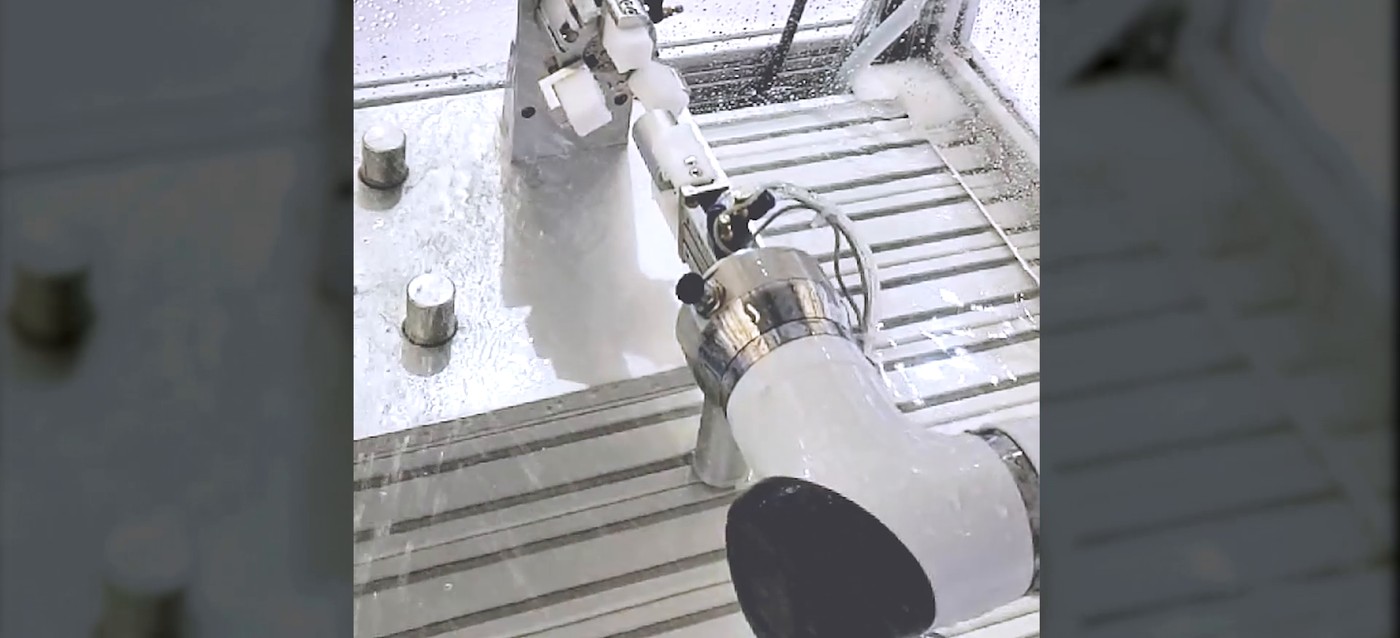
Loading a fixture is the same motion whether the cell is wet or dry: the part goes in the same place, the same way, every cycle
Which robot for which machine
Payload is the part plus the gripper; reach decides how many machines and trays one arm can cover. Size for around 80 % of the rated payload and let the arm be the reliable part of the cell:
Heavy shafts and castings that run out of cobot payload
The night shift argument
The strongest case for CNC tending is not the day shift — it is the hours nobody wants to staff. A machine that loads itself can run through the evening and overnight, with the parts staged and the alarms monitored, and the morning shift arrives to finished work instead of a cold machine.
Unattended running works where the parts, chips and tools behave — which is exactly what integration proves: we run your part, watch how the chips break, check that the seating holds across a tray, and set the stop conditions so a problem pauses the cell instead of scrapping the batch. Where a job is not ready for unattended running yet, we say so and automate the attended shift first.
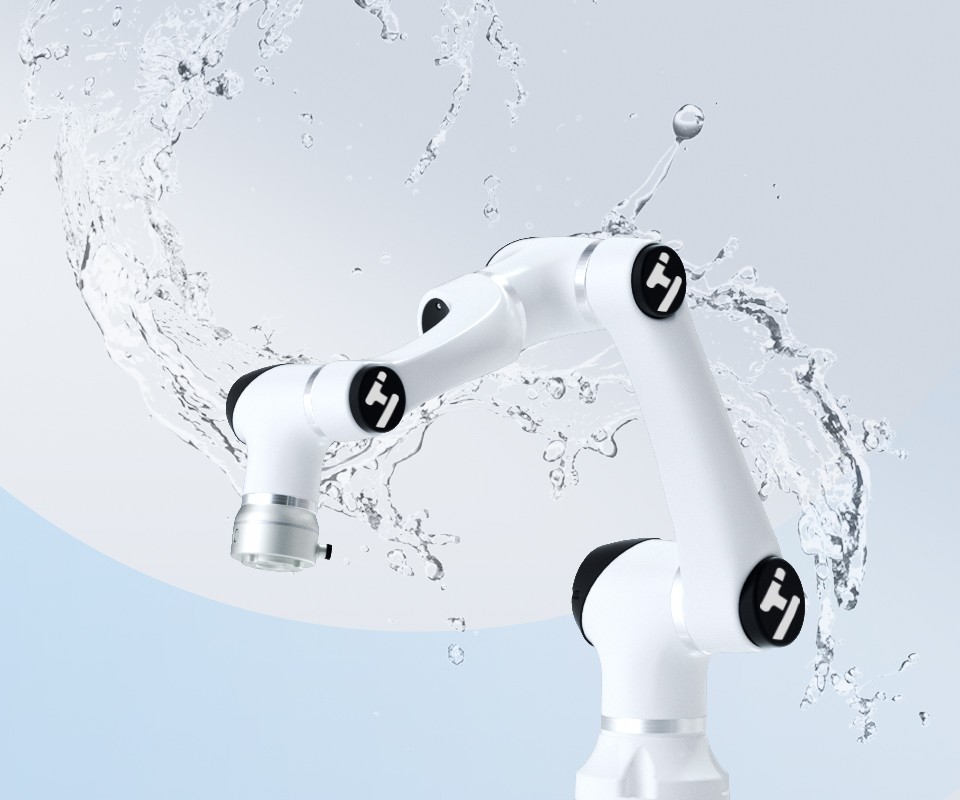
Coolant, swarf and washdown are part of the environment — IP-rated configurations are specified for the cell, not assumed
Safety and the machine interface
Collaborative arms are built for work alongside people — the safety basis is ISO 10218-1 and ISO 10218-2, with ISO/TS 15066 covering collaborative operation. In a tending cell the specific questions are:
The door plane. The robot and the machine share an opening; the interlock logic — door open before the arm enters, arm clear before the cycle starts — is wired and tested at installation, and it is the first thing we prove.
Operator space. Restocking trays and reaching for finished parts must never mean reaching into the arm’s path; the layout is planned with the risk assessment, typically without a fence, using monitored zones where paths cross.
The floor around the machine. Chips, coolant and oil make the ground around a machine exactly where people slip; keeping the operator out of the wet zone is a safety benefit as much as a labour one.
What we set up for you
We are the authorized distributor for Huayan robotics in Malaysia, and a tending cell is a system, not a robot. The scope we quote covers:
Assessment — which machine to automate first, and what the machine’s signals allow
Demo — your part loaded and unloaded before you commit
Integration — gripper, part presentation, door and chuck handshakes, safety layout
Installation — on your floor, handover on your parts, with the interface wired and tested
Programming — every job taught and stored, ready for the next part number
Training — your operators running the cell and switching jobs
Spares — gripper fingers, wear parts and consumables kept local
Service contract — scheduled support so the spindle keeps turning
What we need from you for a quote
Prices are quoted per cell, because the robot is rarely where the difference lies — the gripper, presentation and machine interface decide the number. To quote accurately we need:
The machine: make and model, door type, and what signals it can give
The part: drawings or photos, weight, and how it is held (chuck, jaws, fixture)
Cycle time and how many parts per shift you need
How blanks arrive and how finished parts leave today
Whether the goal is one attended shift, or running unattended overnight
Frequently asked questions
How much does a CNC machine tending robot cost in Malaysia?
We quote per cell, and the arm is usually the most predictable line in it — the gripper, part presentation, door and chuck interface decide the rest. That is why we do not publish a price list: one machine needs a simple two-finger gripper and a tray, another needs a double gripper and a conveyor handshake. Send us the machine and the part and we will scope the total solution against your cycle; if the volumes do not justify it, we will tell you.
Will a robot make my cycle time slower?
The machining cycle does not change — what changes is the door-to-door time, the minutes between cycles when a person walks over, opens the door, swaps parts and restarts. With a robot staged at the machine, the next cycle starts within seconds. On most jobs the total output per shift goes up even if the machining time is identical, because the machine simply waits less.
Can one robot tend two or three machines?
Often yes, and that is where the arithmetic gets compelling — the arm loads machine A, and while A cuts it loads B, returning when A’s cycle ends. Reach decides how many machines can be covered, which is why the table above lists it: the E12’s 1800 mm and the S20’s 1700 mm cover more floor than the smaller arms. We check the machine layout at the assessment.
Our CNC is old — can it still be automated?
In most cases yes. The robot needs to know when the cycle is done and to command door and cycle start; older machines without spare I/O get a small signal interface wired during installation. What we cannot automate is a machine with no consistent way to open the door or start the cycle — that gets flagged at the assessment, before anything is ordered.
How does it seat parts in the chuck accurately?
With the right jaws, a hard stop and a clean seat: the gripper presents the part to a stop, the chuck closes, the gripper releases, and a blow-off clears chips before seating. Where the fit needs feel rather than force, the Elfin-Pro’s force control presses to a target instead of to a position. For most work the accuracy comes from the fixture, not from the arm.
What about chips, coolant and swarf?
The cell is specified for the environment it lives in: IP-rated robot configurations where coolant and washdown are part of the day, covers and routing that keep swarf off the gripper, and a layout that keeps the operator out of the wet zone. These choices are made at integration, from your actual machine conditions.
What support do we get after installation?
Local support from Kuala Lumpur: gripper fingers and spares kept locally, service contracts with scheduled support, and trained people who know your cell and your machines. Training, spares and service are all part of the quoted scope.
Talk to our team
Send us the machine and the part — a photo of the door, the jaw and the finished part is enough to start — and we will tell you whether CNC tending automation fits, what the cell would look like, and what the total solution involves. Contact Trinventor Solution for a live demo, consultation and local after-sales support in Malaysia.