
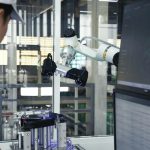
Handheld 3D scanner with robotic arm for automated data capture
3D Scanning Solutions by Industry in Malaysia
3D Scanning Solutions by Industry in Malaysia Quick verdict: Whatever your industry — automotive, mold...
3D scanning for education and research
3D Scanning for Education & Research in Malaysia
3D Scanning for Education & Research in Malaysia Quick verdict: For universities, polytechnics and...
3D scanning an infant's head for a cranial helmet
3D Scanning for Medical, Dental & Orthotics in Malaysia
3D Scanning for Medical, Dental & Orthotics in Malaysia Quick verdict: For orthotics, prosthetics...
3D scanning an energy pipeline for corrosion inspection
3D Scanning for Energy & Heavy Equipment Inspection in Malaysia
3D Scanning for Energy & Heavy Equipment Inspection in Malaysia Quick verdict: For energy operators...
No posts found
  • Article
  • >
  • Metal 3D Printing (SLM) in Malaysia: Applications and Cost

Metal 3D Printing (SLM) in Malaysia: Applications and Cost

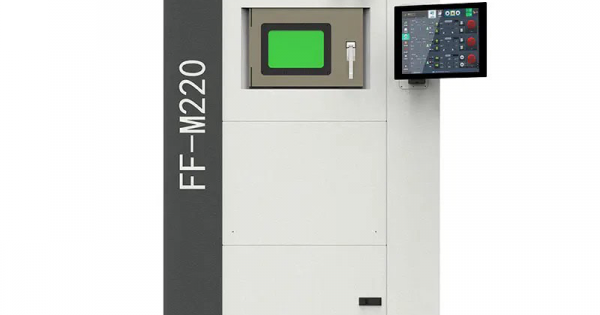
FastForm metal 3D printer

Quick verdict: Metal 3D printing — usually SLM (Selective Laser Melting) — fuses metal powder layer by layer into dense, fully functional metal parts. It is the go-to for aerospace, medical, tooling and complex geometries that are impossible to machine. Here is how it works, what it costs, and whether it is right for your business.

How does SLM metal printing work?

SLM spreads a thin layer of metal powder, then a high-power laser selectively melts it in the shape of the part. The bed drops, a new layer of powder is spread, and the process repeats — building the part layer by layer from the bottom up.

The result is a dense, solid metal part (often 99%+ density) with mechanical properties close to wrought metal. Because the process is additive, it can produce internal channels, lattice structures and undercuts that would be impossible to machine or cast.

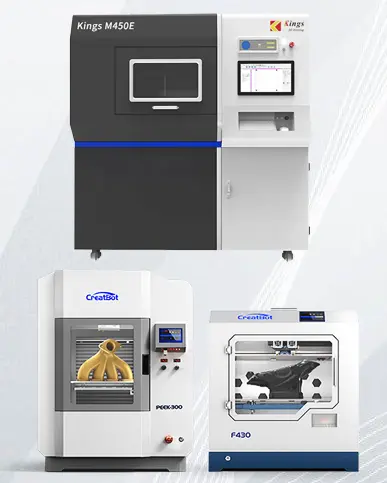
Machines we recommend: the TH M150 for entry-level SLM, and the TH M800 for production-scale builds.

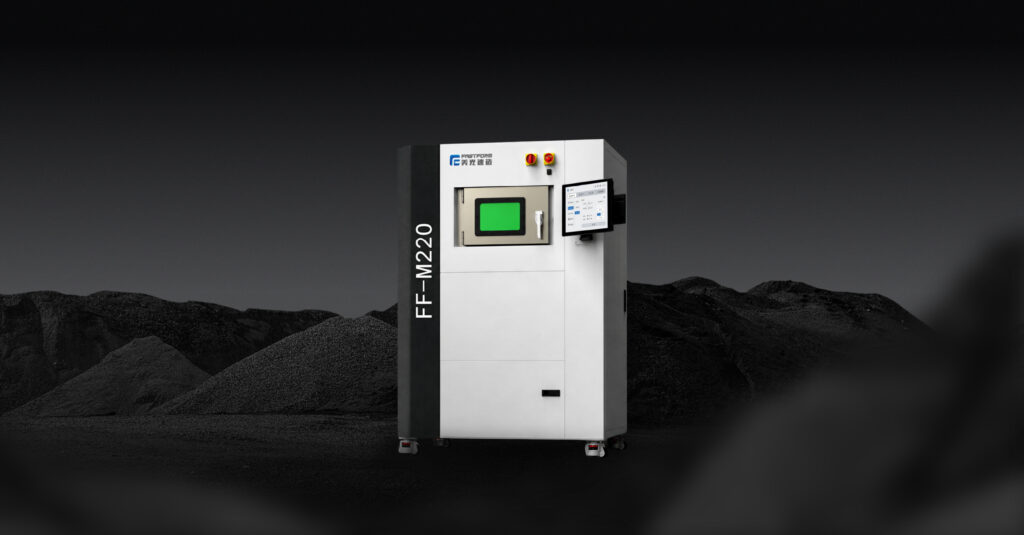
FastForm FF-M220 SLM metal 3D printer

What is SLM used for?

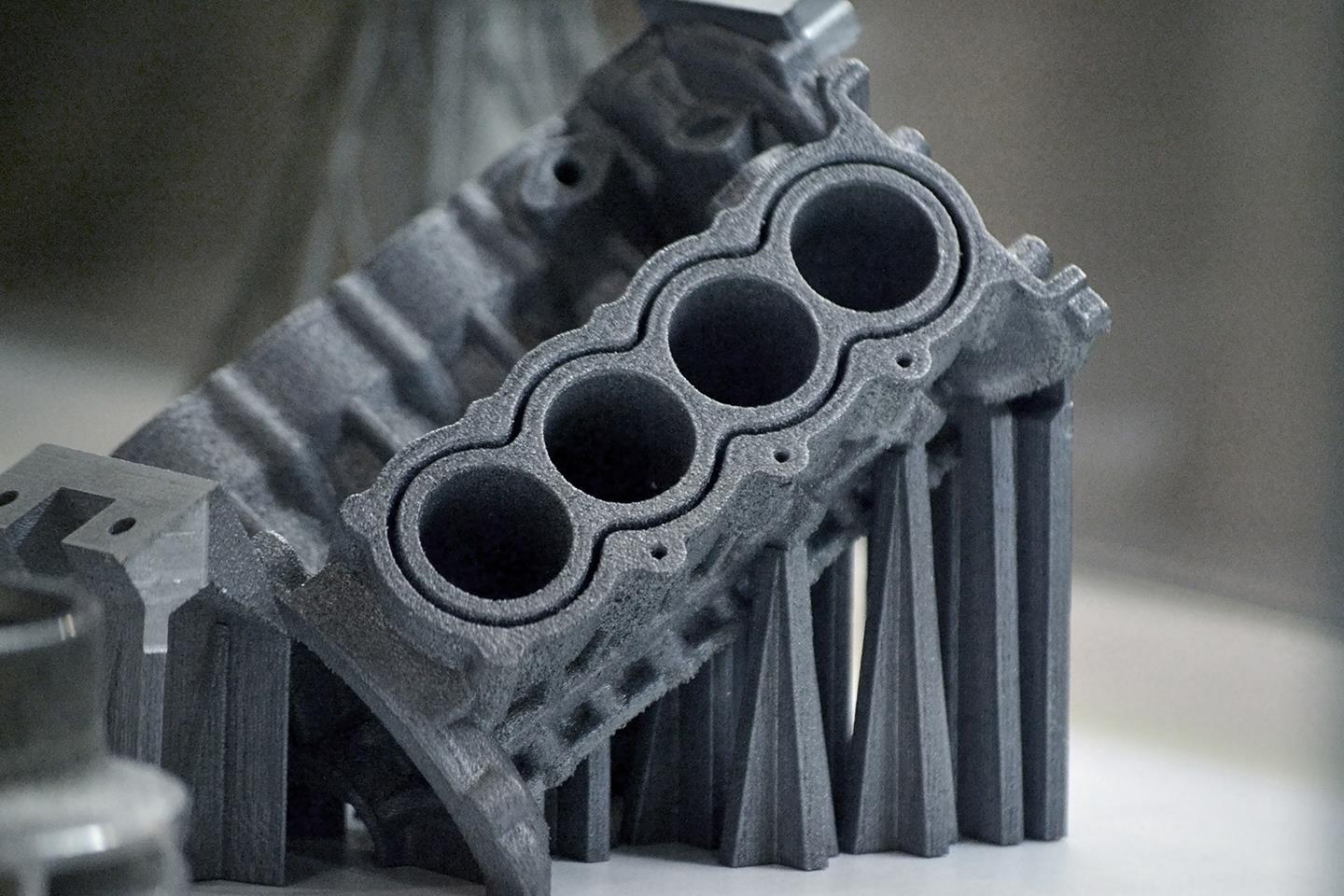
Metal 3D printed part

Aerospace — lightweight brackets, manifolds and components with internal cooling channels that save weight and fuel.

Medical & dental — patient-specific implants, surgical guides and dental frameworks in titanium and cobalt-chrome.

Tooling — injection moulds and die inserts with conformal cooling channels that cut cycle times dramatically.

Automotive & energy — high-performance components, heat exchangers and replacement parts for legacy machinery.

For dental-specific work, the EP-M150 Metal Dental is purpose-built for the job.

Metal printers compared

Model Build volume Best for
TH M150 150 mm class Entry SLM, small precision parts
TH M280 280 mm class Mid-size production
TH M400 400 mm class Larger single parts
TH M800 800 mm class Production-scale builds

What does metal 3D printing cost?

Item Cost (RM)
Entry SLM printer 300,000 – 600,000
Production SLM printer 600,000 – 2,000,000+
Metal powder (varies by alloy) 500 – 5,000 / kg
Post-processing (heat treat, machining, support removal) Significant — budget alongside the printer

Metal printing is a capital-intensive, industrial technology. See our 3D printer price guide for how it compares to FDM and other technologies.

Is SLM right for you?

Choose SLM when…

  • You need dense, load-bearing metal parts
  • Your geometry is impossible to machine
  • You want lightweight lattice or conformal-cooled designs
  • You produce low-volume, high-value parts

Choose CNC or casting when…

  • Parts are simple and easily machined
  • You need very high volumes at low cost
  • Your tolerances are tighter than SLM can hold
  • Budget is tight and powder costs are a concern

Malaysia-specific considerations

  • Powder handling — metal powders are fine and reactive; you need proper PPE, ventilation and controlled storage.
  • Facility — SLM needs a controlled environment with stable power and, ideally, an inert-gas supply for reactive metals.
  • Post-processing — parts need heat treatment, support removal and often CNC finishing; plan the full workflow, not just the printer.
  • Safety compliance — factor in DOSH requirements for powder and laser safety in your facility.

Our honest recommendation

Metal 3D printing is a strategic investment, not a casual purchase. It makes sense when you have real demand for complex, high-value metal parts that machining cannot produce. Start with a 150 mm-class machine to build capability, then scale to a larger system as volumes grow.

FAQ

What metals can SLM print?
Stainless steel, tool steel, titanium, aluminium, cobalt-chrome and nickel alloys — the common engineering metals.

Are SLM parts as strong as machined metal?
With proper post-processing, SLM parts reach densities and strengths close to wrought metal, though some alloys need heat treatment.

Why is metal 3D printing so expensive?
The machines are costly, metal powder is expensive, and post-processing (heat treat, machining, support removal) adds significantly to part cost.

Do I need post-processing after SLM?
Almost always — support removal, stress-relief heat treatment, and often CNC finishing to meet final tolerances.

Considering metal 3D printing?

Tell us your part, material and volume, and we will run a feasibility review and a sample build. Contact Trinventor Solution today.

Thank you for signing up. You will be the first to know the Industry news, upcoming products, latest technology and special promotion.

Stay Tuned.