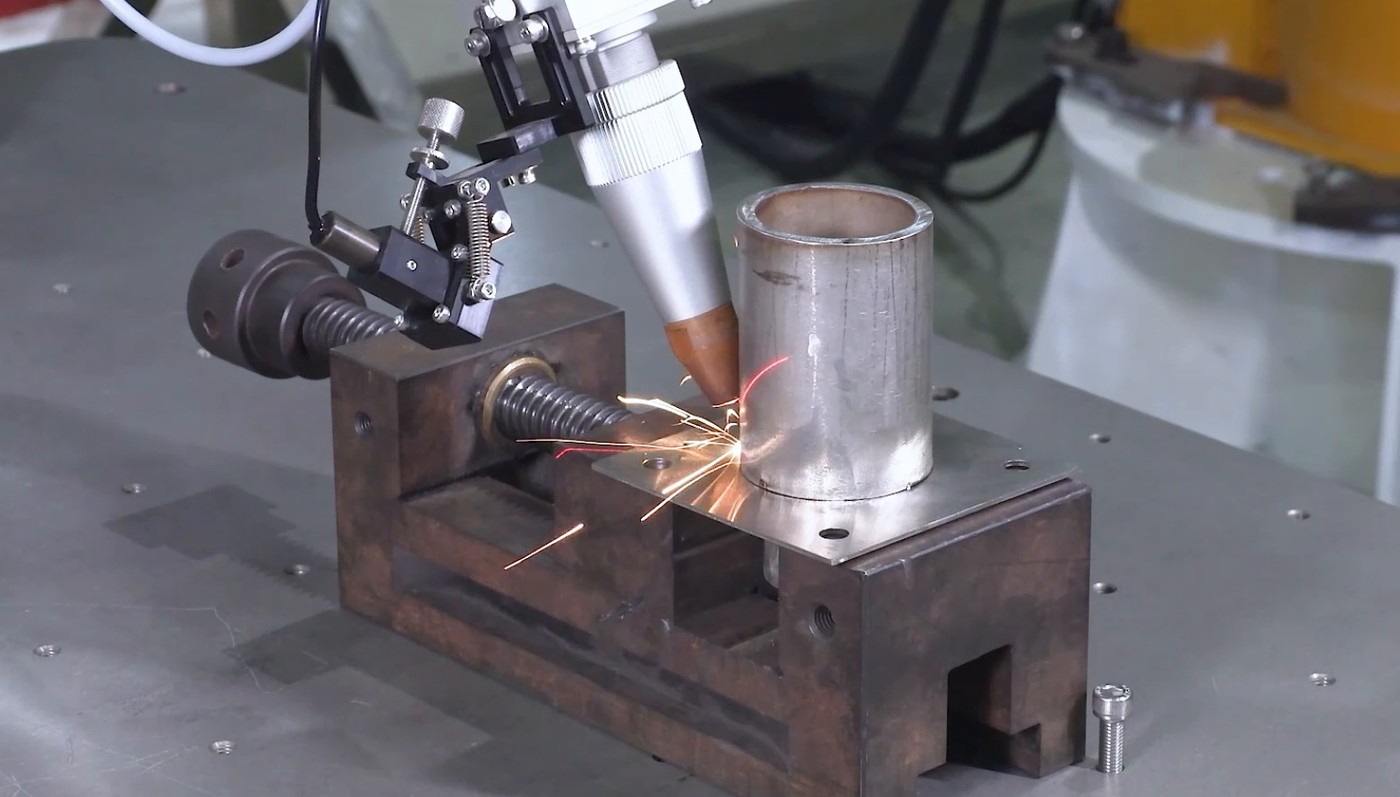
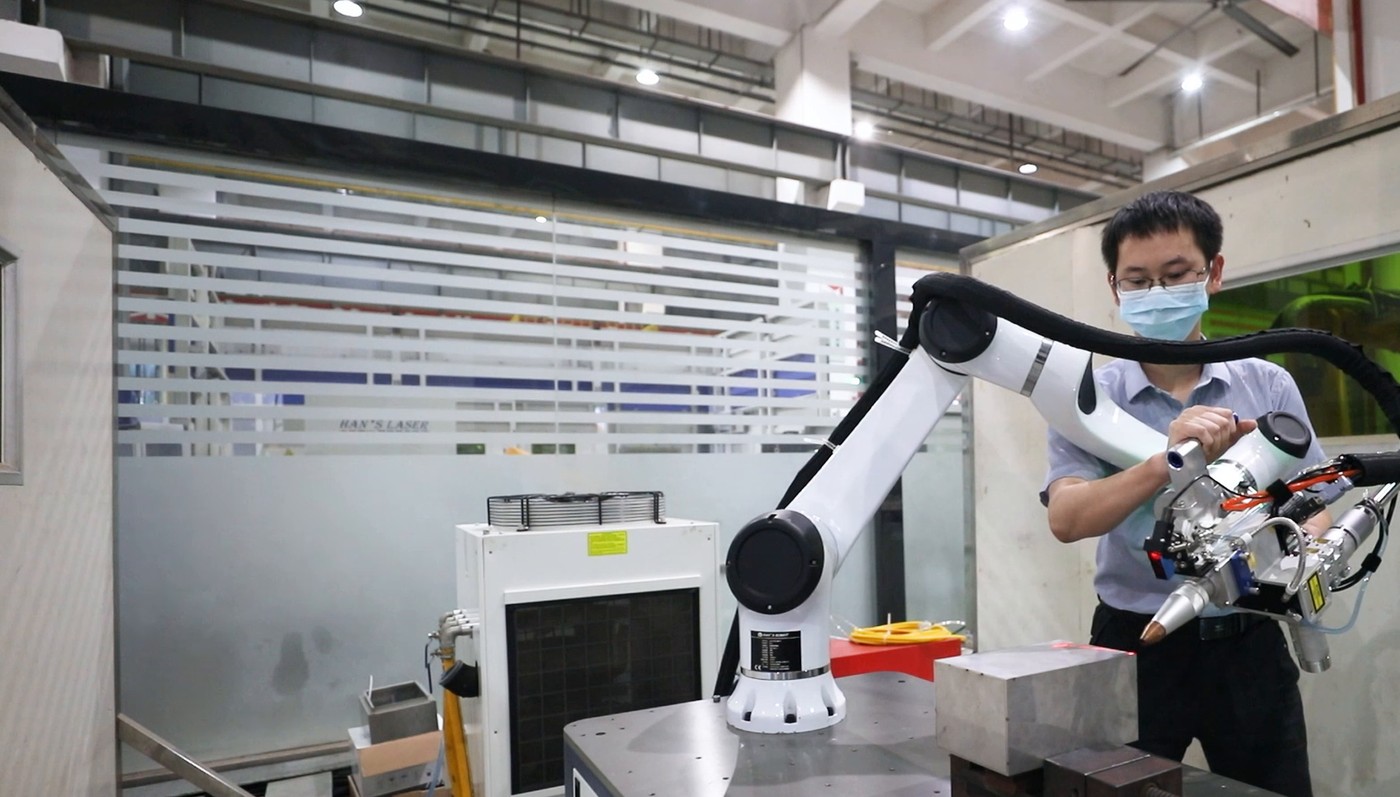
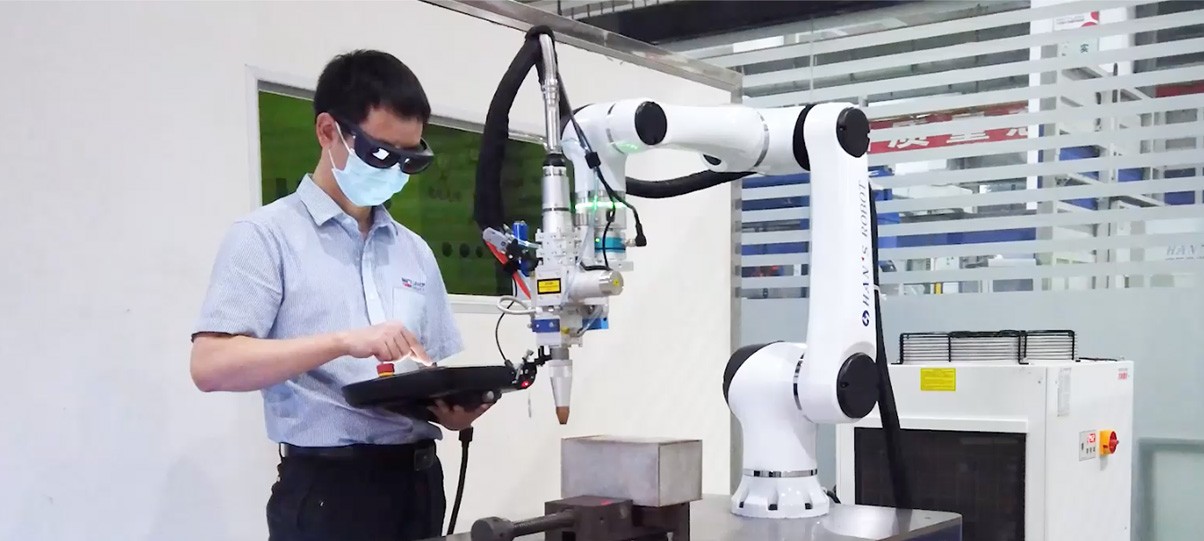
Laser welding on a collaborative robot: the arm holds the weld head, the fixture holds the part — the path repeats exactly, weld after weld
Quick verdict: cobot welding pays off when the parts repeat and the weld must look the same every time — not when you are welding one-off jobs with free-form fit-up. Tell us which of those two you do, because it decides whether a welding robot is the right answer at all.
A welding robot is the easy part of the decision. The hard part is everything around it: the fixture that presents the joint repeatably, the torch package that matches your process, and the safety plan that lets people keep working next to a machine that is running an arc. Get those right and a cobot weld cell runs two shifts with the same quality at the end of the week as at the start. Get them wrong and the arm stands in a corner.
Trinventor Solution supplies and integrates Huayan collaborative robots for welding in Malaysia — as the authorized distributor, with the assessment, fixture and safety planning, programming, operator training, spares and service that a weld cell needs to keep running. This page covers where cobot welding fits, how the setup is built, and which of the Huayan arms suits which weld cell.
When cobot welding pays off
A cobot earns its place on the floor when the work is repetitive but the batches are not huge — the middle ground that is too repetitive to keep a welder on all day and too varied to justify a caged industrial robot and dedicated fixturing:
Parts that repeat. The same bracket, frame or tube assembly comes back regularly, in batches of ten to a few hundred. Once the weld path is taught and the fixture locates the part, every piece gets the same weld.
Quality that must not drift. When the weld is judged by a customer, an inspector or a load test, consistency is the product. A robot does not have a bad afternoon.
A skilled welder who is the bottleneck. When your best welder is stuck making the same seam all day, that skill is being spent on the wrong job. Hand the repeat work to the robot and move the welder to the new, awkward and rework jobs — the work that actually needs a person.
Small shops with no caged-cell space. A cobot welds on the same bench the part is built on, in a fraction of the footprint of a fenced industrial cell, which is what makes automation possible in a normal Malaysian fabrication shop.
Heat, fume and spark zones you would rather not staff full-time. The arm does not need to be relieved from the weld bay.
If your work is genuinely one-off — repair jobs, prototypes, fit-up on worn assemblies — manual welding is faster and we will say so. The assessment step exists to separate those cases before anyone buys anything.
The welding workflow we set up
Fixture and part presentation. The fixture locates each part in the same place, every time — that is what makes the robot’s repeat weld possible. Where parts vary, we design the clamping and stops around that variation instead of pretending it does not exist.
Weld path — taught, not coded. The operator takes the arm by the torch, walks it along the joint and the positions are recorded: hand-guiding for simple seams, the pendant for accurate ones. No programming background needed — your welder is the programmer.
The weld. The arm carries the torch package through the taught path while the fixture holds the part. Run it, check the first piece, adjust the path or the parameters, then let it repeat.
Inspection and repeat. Sample the output, confirm the seam, and the cell is ready to run the batch. Because the path is stored, the next batch is a fixture change, not a re-setup.
Hand-guiding the cobot past the weld seam — walk the torch along the joint once and the path is recorded
MIG, TIG or laser — the process decides the package
The robot is process-agnostic; the torch package is not. We match the arm to the welding process you actually need for the parts in front of you:
Process
Where it fits
Typical work
MIG / MAG
Wire-fed, fast deposition, the workhorse for steel, stainless and aluminium fabrication
Frames, brackets, tube assemblies, general fabrication
TIG
Slower, precise, clean — when the weld appearance matters or the material is thin
Stainless food and chemical work, cosmetic seams, thin sheet
Laser welding
Very fast, low heat input and minimal distortion; needs good fit-up
Thin sheet, precision parts, welds next to finished surfaces
Tell us the material, thickness and finish requirement and this table collapses to one answer. The laser work shown on this page runs on a Huayan Elfin — the same arm, with a different head.
Which robot for which weld cell
All four Huayan lines run weld packages; the choice is payload and reach, set by the torch, the cable dress and how far the part spreads out:
Heavy torch packages and positioner work on large weldments
Teaching the weld path with the handheld pendant before a production run — the first part is set by hand, the rest are set by the program
Safety, fume and the practicalities
A welding cobot is designed for collaborative operation — the safety standards behind it are ISO 10218-1 and ISO 10218-2, with ISO/TS 15066 covering collaborative operation specifically. But welding adds its own hazards to the standard risk picture: arc flash, spatter, fume and heat. In practice that means:
Work zones, not cages. Screens and light curtains around the arc area where needed, sized by the risk assessment we do with you — not a fence around the whole cell.
Fume extraction at the torch. A fume arm or on-torch extraction so the operator and the environment stay clear of welding fume.
Guarding the parts the robot does not see. Fixture clamps, part presentation and hot workpieces are part of the cell layout, not an afterthought.
What we set up for you
We are the authorized distributor for Huayan robotics in Malaysia, and a weld cell needs more than a robot. The scope we quote is the total solution:
Assessment — which parts should be automated first, and whether a cobot is the right answer
Demo — run your part or a representative part before you commit
Integration — torch package, fixture concept, part presentation and safety layout
Installation — on your site, with handover on your parts
Programming — the weld paths taught to your prints and parts
Training — your operators and welders, not just your engineers
Spares — consumables and replacement parts kept local
Service contract — scheduled support so the cell stays in production
What we need from you for a quote
Prices are quoted per job, because two welders with the same arm can be very different projects once the fixture, torch and safety scope are counted. To quote accurately we need:
Drawings, photos or a sample of the part — and the joint you want welded
The weld process and material: MIG, TIG or laser; steel, stainless or aluminium; thickness
Batch size and how often the part repeats, plus any takt time you have to hit
How the part is welded today, and where the bottleneck actually is
What is around the cell — space, power, other stations, people passing
Frequently asked questions
How much does a cobot welding setup cost in Malaysia?
We quote per job, and the honest answer is that the robot is not the biggest variable — the fixture, torch package, safety scope and integration decide the number. That is also why we do not publish a price list: a quote for one part family can include a fixture you already have, and for another part family it cannot. Send us the part and we will scope the total solution against your volumes; if a cobot does not pay back for your work, we will tell you that instead of quoting.
Is a cobot as fast as a full industrial welding robot?
On many MIG and TIG jobs the arc-on time ends up comparable, because the limit is usually the process and the fixture, not the arm speed. An industrial robot still wins on very high-volume dedicated cells where the same weld runs all day. A cobot wins when the parts change, when the cell has to share the floor with people, and when the operators themselves have to retask it. If your volume genuinely justifies a dedicated cell, tell us — we will scope the right machine, including larger Huayan arms, rather than sell past the problem.
Can a cobot weld do MIG, TIG and laser?
Yes — the welding process lives in the torch package and the power source, and the arm carries whichever one your work needs. MIG/MAG is the default for general steel and stainless fabrication; TIG suits thin or cosmetic work; laser welding is what you see on this page and suits thin sheet and tight-tolerance parts where you cannot put heat into the workpiece. We match the package to your parts during assessment.
Do we need a programmer to run it?
No. Weld paths are taught by hand — the operator walks the arm along the joint and the positions are recorded — or entered on the pendant for accurate seams. The people who program your weld cell are your welders. Our training covers program recall, touch-up of wear or fixture drift, and the day-to-day running of the cell, not just an engineering course.
Is it safe to have a welding cobot next to people?
Collaborative robots are designed to work alongside people, and the standards behind that — ISO 10218-1, ISO 10218-2 and ISO/TS 15066 — are the basis of every cell we build. Welding adds arc, spatter and fume risks on top, so the integration includes the screens, extraction and cell layout that address them. The risk assessment is done with you and your people, on your actual layout, before installation.
Do we still need fixtures and jigs?
Yes — and the fixture is half the result. A repeatable weld needs a repeatable part position; a cobot welding loose parts by eye is a demo, not a process. If you already have fixtures that a welder works from, they are usually the starting point. If you do not, fixture concept is part of our integration scope, designed around the parts you actually run.
What support do we get after installation?
Local support from Kuala Lumpur: consumables and spares held locally, service contracts with scheduled support, and trained people on our side who know your cell. The robot is the reliable part — it is the torch, the fixture and the process that occasionally need attention, and that is exactly where local support matters.
Talk to our team
Send us the part you want welded — a photo or a drawing is enough to start — and we will tell you whether cobot welding fits, what the cell would look like, and what the total solution involves. Contact Trinventor Solution for a live demo, consultation and local after-sales support in Malaysia.